Wrap up
![Parties Lay Out Priorities as Parliament Opens Likely Final Session of 51st National Assembly]()
![Parties Lay Out Priorities as Parliament Opens Likely Final Session of 51st National Assembly]() National Assembly Chair Raya Nazaryan, at the National Assembly, Sofia, January 14, 2026 (BTA Photo/Vladimir Shokov)
National Assembly Chair Raya Nazaryan, at the National Assembly, Sofia, January 14, 2026 (BTA Photo/Vladimir Shokov)
site.btaParties Lay Out Priorities as Parliament Opens Likely Final Session of 51st National Assembly
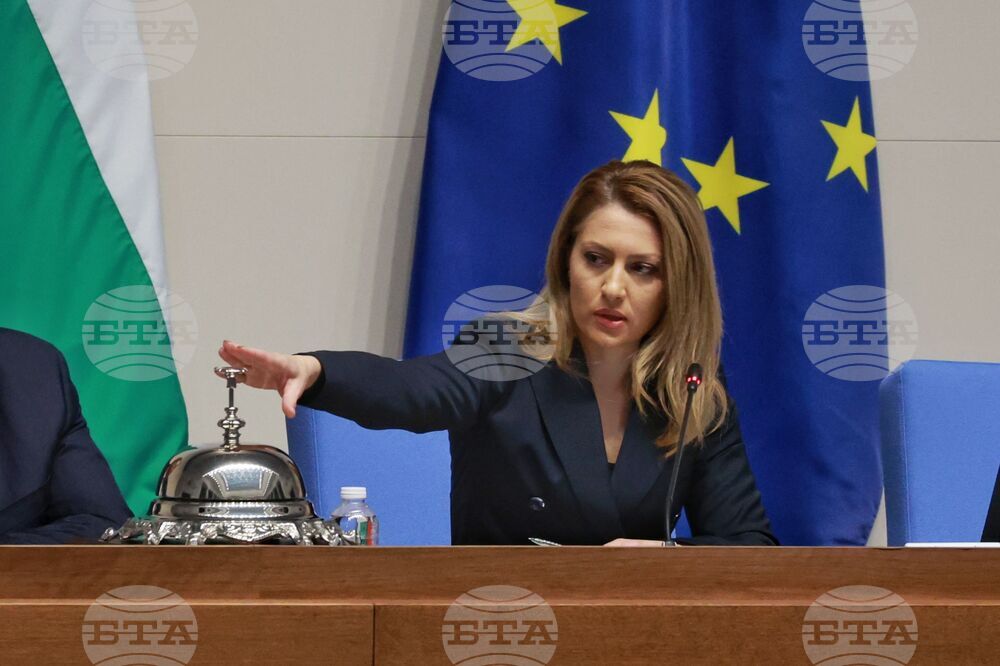
The National Assembly opened on Wednesday the new plenary session of the 51st Parliament, widely expected to be its last, with 216 MPs registering as present at the start of the sitting.
Parliament Chair Raya Nazaryan urged MPs to keep a constructive and respectful tone ahead of the election campaign, after which parliamentary groups outlined their priorities for the remaining weeks, including election-rule changes and machine voting, the 2026 budget, and institutional reforms.
Parliament Chair Raya Nazaryan told MPs: “This is likely the last session of this National Assembly,” and appealed for restrained conduct in the weeks ahead. “Let us show a constructive spirit and diligence in the remaining time; I believe you can, and I wish you successful work,” she said, expressing hope that the election campaign would not inflame tensions in the chamber or spill into “gratuitous confrontations and insults.” She urged parliamentary groups to show greater tolerance and respect, arguing that MPs’ conduct and professionalism shape public perceptions of the legislature.
The sitting began in line with the Rules of Procedure with the anthems of the Republic of Bulgaria and the European Union. MPs observed a one-minute silence in memory of football player and coach Dimitar Penev. The electronic board recorded 216 MPs present in the chamber. During the vote on the weekly agenda, a Vazrazhdane proposal for Thursday hearings with heads of key institutions, including the Bulgarian National Bank, on euro-related issues was rejected. Under a procedural rule, Parliament approved requests from Continue the Change – Democratic Bulgaria (CC-DB) to consider amendments to the National Service for Protection Act and from BSP – United Left to discuss amendments aimed at reducing student loan interest rates. Nazaryan also announced bodies and members whose terms in office have expired and are due for election and said that during the fifth session of the 51st National Assembly, Deyan Dechev of BSP – United Left will chair the rotating commission overseeing the security services.
GERB–UDF, through MP Toma Bikov, framed the key political risk for the coalition as a possible derailment of Bulgaria’s European trajectory. “For us, the greatest risk was related to the possibility that Bulgaria might fail to complete the process of European integration,” Bikov said, presenting euro adoption as a milestone and crediting the role of GERB–UDF in the process. He argued that the current legislature has limited prospects for long-term strategies and said the coalition sees early elections as the only alternative to the current compromise-based majority. “Without the government of Rosen Zhelyazkov, Bulgaria would not have become a member of the Eurozone, and the challenges facing our country’s civilizational choice would have taken on an existential character,” he said. Bikov also praised GERB leader Boyko Borissov’s role, saying: “Our successful accession would not have happened without the efforts of our leader Boyko Borissov, whose key role in Bulgaria’s development will be assessed first by historians rather than by our opponents.” He ended with a warning to rivals: “We remind our opponents that over the past 20 years, attempts to destroy GERB have always ended in disaster for those who undertook them,” while calling for avoidance of hate speech during the campaign.
CC-DB, through co-Floor Leader Nikolay Denkov, placed election integrity and institutional reforms at the centre of what it described as urgent end-of-mandate tasks. He said the remainder of the Parliament should focus on preparing fair elections through amendments to the Election Code, “100% machine voting with machine-generated tally sheets,” broad participation and civic oversight to prevent fraud, and “the immediate removal of the illegal Prosecutor General.” Denkov also urged the adoption of a unifying national objective after eurozone accession, arguing: it is time to clearly define a new national goal, “one that can unite the country in the coming years and determine the kind of Bulgaria in which we and our children want to live.” He outlined priorities spanning justice and rule of law, a competitive economy, education, demographics and social policy, healthcare, security and foreign policy positioning anchored in European values and national interests.
Movement for Rights and Freedoms (MRF) – New Beginning, through Deputy Floor Leader Iskra Mihaylova, argued that the approaching end of the legislature calls for focus on completing essential work rather than launching election platforms. “Let us finish our work with reason and respect for the people who sent us here,” she said. “Today we are opening, in all likelihood, the final session of the work of the 51st National Assembly,” Mihaylova added, noting that there are only weeks left to complete pending tasks. She presented this as a responsibility in uncertain times: “This is our duty - to make responsible decisions for our homeland in times of uncertainty.” Mihaylova urged Parliament to ensure the functioning of institutions, including by enabling the work of the caretaker government through fulfilment of constitutional obligations, and called for support to institutions, municipalities and sectors implementing projects under EU structural funds and the Recovery and Resilience Plan.
Vazrazhdane, through Party and Floor Leader Kostadin Kostadinov, called for systemic transformation centred on sovereignty. “Our main task is to regain real, not merely formal, national sovereignty,” he said, arguing for a review of Bulgaria’s alliances and reassessment of international treaties, with renegotiation or termination of clauses deemed unfavourable. Kostadinov argued for accountability through a specialised tribunal once those responsible for what he described as “colonial dependence” are identified. He presented national aims that go beyond domestic institutional change, saying: “Our unification with the Republic of North Macedonia following the model of the two Germanys, as well as the return of Southern Bessarabia to Bulgaria, is a goal that can be achieved in the next few years.” He criticised the response of partners after the attack on the Bulgarian embassy in Skopje and said: “The only ally of Bulgaria is the Bulgarian people.” He concluded with a strategic ambition: “The ideal of Vazrazhdane is to see Bulgaria as a foremost power politically, economically, and militarily - not only at the regional level but also on the continental level.”
BSP – United Left, through Floor Leader Dragomir Stoynev, said the group has helped ensure stability and reassurance for citizens in recent months and highlighted eurozone entry as a success, while focusing on the absence of a regular 2026 State Budget. He warned about uncertainty around an adopted income-indexation rule and the practical consequences of the delay, including for defence modernization. “By not adopting the 2026 State Budget Bill, we shot ourselves in the foot,” Stoynev said. He argued that legislative work tends to stall when elections approach and said the group’s immediate priority is legislation to combat speculation. The Socialists also called for fair and transparent elections and urged caution in rebuilding public trust, saying: “We must be extremely careful not to alienate people who already distrust the legislative process, but rather to attract them,” and adding: “It is up to us in this month to show whether our actions can prove that we have been up to the task as representatives of the people and that we have met the expectations of Bulgarian citizens.”
There Is Such a People (TISP), through MP Pavela Mitova, described the group’s conduct in the legislature as driven by institutional responsibility rather than short-term tactics. “Our political behaviour has never been guided by expediency, but solely by the idea of statehood and common sense,” she said. Mitova blamed the lack of a budget on parties that rejected a version supported by the social partners and argued this leaves the country without social protection and predictability for business. She credited TISP with preventing electricity price rises, saying: “Thanks to our consistent policy, the price of electricity for Bulgarian citizens has not increased and will not increase - something that was inevitable if we had not removed the proposal of Continue the Change - Democratic Bulgaria for market liberalization from the National Recovery and Sustainability Plan.” She also defended the group’s actions on fuel security and the Recovery and Sustainability Plan and criticised constitutional changes attributed to CC-DB, saying that after a Constitutional Court request, “some of the stupid changes made to the Constitution by the legal titans from CC - DB were removed.” Mitova reiterated TISP’s stated foreign-policy red lines and its insistence on conservative policies, including migration and energy positions.
The Alliance for Rights and Freedoms (ARF), through Floor Leader Hayri Sadakov, linked democratic legitimacy to election integrity and transparency, declaring: “There is no democracy without honest elections, no trust without transparency, and no stability without a protected and free vote.” He argued that Parliament must guarantee an honest electoral process and called for urgent Election Code changes, effective machine voting, electronic counting and centralized reporting “without human involvement,” alongside rules that leave no room for interpretation on election night. Sadakov said ARF backed the Zhelyazkov cabinet for reasons of stability, but accused MRF – New Beginning of pursuing influence through pressure and dependencies. “Subsequently, this same political factor did everything possible to dominate the government from within, to replace the governing logic with one of pressure and dependencies, and to continue turning institutions into instruments of influence. This was not support for stability; it was yet another attempt to seize power through the back door,” he said, adding that protests demanded Peevski’s removal from Bulgarian politics.
Velichie, through Floor Leader Ivelin Mihaylov, said the group’s final priority in this Parliament is to secure election integrity and presented itself as an anti-corruption entrant into politics. “Our final task is to guarantee fair elections, and we will do so in a way never seen before,” he said. Mihaylov argued the group is “free from the corruption and lies present in most other parties” and said its MPs entered politics to understand and expose how decisions are made. “We have reached a low point unlike anything in recent Bulgarian history,” he said, claiming that proposals the group advanced, ranging from irrigation systems to cleaning initiatives, were obstructed. He said: “We cannot work with MPs who see themselves as aristocrats and assume they are elected permanently,” and concluded with: “The last thing we will do is guarantee fair elections. God will ensure that we have a truly worthy National Assembly for this great nation.”
The MECh parliamentary group did not make a declaration on the first day of Parliament's work after the winter recess.
/DD/
news.modal.header
news.modal.text