site.btaConstruction of Corridor VIII Has Always Been Bulgaria's Priority, Deputy Foreign Minister Says in Tirana

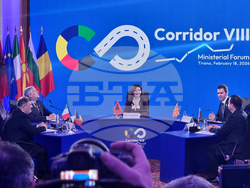
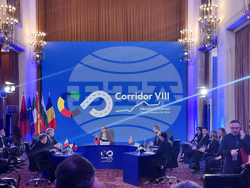
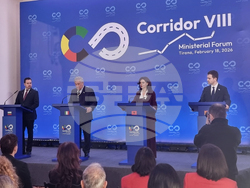
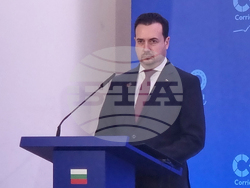
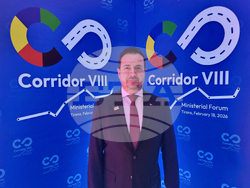
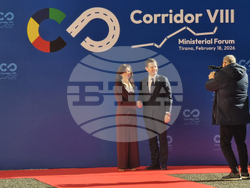
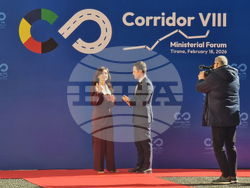
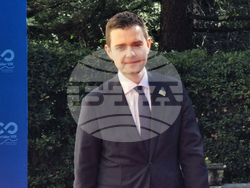
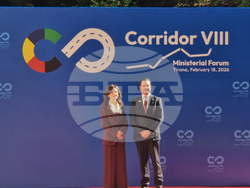
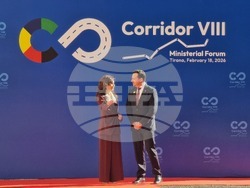
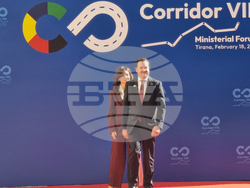
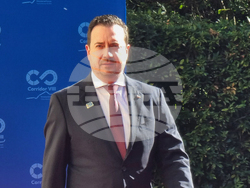
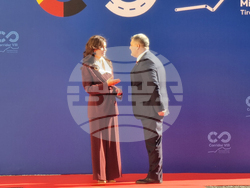
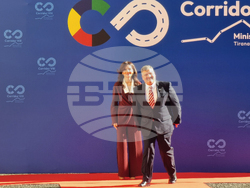
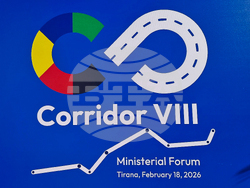
Bulgaria’s Deputy Foreign Minister Nikolay Pavlov, speaking after a ministerial on Corridor VIII held in Tirana on Wednesday, said that the meeting is fully aligned with the shared strategic objective of strengthening connectivity, regional cooperation, and collective security. The Albanian capital hosted a ministerial meeting and economic forum on Transport Corridor VIII - an infrastructure project linking the Adriatic Sea with the Black Sea through Albania, North Macedonia, and Bulgaria, extending to Italy and Romania. The Pan-European Transport Corridor VIII is a key component of the Trans-European Transport Network (TEN-T).
Bulgaria highly appreciates the strong political commitment demonstrated by all partners, Pavlov added. "The development of the Trans-European transport and energy networks is among the European Union’s most important strategic projects. Railways, roads, ports, airports, energy interconnectors, and digital infrastructure are not merely technical systems, they form the backbone of the EU’s economic strength, connectivity, resilience, and security," he stated.
He added that the construction of Pan-European Transport Corridor VIII has always been a national priority for Bulgaria and that over the years the country has undertaken consistent and sustained efforts to complete all segments of its route. Pavlov emphasized that today Corridor VIII goes beyond the scope of an infrastructure initiative of economic significance, as it has already become a strategic East–West axis connecting the region and its markets and partners, while playing an important role in ensuring regional security.
Pavlov further noted that in the current geopolitical environment, Corridor VIII is of fundamental importance for security and defence. According to him, military mobility remains a cornerstone of European security and a common strategic priority.
He added that efficient and resilient infrastructure is essential for deterrence and NATO’s collective defence, as well as for strengthening cooperation between the EU and NATO.
Pavlov reaffirmed Bulgaria’s full commitment to building all components of Corridor VIII, and its readiness to continue cooperation on the project with its partners and to host the next meeting dedicated to Corridor VIII.
Responding to a question from the Bulgarian News Agency regarding the level of completion of Bulgaria’s projects under Corridor VIII, Pavlov said that Bulgaria is prioritizing the full implementation of the corridor in all its dimensions, relying on European funding instruments available for the project. He expressed confidence that Corridor VIII will remain a priority for Bulgaria.
Asked what obstacles may be slowing the project down, whether technical, administrative, or linked to political misunderstandings, given that it connects not only countries but also economies, Pavlov stated that Bulgaria is working on Corridor VIII as a priority and will overcome any challenges that arise.
"We are talking about a highly complex, large-scale project, a corridor with many dimensions, whose construction would require very substantial funding. Its implementation is certainly not easy and is time-consuming, but I believe we have reached a stage where this long-standing project is entering its decisive phase of realization and we will be moving ever closer to its completion," Pavlov said.
He added that each country has both the responsibility and the need, within its capabilities, to prioritize the project’s implementation.
"On behalf of Bulgaria, I reaffirm the priority status of this project and our determination to work through all the challenges to achieve its completion, so that in the future we will have this axis completed, one that will bring greater security and more opportunities for Bulgaria: for our businesses, our tourism sector, and for the stability and development of the entire Balkan region," Pavlov said.
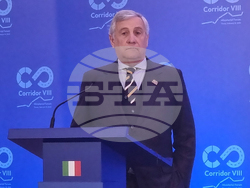
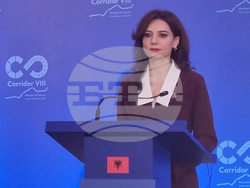
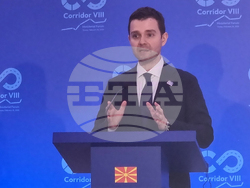
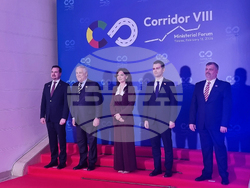
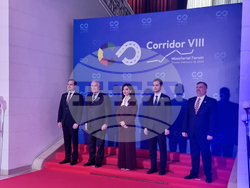
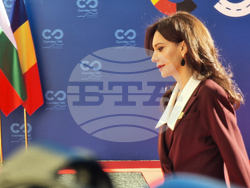
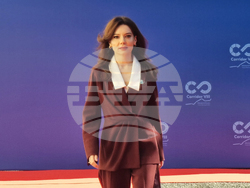
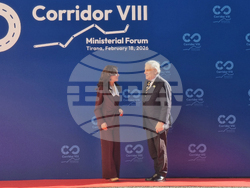
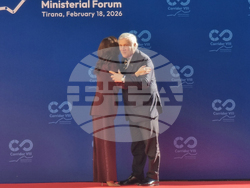
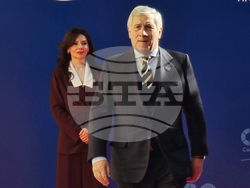
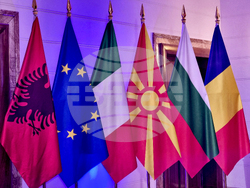
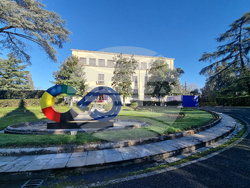
The ministerial meeting was held at the Palace of Brigades in the Albanian capital under the chairmanship of Albanian Foreign Minister Elisa Spiropali. The meeting was attended by delegations led by Italian Deputy Prime Minister and Foreign Minister Antonio Tajani, Bulgaria’s Deputy Foreign Minister Nikolay Pavlov, North Macedonia’s Minister of Foreign Affairs and Foreign Trade Timcho Mucunski, and Romania’s Ambassador to Tirana Octavian Serban.
/RY/
Additional

news.modal.image.header
news.modal.image.text
news.modal.download.header
news.modal.download.text
news.modal.header
news.modal.text