site.btaRomania in 2025: New President, New Government, Mounting Challenges
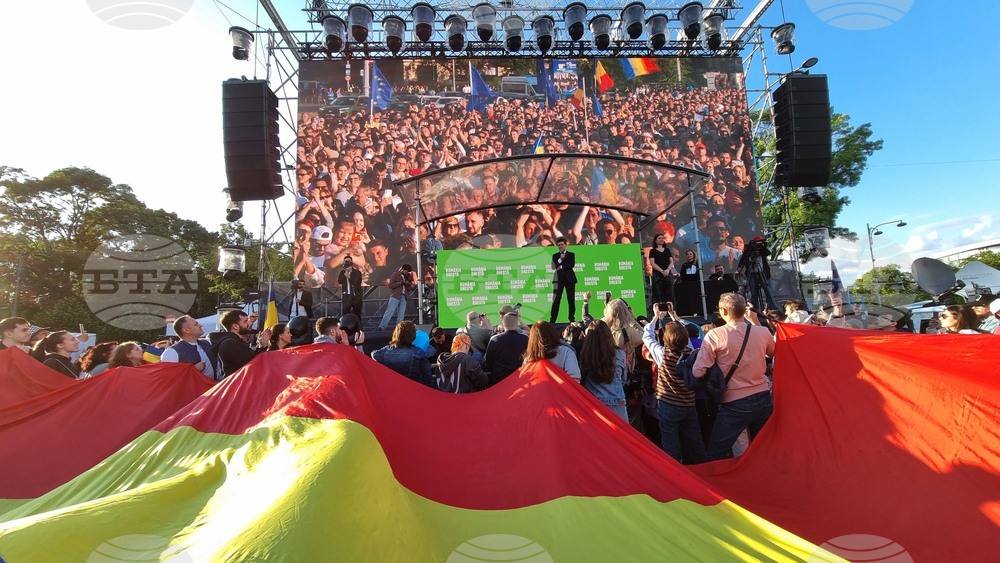
Romania is closing a turbulent year marked by the resignation of one president, the election of a mayor as head of State, and an acting president who went on to become prime minister. In 2025, this country both began and ended the year with protests.
The first months of 2025 were marked by political instability and a wave of demonstrations under the slogan “Bring Back the Second Round,” organized by the far-right opposition Alliance for the Union of Romanians (AUR) and other sovereigntist parties. The protests were staged against the annulment of the presidential elections at the end of 2024, whose first round had been won by far-right independent candidate Calin Georgescu. The elections were cancelled by the Constitutional Court after declassified intelligence reports showed that Romania had been targeted by “aggressive Russian hybrid attacks” aimed at influencing the integrity of the electoral process.
On February 10, President Klaus Iohannis, whose second and final term was due to expire on December 21, 2024, but had been extended by the Constitutional Court following the annulment of the elections, announced his resignation. The decision came as Parliament was preparing to vote on an opposition motion to suspend him from office. The vacant post was temporarily filled by Senate Speaker Ilie Bolojan.
New President, New Government
The first round of the repeat presidential elections was held on May 4. AUR leader George Simion finished first with more than 40% of the vote, followed by Bucharest Mayor and independent candidate Nicusor Dan. The candidate of the then-ruling coalition of Social Democrats and Liberals, Crin Antonescu, failed to reach the runoff, which led to the resignation of Prime Minister and Social Democratic Party (PSD) leader Marcel Ciolacu from both posts.
In the second round, the pro-European candidate Nicusor Dan, founder of the reformist Save Romania Union (USR), defeated sovereigntist candidate George Simion, winning the election with 53.6% of the vote. His first task as president was to hold consultations with political parties to form a new government following Ciolacu’s resignation.
After difficult and prolonged coalition negotiations, the four pro-European parties in Parliament – the Social Democratic Party (PSD), the National Liberal Party (PNL), the Save Romania Union (USR), and the Democratic Alliance of Hungarians in Romania (UDMR), reached an agreement to form a government. The cabinet, sworn in on June 23, was headed by PNL leader Ilie Bolojan. The coalition agreement provides for a rotation of the prime minister’s post, which is to pass to the Social Democrats in 2027.
Austerity Measures, Wave of Protests
The new government was immediately confronted with the serious challenge of containing the excessive budget deficit, which reached 9.3% of GDP at the end of 2024 – the highest level in the European Union.
Romania has been under an excessive deficit procedure since 2020 and risked having its access to EU funding frozen, including funds from the National Recovery and Resilience Plan, unless it convinced the European Commission that it was making sufficient efforts to reduce the deficit toward the 3% threshold set by the Maastricht criteria.
To avoid this scenario, as well as the risk of a downgrade in the country’s credit rating, Prime Minister Bolojan announced a series of austerity measures in July. Some took effect at the beginning of August, while others are scheduled for implementation in 2026.
The painful measures triggered widespread protests but ultimately produced the desired result. In November, the European Commission agreed not to block Romania’s access to EU funds and accepted a target deficit of 8.4% of GDP by the end of 2025.
As of August 1, 2025, most measures from the first fiscal package came into force, including an increase in the standard VAT rate from 19% to 21% and in the reduced rate to 11% from 9% and 5%. Excise duties on fuel and alcoholic beverages were raised by 10%, and those on cigarettes by 3%. It was also decided that pensions and public-sector wages would be frozen in 2026.
From September 1, higher road vignette fees for passenger cars took effect. The annual vignette rose from EUR 28 to EUR 50, the monthly one from EUR 5.3 to EUR 9.5, and the one-day vignette from EUR 2.5 to EUR 3.5. Fines for driving without a vignette were also increased.
The second package of measures, most of which will take effect on January 1, 2026, envisages increases in a number of local taxes and fees, including those on buildings, agricultural land, and vehicles. A 16% tax on profits from cryptocurrency transactions was introduced, while the dividend tax was raised from 10% to 16%. Consumers ordering parcels from outside the European Union will now pay a flat fee of 25 lei (around EUR 5) for parcels valued under EUR 150.
The austerity measures sparked protests by employees across various sectors. On September 8, the new school year began with a boycott in a number of schools, as thousands of teachers took to the streets. Their discontent was driven by longer mandatory teaching hours, larger class sizes, school mergers, reduced hourly pay, and other measures. On October 29, thousands of people joined a major rally in front of the government building, organised by the country’s four largest trade union confederations.
At the same time, a reform of magistrates’ pensions, required for access to funds under the National Recovery and Resilience Plan, awaits a ruling by the Constitutional Court, scheduled for December 28. The law envisages raising the retirement age and capping pension amounts, and it has triggered protests within the judiciary.
Five No-Confidence Motions, New Bucharest Mayor
On September 7, Romania’s Parliament faced what local media described as an “unprecedented” situation: it was required to vote on four no-confidence motions against the government in a single day. These were submitted by the far-right opposition parties AUR, SOS Romania, and the Party of Young People (POT) after the government adopted the second austerity package through an expedited procedure known as assuming responsibility. All four motions were rejected.
On December 15, Parliament also rejected a fifth no-confidence motion against the government of Ilie Bolojan, submitted by the opposition Peace – Romania First parliamentary group and supported by AUR. The opposition called on the governing Social Democrats to back the motion amid coalition tensions, but PSD and the other governing parties chose not to vote. On the same day, however, the Social Democrats supported a no-confidence motion against a minister from the Save Romania Union (USR), prompting accusations that they had violated the coalition agreement.
On December 7, elections were held for a new mayor of Bucharest, an event that analysts say could have far-reaching consequences for inter-party relations and the political landscape as a whole. The post had been vacant since Nicusor Dan won the presidency. In a closely contested race, National Liberal Party candidate Ciprian Ciucu defeated the Social Democrats’ candidate Daniel Baluta, who had been seen as the favourite in opinion polls. Baluta finished third, also trailing AUR-backed Anca Alexandrescu, who placed second.
Calin Georgescu: From Presidential Candidate to Defendant
On September 16, former presidential candidate Calin Georgescu was sent to trial on six charges, the most serious being complicity in an attempt to carry out actions against the constitutional order. Also sent to trial in the same case was mercenary Horatiu Potra, who had provided security for Georgescu, along with around 20 other mercenaries from Potra’s group. They are accused of planning an attempted coup following the annulment of the presidential elections at the end of 2024.
In November, Horatiu Potra, together with his son and nephew, was extradited to Romania from the United Arab Emirates and is currently in detention. Calin Georgescu has been placed under judicial supervision, including a ban on leaving the country.
In December, a new wave of protests erupted, this time over the state of the justice system. They were triggered by the documentary Captured Justice, published by the investigative outlet Recorder. In the investigation, several former and current magistrates spoke of pressure on the judiciary that led to major corruption cases being delayed until they became time-barred. The revelations brought thousands of people onto the streets of Bucharest and other cities, with protesters calling for fair, transparent, and independent justice.
2025 ends with uncertainty not only over whether Romania will meet its deficit-reduction targets, but also over whether the governing coalition will survive into 2026. Doubts about its stability deepened in December, when PSD, the largest parliamentary force, announced it was launching an “analysis” of its participation in the coalition. The review is expected to continue until February 2026, when the new draft budget should be ready.
The Social Democrats have serious disagreements with one of their coalition partners, the Save Romania Union (USR). According to some sources, PSD may demand either that USR leave the government or that the Social Democrats themselves move into opposition – both scenarios that would result in the loss of the parliamentary majority. A decision is expected in 2026.
/KK/
news.modal.header
news.modal.text