BOTAS deal review
![CC Seeks Transparency on Terms of BOTAS Agreement Freeze]()
![CC Seeks Transparency on Terms of BOTAS Agreement Freeze]() CC MP Radoslav RIbarski attends a meeting of the parliamentary Defence Committee, June 10, 2026, Sofia. (BTA Photo/Hristo Kasabov)
CC MP Radoslav RIbarski attends a meeting of the parliamentary Defence Committee, June 10, 2026, Sofia. (BTA Photo/Hristo Kasabov)
site.btaCC Seeks Transparency on Terms of BOTAS Agreement Freeze
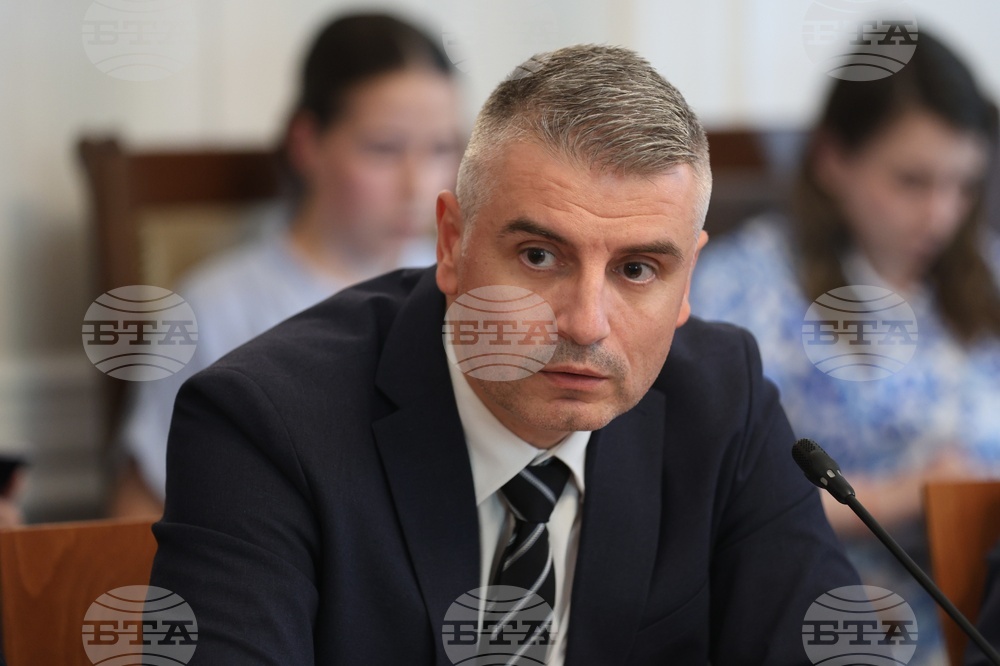
The 15-month suspension of the gas supply agreement between Bulgaria's state-owned gas supplier Bulgargaz and Turkiye's state-owned energy company BOTAS may provide "a breathing space" for Bulgargaz, but the key question is what will happen after the suspension expires and what conditions Turkiye has attached to the deal, Radoslav Ribarski, an MP from Continue the Change (CC), told BTA on Tuesday. Ribarski was commenting on the protocol signed on Monday to suspend the BOTAS agreement for 15 months following talks between Bulgarian Prime Minister Rumen Radev and Turkish President Recep Tayyip Erdogan in Ankara.
Ribarski questioned whether the agreement's 13-year duration would be shortened by the 15-month suspension or whether that period would simply be added back at a later stage. According to Ribarski, the public is now asking what the final terms demanded by the Turkish side are, saying that the current agreement is highly advantageous for BOTAS but extremely unfavourable for Bulgargaz.
Ribarski said the term "freeze" was too broad, pointing out that in international trade it can have many different meanings. He voiced hope that the government would disclose all the details of the arrangement instead of merely announcing that an agreement had been reached.
According to the CC lawmaker, suspending the contract effectively amounts to an acknowledgment that the agreement is commercially unfavourable, lacks market-based terms and requires renegotiation. He argued that repeated claims over the past three years that the contract had simply not been utilized by previous governments had proven to be inaccurate.
Ribarski said the crucial issue now is what conditions Turkiye has imposed, or has already secured, as part of the suspension. He questioned whether the 15-month period would merely serve as a window during which Bulgaria would have to consider the terms set by the Turkish side. He called on the executive branch to ensure maximum transparency throughout the process to avoid repeating the situation that had developed under the existing agreement.
He added that during parliamentary debates, Continue the Change had consistently maintained that such strategic gas interconnectivity was important for Bulgaria while also advocating the renegotiation of the BOTAS contract. Terminating the agreement had never been the party's preferred solution, he said, but stressed that the contract could not continue under its current terms.
The agreement in question was signed on January 3, 2023. Under the contract, the Bulgarian side booked capacity of 106.4GWh/day on the Turkish LNG regasification terminals and agreed to pay for this BGN 1 million (EUR 512,000) daily for a period ending in 2035. At present, Bulgargaz does not import gas under the agreement with BOTAS, and in early May its arrears to the Turkish company approximated BGN 300 million. If the 13-year take-or-pay agreement is rescinded, the Bulgarian company will be liable for close to BGN 3 billion in damages. By a resolution passed on April 19, 2024, the Bulgarian National Assembly assigned then-energy minister Vladimir Malinov to take action for re-negotiating the agreement.
/MR/
news.modal.header
news.modal.text