site.btaJudicial System Act Amendments Clear Committee Stage at First Reading
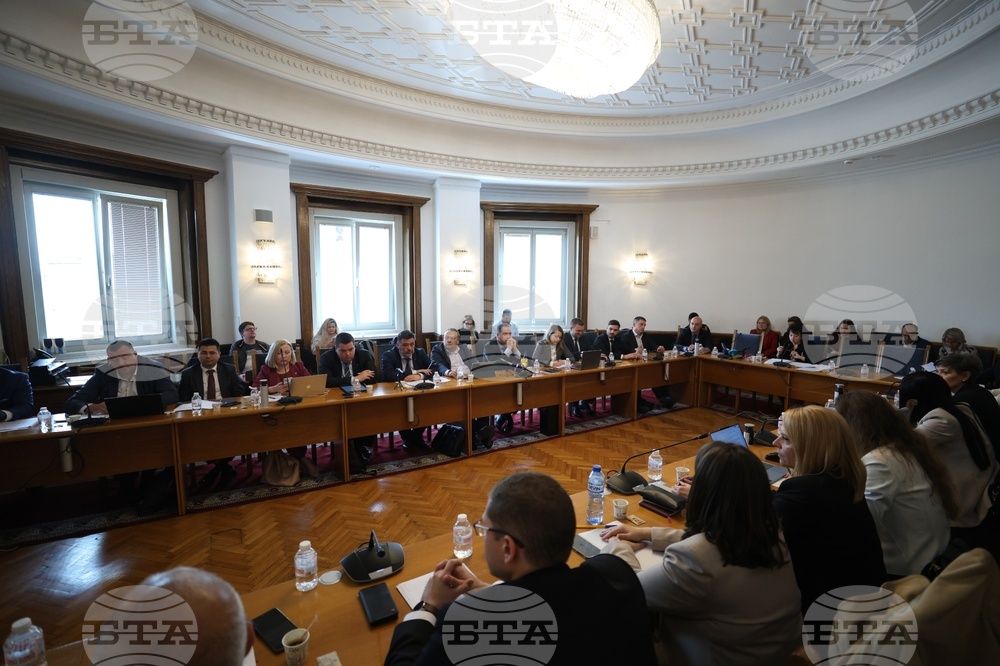
Bulgaria's National Assembly Ad Hoc Committee on Legal Affairs on Tuesday approved at first reading three bills amending the Judicial System Act.
PB Version
One bill, tabled on Monday by Olga Borisova and 21 other MPs of Progressive Bulgaria (PB), passed unanimously by 23 votes in favour.
The purpose of the revisions is to rigorize safeguards against the concentration of influence within the judiciary and reform the procedures for selecting members of the Supreme Judicial Council (SJC) and its Inspectorate.
The draft legislation introduces a "cooling-off rule", according to which persons who have been presidents or vice presidents of the Supreme Administrative Court (SAC) or the Supreme Court of Cassation (SCC) or prosecutors general or deputy prosecutors general, as well as acting office holders, over the last seven years would be ineligible for SJC membership. The measure would significantly narrow eligibility for senior magistrates, although some exceptions apply, such as the current SCC president, who is a member ex officio.
The minister of justice would be empowered to contest instruments and decisions issued by the SJC Plenum and either of its chambers (Judges and Prosecutors) that would suspend their enforcement.
Supreme Judicial Council (SJC) members whose term of office has expired more than a year earlier would be barred from voting on long-term decisions (appointments, promotions, and transfers of magistrates, as well as changes to judicial leadership), except where there is a justified need.
The draft seeks to ensure that future appointments to the SJC and its Inspectorate are based on transparent, objective, and predictable criteria, including professional qualifications, experience, public reputation, and adherence to judicial ethics. New rules on ascertaining that candidates for SJC members possess the high professional standing and moral integrity required for holding such office are proposed. Parliament would first adopt the rules for assessing candidates before proceeding with the elections.
The SJC would be required to organize elections for its professional quota (eleven members, rendered up by the judicial authorities) within one month after the amending law enters into force. Voting would be conducted by paper ballots at regional court locations - a provision that has raised some magistrates' concerns about potential risks to balloting secrecy in smaller jurisdictions.
Just as before, only MPs would be able to nominate candidates for the SJC and its Inspectorate, although they may endorse individuals proposed by legal academia, professional bodies, or civil organizations. The pool of eligible candidates would be broadened to include university lecturers.
The SJC Judges Chamber would be required to review the legality of judicial secondments to the SAC and potentially revoke irregular assignments. The SJC plenum would be competent to appoint acting SAC and SCC president and an acting prosecutor general to serve for a maximum six-month period.
The draft cancels earlier plans to expand the roster of SAC judges, arguing that Bulgaria already has one of the highest numbers of supreme court judges in Europe and that the increase was unjustified.
CC and DB Bills
The Ad Hoc Committee backed two other bills amending the Judicial System Act, tabled by Velislav Velichkov of Continue the Change (CC) and a group of MPs and by Nadejda Yordanova of Democratic Bulgaria (DB) and a group of MPs. The vote was 21-2, with Hamid Hamid and Kalin Stoyanov of the Movement for Rights and Freedoms (MRF) voting against.
Just as PB's, both the CC's and DB's bills would bar SJC members with expired terms from voting on personnel changes or taking long-term decisions, but unlike PB, they do not provide for any exception.
CC proposes requiring candidates for SJC membership to have proven, rather than presumed, moral integrity, as current law provides. One member of the SJC Judges Chamber would be elected by the Union of Jurists in Bulgaria and another by the General Assembly of Lawyers in Bulgaria. One member of the SJC Prosecutors Chamber would be elected by the Academic Council of the St Kliment Ohridski University of Sofia, and another by the Bulgarian Academy of Sciences.
DB proposes that SJC members elected by the National Assembly be nominated by MPs, the Supreme Bar Council, and law faculties or equivalent units at higher education institutions ranked in the top three in the Ministry of Education and Science's rating system for Bulgarian higher schools in the field of law for the relevant year.
The Committee Debate
Raya Nazaryan MP of GERB-UDF: Most of the provisions need fine-tuning and more time should be allowed before the bill comes up for second reading, with a working group to be set up to include all competent authorities.
Nadejda Yordanova MP of DB: The amendments under which the National Assembly will adopt rules on the election of members of the SJC and the SJC Inspectorate need some further consideration, but this could be addressed by the Committee before the second reading.
Stoyu Stoev MP of CC: Voting at district courts must be conducted by paper ballots, as the electronic voting system has not been certified for years. It would be appropriate to use the voting machines provided for in the Election Code.
Peter Petrov MP of Vazrazhdane: The conditions for electing SJC members need to be streamlined.
Lyubomir Talev of the Justice Ministry's Council on Legislation Directorate: I support all three bills. The PB bill offers a balanced solution for SJC entities with expired terms without blocking the system.
SCC Vice President Mimi Furnadzhieva: SCC President Galina Zaharova supports the need for an assessment of professional standing and moral integrity. The way members are elected should be changed.
Acting SAC President Lyubomir Gaydov: I support all three bills.
Desislava Popkoleva of the Bulgarian Judges Association: PB's clarification on "justified need" in the proposal concerning an SJC whose term expired more than a year earlier is too convoluted and open to broad interpretation.
During the meeting, it emerged that opinions had been received from the SCC President and the Association of Independent Advocates, both backing the bills presented.
Comments to Media before and after Committee Meeting
Raya Nazaryan MP of GERB-UDF: GERB–UDF will support all three bills. The parliamentary group plans to submit modifications before the bills come up for a second reading while keeping the objectives proposed by the sponsors. The concerns regard the wording of the provisions rather than their overall intent. All three bills contain constructive proposals aimed at ensuring a transparent procedure for the election of members of the SJC and its Inspectorate. The proposals also seek to regulate how the current Council should continue functioning until a new body is elected. The consideration of the draft legislation is timely, even by an ad hoc committee. The key priority is establishing a procedure to enable a proper assessment of candidates' professional standing and moral integrity. It is our responsibility to determine how candidates will be heard and to select the most competent individuals. The legislation concerning the sitting SJC members should not restrict the institution to the point of hindering its functioning. The time allowed between the tabling of the amending bills and the convening of the Committee was too short to consult legal professionals. We hope such expert opinions will be available before the second reading, so that we can work with to-the-point wordings and avoid any interference by the legislative branch in the independence of the judiciary.
Ad Hoc Committee on Legal Affairs Chair Yanka Tyankova MP of PB: The meeting was extremely constructive and positive. The right tone was set. We will make every effort to take into account the proposals made very quickly but reasonably, so that they could be properly shaped for debate in time for the the second reading. The draft legislation has incurred well-founded criticism and, just like any bill drafted on such short notice, is subject to review. In any case, the terms and definitions must be streamlined. The SJC lineup must be renewed by late summer or early autumn.
Olga Borisova MP of PB: With regard to the judicial reform, PB targets a transformation of justice into a fair system ensuring the rule of law and providing a predictable playing field for individuals and businesses. The bill amending the Judicial System Act we have presented is the first step in this direction.
Dimitar Petrov MP of PB: The curtailment of the SJC's powers is consistent with constitutional case-law, and that the exception would be triggered in case the functioning of the judicial system is at risk. Within our four-year term, we will move further amendments to the Judicial System Act intended to improve the operation of the SJC.
/LG/
news.modal.header
news.modal.text