site.btaUPDATED Legal Affairs Committee Backs Judicial System Act Changes
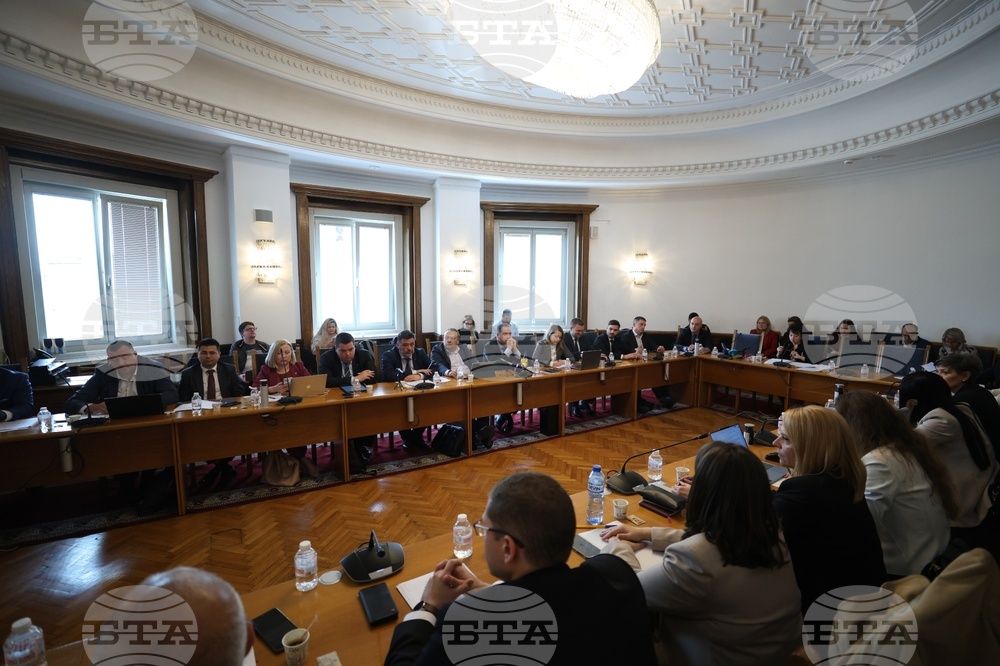
Parliament's ad hoc legal affairs committee on Tuesday approved at first reading three bills amending the Judicial System Act. One passed unanimously, while the other two were backed by 21 votes to two.
The two bills, backed by 21 votes, were tabled by Velislav Velichkov of Continue the Change (CC) and a group of MPs, and by Nadejda Iordanova of Democratic Bulgaria (DB) and a group of MPs. The two votes against were cast by Hamid Hamid and Kalin Stoyanov of the Movement for Rights and Freedoms (MRF). A bill tabled by Olga Borisova of Progressive Bulgaria (PB) and a group of MPs was unanimously approved with 23 votes in favour.
All three bills would bar Supreme Judicial Council (SJC) members with expired terms from voting on personnel changes or taking long-term decisions. The PB amendments differ by providing that an SJC whose term expired more than a year earlier may put forward such proposals only when absolutely necessary.
CC proposes requiring candidates for SJC membership to have proven, rather than presumed, moral integrity, as current law provides. It also proposes that one member of the SJC Judges Chamber be elected by the Union of Jurists in Bulgaria (UJB) and another by the General Assembly of Attorneys in Bulgaria. One member of the SJC Prosecutors Chamber would be elected by the Academic Council of Sofia University “St. Kliment Ohridski” and another by the Bulgarian Academy of Sciences (BAS).
DB proposes that SJC members elected by the National Assembly be nominated by MPs, the Supreme Bar Council, and law faculties or equivalent units at higher education institutions ranked in the top three in the Ministry of Education and Science’s rating system for Bulgarian higher education institutions in the field of law for the relevant year.
PB proposes barring anyone who has served in the past seven years as chair of the Supreme Administrative Court (SAC), chair of the Supreme Court of Cassation (SCC) or Prosecutor General from election to the SJC. It also proposes allowing the Minister of Justice to challenge SJC acts and decisions, a move that could suspend their implementation.
During the debates, Elena Noneva of PB said that the three bills are currently being considered at first reading and should be supported.
Raya Nazaryan of GERB-UDF said most of the texts should be refined and that a longer period should be allowed between first and second reading, with a working group set up to include all competent authorities.
According to Nadejda Iordanova, the amendments under which the National Assembly will adopt rules for the election of members of the SJC and the Inspectorate to the SJC (ISJC) need some further consideration, but this could be resolved by the committee between first and second reading.
Stoyu Stoev of CC expressed the view that voting at district courts must be conducted with paper ballots, as the voting system has not been certified for years. In his view, it would be appropriate to use the voting machines provided for in the Election Code.
Peter Petrov of Vazrazhdane said the conditions for electing SJC members need to be refined.
During the meeting, it emerged that opinions had been received from the SCC President and the Association of Independent Advocates, both supporting the bills presented.
Lyubomir Talev of the Council on Legislation Directorate at the Ministry of Justice said he supported all three bills, adding that the PB bill offers a balanced solution for SJC bodies with expired terms without blocking the system.
SCC Deputy President Mimi Furnadzhieva said the court's President, Galina Zaharova, supports the need for an assessment of professional and moral qualities and that the way members are elected should be changed.
Acting SAC President Lyubomir Gaydov said he supported all three bills.
Desislava Popkoleva of the Bulgarian Judges Association said PB's clarification on absolute necessity in the proposal concerning an SJC whose term expired more than a year earlier is too convoluted and open to broad interpretation.
Representatives of almost all parliamentary groups that expressed an opinion on the PB bill spoke in a similar vein on that clarification.
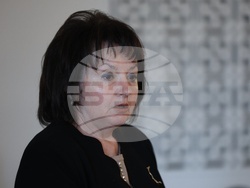
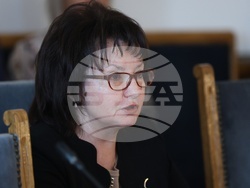
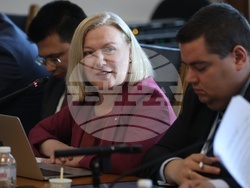
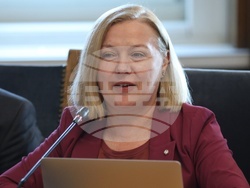
At the beginning of the meeting, committee chair Yanka Tyankova of PB addressed the members and expressed hope that political rhetoric would not carry over into the committee and would give way to the high ethical and moral qualities of each of its members.
Speaking to the media after the meeting, she said it had been extremely constructive and positive and that the right tone had been set. "We will make every effort to take into account the proposals made very quickly but reasonably, so that between first and second reading they can be put in good shape for discussion. This is a very exceptional situation," Yanka Tyankova added.
/IV/
Additional

news.modal.image.header
news.modal.image.text
news.modal.download.header
news.modal.download.text
news.modal.header
news.modal.text