site.btaBulgaria Looks Forward to 2026 as Year of Cultural Tourism, Turning Point for Mountain Tourism
Bulgaria expects 2026 to be a year of cultural tourism and a turning point for mountain tourism, according to statements already made by outgoing Tourism Minister Miroslav Borshosh. The State’s efforts are focused on positioning Bulgaria as a year-round tourism destination and moving beyond the label of being a cheap destination. The emphasis will be on domestic tourism, but work on strategic markets will continue in 2026 as well. Borshosh outlined these priorities over the past year, during which the sector developed for 11 months under a regular government.
According to a forecast by the World Travel & Tourism Council (WTTC), the contribution of the tourism sector to Bulgaria’s gross domestic product (GDP) is expected to reach 8.4% in 2025, Deputy Tourism Minister Irena Georgieva said in October. “We very much hope to achieve this increase compared to the previously reported share of GDP, which was just under 7%,” she added at the time.
Types of tourism prioritised for development in 2026
The Ministry of Tourism has declared 2026 the Year of Cultural Tourism. Among the reasons for selecting cultural tourism, Deputy Minister Georgieva said that it extends the season and stimulates year-round travel, creates higher added value by attracting tourists with greater engagement and interest in local communities, supports balanced regional development by unlocking local tourism potential, and responds to the global trend towards authentic, meaningful and sustainable tourism experiences. Bulgaria has one of the richest cultural heritages in Europe – ranging from prehistoric sites and Thracian treasures to ancient and medieval cities, as well as living traditions, festivals, crafts and cultural diversity.
In 2026, Bulgaria will focus on a range of specialised forms of tourism.
Cultural and historical tourism will serve as the foundation for extending the season and attracting higher-spending tourists through historical, festival and craft routes.
Health tourism (medical, SPA and wellness) has the potential to generate more than EUR 140 mln in annual added value, with priority areas including dental care, reproductive health and rehabilitation. Bulgaria has the potential to achieve annual gross value added of over EUR 140 mln from around 22,000 foreigners visiting the country for medical tourism, according to a study by a working group initiated by Borshosh to develop this segment, presented in October.
For the first time, Bulgaria was placed on the map of historic thermal towns with the membership of Hisarya in the European Historic Thermal Towns Association (EHTTA). Hisarya became the first Bulgarian town to join the association, Mayor of Hisarya Municipality Iva Valcheva announced in early September during the 12th Annual Congress of the Bulgarian Union of Balneology and SPA Tourism.
Also last year, Bulgaria received international recognition with the election of Siyka Katsarova, President of the Bulgarian Association of Balneology and SPA Tourism (BUBSPA), as President of the European Spas Association (ESPA). “If Bulgaria accepts that tourism, and health tourism in particular, is a national priority, as is the case in Croatia, we have every chance to make the most of the opportunity provided by my presidency of ESPA,” Katsarova told the Bulgarian News Agency.
Wine and gastronomic tourism will also be among the priorities in 2026, following the integration in 2025 of wine production with cultural routes under the Iter Vitis quality label. This became possible after Bulgaria joined one of the Council of Europe’s cultural routes - “The Wine Route” (Iter Vitis) - in November, becoming its 25th member. The country’s hosting of the 9th Global Conference on Wine Tourism of the UN World Tourism Organization received wide international attention. “I believe we rose to the occasion by hosting this global conference,” Georgieva said, noting that around 300 representatives from 31 countries took part, including distant countries such as Argentina and Chile. Foreign participants numbered 115, while on the Bulgarian side interest was shown by both wine professionals and experts in the field of wine tourism. In September, Tourism Minister Miroslav Borshosh presented the launch of the national campaign “Follow the Wine Route” (Wine Leads the Way), aimed at promoting wine tourism in Bulgaria, during an event held at BTA’s National Press Club in Sofia.
Event and congress tourism are among the other specialized forms of tourism that Bulgaria will prioritize in 2026. The development of festivals and major sporting events, such as the 2026 Volleyball World Championship, is expected to generate a significant economic effect. Bulgarian Volleyball Federation President Lyubomir Ganev outlined the economic contribution and impact of hosting major volleyball events in Bulgaria in November, focusing on the 2023 Men’s European Volleyball Championship and the upcoming event in Sofia in 2026. For the forthcoming championship, he said the expected economic effect would exceed EUR 20 mln for Bulgaria, the city and the region, noting that more than EUR 2 mln of this amount would be provided by the federation. More than 10,000 foreign tourists are expected to visit Sofia for the event.
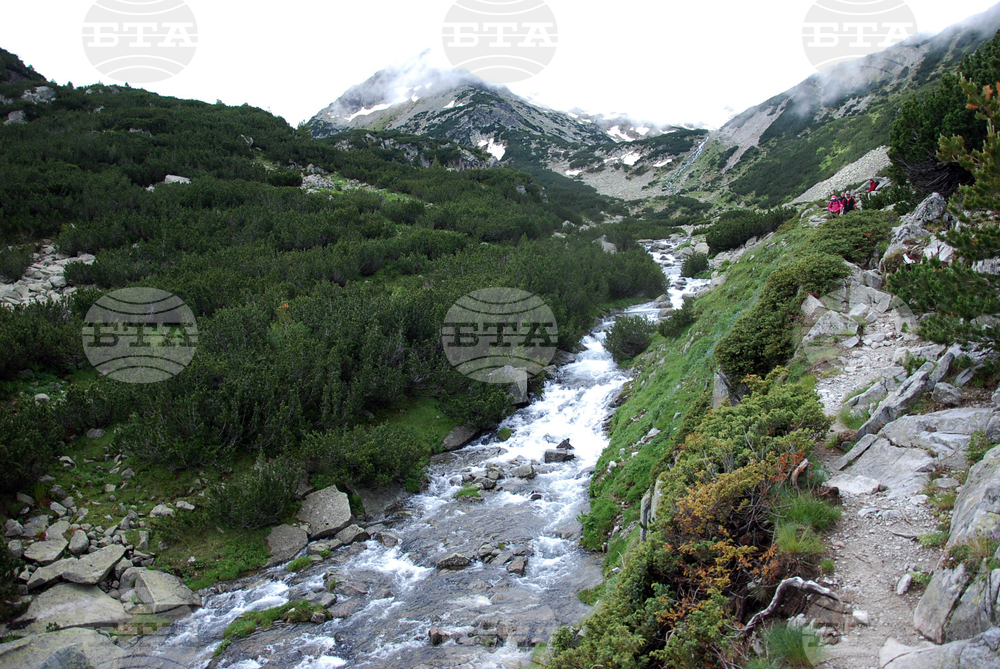
Bulgaria will also focus on transforming mountain tourism into a year-round activity, with the aim of moving away from purely ski tourism towards a four-season model that includes mountain biking and climate therapy. This topic was also discussed at the latest BTA forum “BG Tourism – Winter 2025/2026”, held in December in Pamporovo, with a main focus on the accessibility of Bulgarian mountain tourism, including the need to build new ski runs and modern facilities. Borshosh described 2026 as a turning point for Bulgarian mountain tourism. He said the country would like to compare itself with countries such as Italy, France, Austria and Switzerland. “None of these countries has fewer than 5,000 kilometres of pistes. The Bulgarian state, Bulgarian mountains and Bulgarian municipalities do not even have 200. You can see the scale of the difference,” the Minister commented at the time. The situation is similar in terms of the number of facilities that form part of the infrastructure making the mountains accessible. “At the moment, Bulgarian mountains are so limited in terms of access that the entire flow is handled by cars and buses. This makes Bulgarian mountains completely inaccessible and, overall, halts their development as a four-season destination,” the Minister said in Pamporovo.
Pilgrimage tourism and the development of routes to spiritual shrines and monasteries, which are seeing sustained annual growth in tourist interest, will also be among the highlights of 2026. In June, Tourism Minister Miroslav Borshosh took part in the first national conference dedicated to pilgrimage tourism in Bulgaria. The event also presented a new edition of a guidebook devoted to the country’s most significant Christian routes. The publication covers ten pilgrimage destinations, including spiritual and cultural landmarks such as monasteries, churches and sites of historical significance for the Christian faith in Bulgaria, including Sofia and the Sofia Holy Mountain, the Thracian Plain and the Rhodopes, the Rose Valley, Northwestern Bulgaria and others. The guide draws attention to opportunities for pilgrimage and cultural-spiritual travel, combining historical information with tourist routes. Minister Borshosh stressed that pilgrimage tourism in Bulgaria is developing at a steady rate of between 5% and 10% annually and represents not only religious but also cultural travel, meeting contemporary tourists’ demand for meaningful experiences.
The development of luxury tourism envisages positioning Bulgaria as a boutique destination by combining five-star comfort with authentic experiences. According to the Ministry of Tourism, Bulgaria’s potential to establish itself as a luxury tourism destination lies in an integrated approach – golf and SPA, wine and culture, yachting and gourmet experiences. While the Maldives, Bali and Dubai are already symbols of high-end tourism, Bulgaria has the potential to become a boutique destination in Southeast Europe, offering luxury woven into Bulgarian culture, identity and hospitality, Deputy Tourism Minister Irena Georgieva said in October. It was reported in October that during the first nine months of 2025, there were more than 1.2 million overnight stays in five-star and boutique accommodation establishments in the country, representing an 11% increase compared with the same period last year.
/MR/
news.modal.header
news.modal.text