site.btaSofia Hosts Green Transition Forum 6.0 Dedicated to Energy, Transport, AI
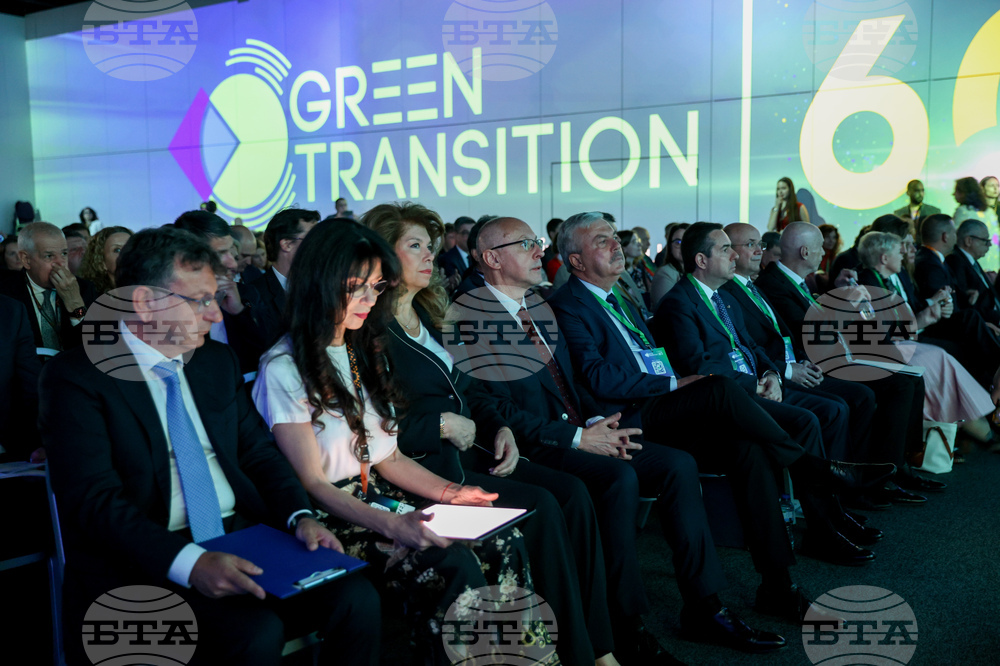
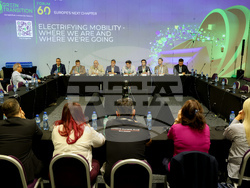
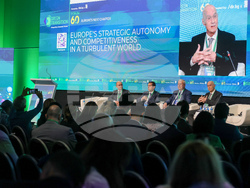
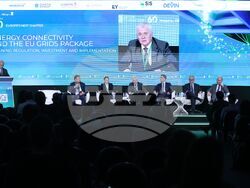
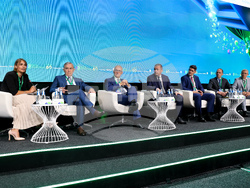
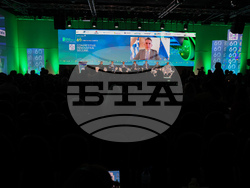
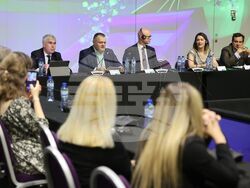
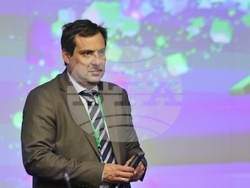
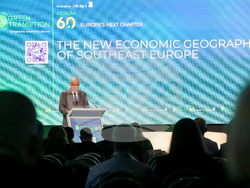
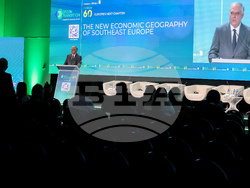
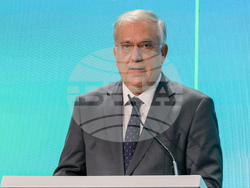
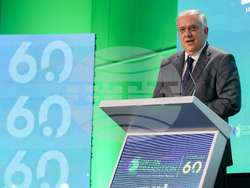
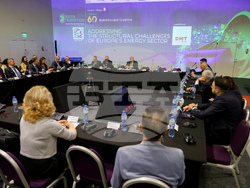
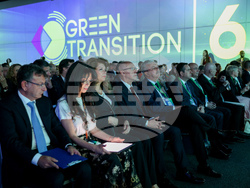
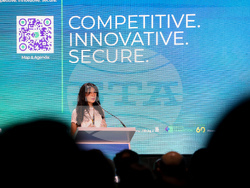
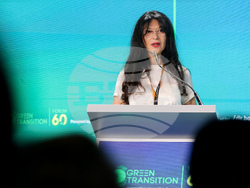
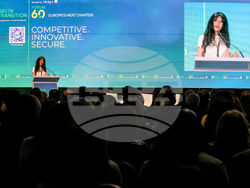
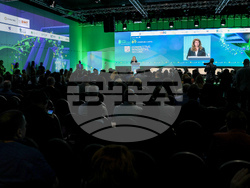
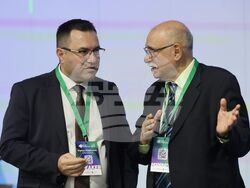
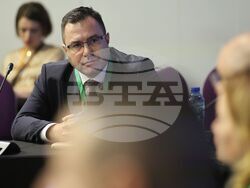
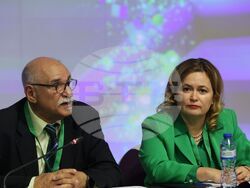
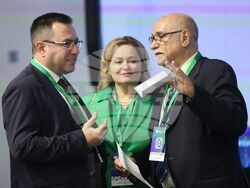
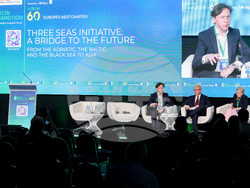
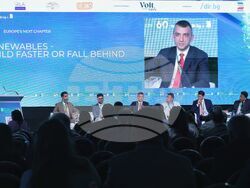
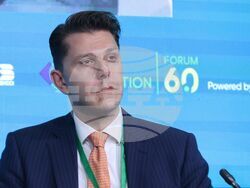
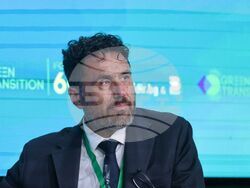
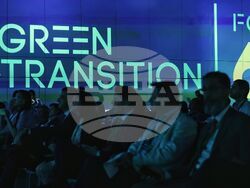
The Green Transition Forum 6.0 opened at the Sofia Event Center here on Monday. The event, organized by Dir.bg with BTA as media partner, aims to launch what will become known as the Sofia Initiative. This coordinated international call for a radical acceleration of structural reforms across the European Union will be signed during the sixth edition of the largest platform for discussions on sustainable development and economic transformation in Central and Eastern Europe.
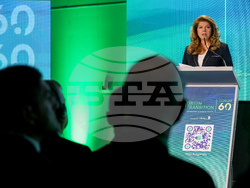
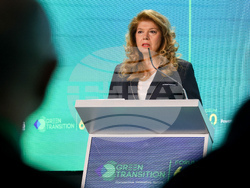
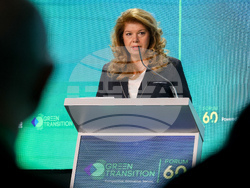
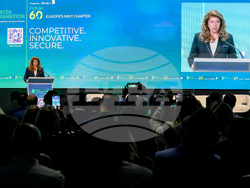
Speaking at the forum, President Iliana Iotova said that Bulgaria can help build a competitive Europe, and unity is needed more than ever. On the idea of a two-speed Europe, Iotova said it may seem a convenient mechanism for faster decision-making, but in the long term, it risks political stratification, regional blocs and new invisible borders inside the Union. The EU was not created to rank member states as first and second class, she said, adding that Europe's greatest strength is its ability to turn differences into a shared direction.
Energy
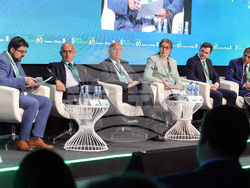
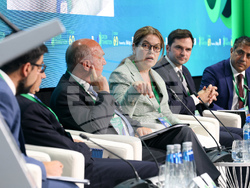
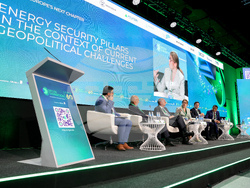
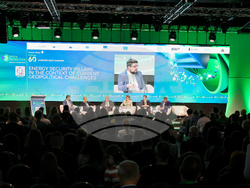
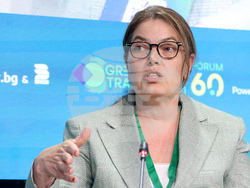
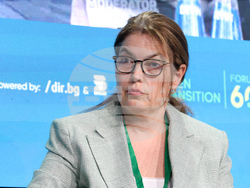
Energy Minister Iva Petrova said that structural diversification is important in order to ensure energy security in Europe. She stated that structural diversification can be achieved through reliable partners and interconnected infrastructure and added that our region is an excellent example of such cooperation, citing the Vertical Gas Corridor as an example. The Minister said that the immediate risks to energy security are not so much related to supply disruptions but rather to market risks.
Kozloduy NPP - New Builds Executive Director Petyo Ivanov said that the project to build units 7 and 8 of the Kozloduy Nuclear Power Plant has been the largest in this region in the past 50 years. He noted that Bulgaria is acquiring new know-how that will facilitate the transfer from technology from Russia to the AP1000.
Ivan Pironkov, Westinghouse's regional manager for Bulgaria, said that the company is actively working with Kozloduy NPP - New Builds to develop the project's construction plan. The project is quite advanced, and we are nearing the final result, he noted.
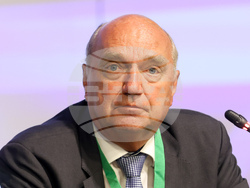
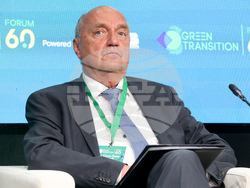
Bogomil Manchev, Chair of the Bulgarian Atomic Forum, said that the new reactors are important for Bulgaria's economy and for its baseload power supply. Manchev added that these reactors are designed for a 60-year operational life, but there is a possibility of extending that by another 20 years.
Transport
Minister of Transport and Communications Georgi Peev said that Southeast Europe's aviation is gaining importance, as the region becomes a strategic bridge between Asia, the Middle East, and Europe. Peev said that improving connectivity in Southeast Europe requires the modernization of infrastructure, enhanced system resilience, and sustained investment in human capital. He noted that efforts should focus on integrating railway lines and road networks with airports. The Minister warned that the region is experiencing a shortage of pilots, air traffic controllers, engineers, IT specialists and other professionals.
Deputy Minister of Transport and Communications Anna Natova said that her Ministry is increasingly focusing on transforming Bulgaria's ports from isolated hubs into modern intermodal logistics centres. She reported that the Ministry's main priorities are centred on connectivity, interoperability, and the integration of European transport corridors. A key objective is to create a transport system, in which different modes of transport work seamlessly together. She reported that the Transport Connectivity Programme has allocated nearly EUR 28 million for oil and gas infrastructure in ports, although discussions are ongoing about where it would be most sensible to make these investments.
Traffic at Vasil Levski Sofia Airport is growing at a rate three times higher than the European average for the 2019-2026 period, said Jesus Caballero, CEO of the airport operator SOF Connect. Traffic at the airport has increased by 24.5% during this period. He emphasized that the airport has the lowest airport fees not only in the region but also among all capital city airports in Europe, which helps ensure high competitiveness.
Economy
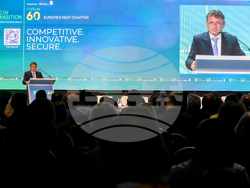
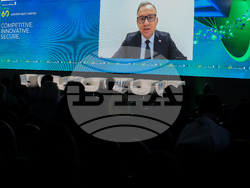
Bulgaria's gross domestic product has increased from 43% to 62% of the average level of member countries of the Organisation for Economic Co-operation and Development (OECD) since the nation joined the European Union in 2007, said OECD Secretary-General Mathias Cormann. Cormann said that while the EU single market has been a driver of growth and opportunity for decades, much of its potential remains untapped. the OECD has identified three priority areas requiring reform: removing barriers to trade and competition in the services sector, implementing the Savings and Investments Union initiative, and further developing Europe's electricity market.
Europe's initiative to boost household investment activity should be implemented in a way that benefits not only the continent's major stock exchanges but also its smaller capital markets, Bulgarian Stock Exchange (BSE) CEO Manyu Moravenov said. Moravenov said that the BSE welcomes the European Commission's initiative to establish a savings and investments union, which aims to improve the way the EU financial system channels savings into productive investment.
Artificial intelligence
Artificial intelligence will change many professions rather than erase them, Spartak Keremidchiev of the Bulgarian Academy of Sciences said. Keremidchiev said that one of the major misconceptions since the onset of the Fourth Industrial Revolution has been the assumption that the labour market will collapse, with entire professions disappearing and others becoming fully automated. He said this interpretation is clinically imprecise and represents an erroneous diagnostic framing of the issue. He noted that global challenges related to the climate, healthcare, inequality and food security will also generate new professions.
The most important issue when discussing AI is whether national education systems are prepared to equip the current and future workforce for the challenges ahead, said Zornitsa Rusinova, Chair of Bulgaria's Economic and Social Council. She warned that in the AI era, society is facing a different reality, because it has long moved beyond a predictable labour market. She said that around 10% of companies with more than 10 employees across the European Union were using AI by the end of last year, with the figure increasing by just over 3 percentage points over the previous two years. She added that neither Europe nor the wider international community currently has unified accounting standards for AI, making it difficult to assess the scale of corporate investment in its implementation.
/YV/
Additional








news.modal.image.header
news.modal.image.text
news.modal.download.header
news.modal.download.text
news.modal.header
news.modal.text