site.btaSofia Hosts Metals Conference, Experts Discuss Industrial Policy, Competitiveness
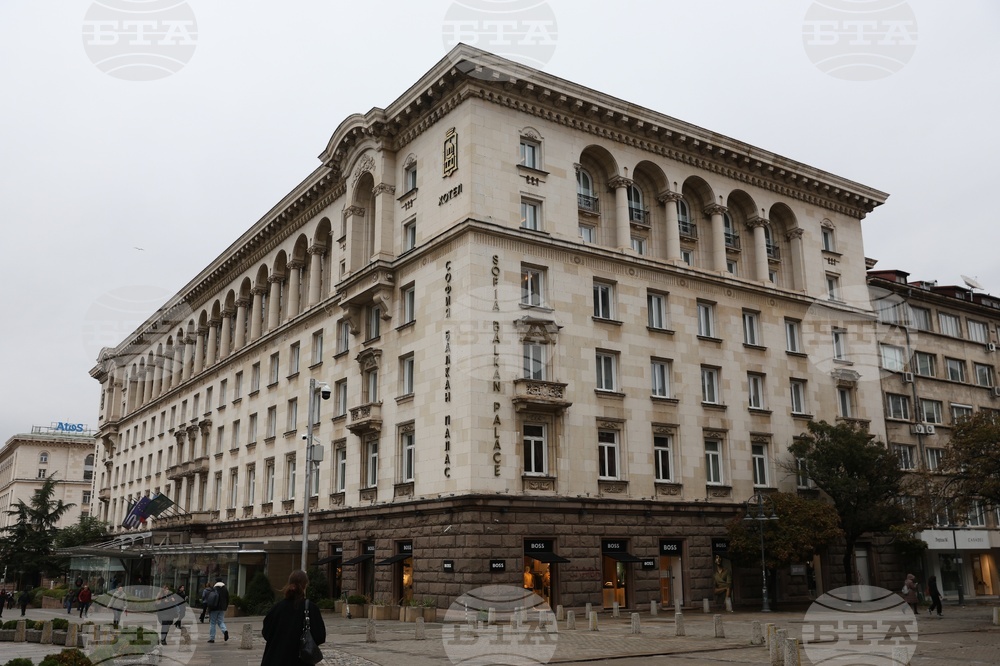
The conference "Metals as a strategic asset for EU independence and industrial leadership. Bulgaria's contribution to sustainable growth" was held on Friday in Sofia. Among the topics that were discussed were metals in the global world, the European Union's policies for industrial acceleration, competitiveness and decarbonization, Bulgaria's place on the EU industrial map, energy and industry, competitiveness and accelerated growth, regulations and regimes - reduction of administrative burdens and regulations, simplified procedures.
Deputy Minister of Energy Lyubomira Gancheva stated that Bulgaria has retained its strategic advantage in sustainable metal extraction using modern methods. According to Gancheva, the topic of the conference is timely and relevant both from the point of view of the geopolitical uncertainty we are in and the global competition. "For many years, Europe lived with the belief that if it relied only on clean technologies, this would ensure the necessary economic growth, but it became clear that current trends impose new needs," she pointed out. Gancheva believes that sustainable development cannot be achieved without the mining industry achieving sustainable development.
MEP Tsvetelina Penkova, who is a member of the Progressive Alliance of Socialists and Democrats group said that metallurgy is not a peripheral sector, but the foundation on which the competitiveness of the European Union (EU) should be built. Penkova pointed out that there are no equal conditions in the EU for different countries in terms of metallurgy. In Southeast Europe, the sector is in a more difficult situation in terms of its competitiveness, she said, adding that the lack of equal conditions is due to higher electricity prices and the lack of connectivity of the electricity transmission network. According to her, the industry will probably face difficulties in the next few months. According to her, there are several reasons for this. These include rising prices of natural gas due to geopolitical tensions, network connectivity, prices of carbon emissions, which have an impact on energy-intensive industries, as well as the global market for metals and raw materials - overproduction and unregulated imports from third countries.
Radan Kanev, MEP, a member of the European People's Party group said that heavy industry and clean technologies need to be combined, because they only make sense together. According to him, when it comes to the competitiveness of the European economy, the conflict between clean industry and traditional electro-intensive industries is artificial and economically absurd. "Clean industry is impossible without high-quality development of heavy industry. Without the production of base metals and rare metals, there can be no clean industry, and this is visible throughout Europe," Kanev pointed out. He stressed that European metallurgy must become price-competitive.
MEP Ilhan Kucuk from the Renew Europe group said that this European Parliament will insist on less bureaucracy and clear rules for legislation in order to ensure sustainability. "What is being observed is the slower pace of legislation and that the European Commission will be monitored with much greater attention," he stressed. Regarding the European Commission's Omnibus package, the MEP pointed out that this is a new approach that is being introduced in this EP and EC with the idea of many legislative acts being collapsed as a space for interaction in order to reduce administration.
/TM, YV/
news.modal.header
news.modal.text