site.btaMost Segments of Bulgarian Real Estate Market Developing Dynamically, Positive Prospects for 2026, Study Shows
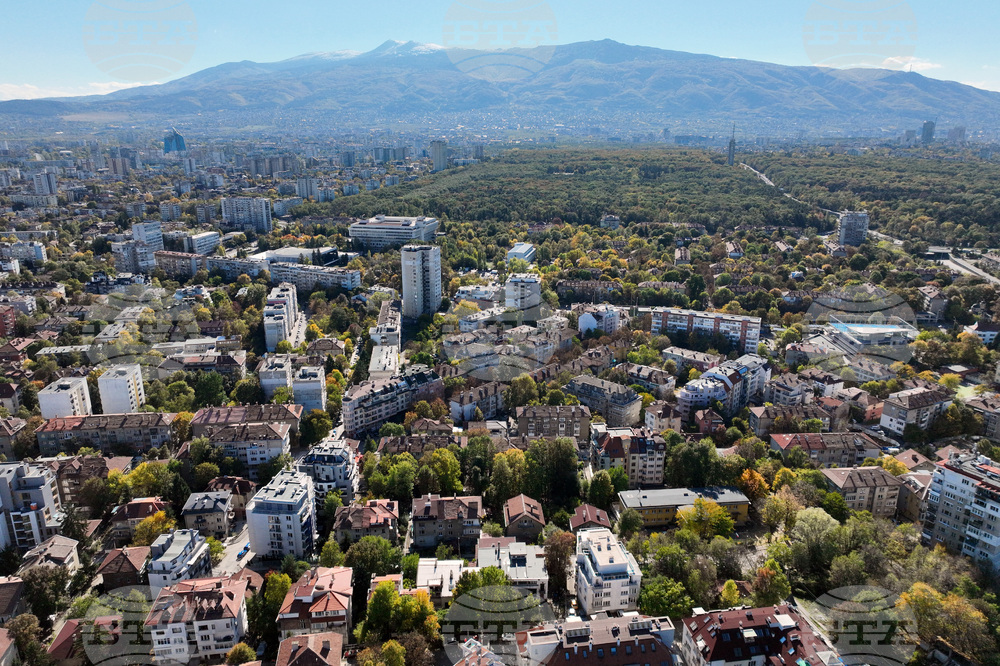
Most segments of the Bulgarian real estate market are developing dynamically, with positive prospects for 2026, a study by commercial property consultancy Cushman & Wakefield Forton, presented to the Bulgarian News Agency on Monday, shows. In the capital, market conditions are favourable for office tenants and for owners of industrial and warehouse space for lease. In addition, conditions are good for both tenants and landlords in shopping centres and retail parks across the country.
During the outgoing 2025, the dynamics of the office leasing market in Sofia remained positive, the company noted. Each quarter saw improvements in key indicators such as lease transactions and vacancy rates compared to the corresponding period of the previous year. Market conditions remain favourable for tenants. With the exception of Sofia’s central business borough, rental levels are stable.
Expectations for 2026 are that market conditions will be maintained and may even improve further in favour of tenants. Potentially, around 100,000 sq m of new office space could be delivered. This will provide additional choice and is very likely to have a moderating effect on rents, the company commented. Tenants’ focus will be on environmentally sustainable buildings in good locations, offering a variety of amenities and supporting the hybrid working model and employee retention.
Unlike office space, the pace of the industrial and logistics market in Sofia is slowing. In the second and third quarters, a year-on-year decline was reported in both newly signed lease agreements and completed projects. On the other hand, the company noted as a positive sign that projects under construction have remained virtually unchanged in both volume and number compared to the end of 2024. Market conditions are favourable for landlords, with the very limited availability of vacant space supporting rental levels.
In 2026, the company expects industry to stabilise, and with it demand for industrial and warehouse space. Potentially, just over 200,000 sq m of new space could be completed, almost half of which would be for lease. This is expected to help balance the market by increasing supply and to ease rental growth.
The market for retail space in shopping centres and retail parks across the country performed very well this year, the company highlighted. The number of newly opened stores and completed new space exceeded that of 2024, while the volume of projects under construction remained almost unchanged. By the end of the year, market conditions are good for both tenants and landlords. On the one hand, active construction has opened up new opportunities for retailers. On the other, the rapid absorption of new projects has limited vacant space and pushed rents upwards.
Expectations for 2026 are that household consumption will continue to grow, driving demand for retail space. At least 150,000 sq m of new space could be delivered, entirely in retail parks. This format will, in practice, reach parity with shopping centres in terms of floor area, ensuring the opening of many new stores and curbing the pace of rent increases.
The investment market maintained a good pace this year, the company said, forecasting that the volume of invested funds is likely to reach the level of 2024, and possibly even exceed it. Local investors, who dominated in 2025, show strong interest in office and retail properties. Since the beginning of the year, at least seven office buildings have changed ownership. One landmark transaction was the acquisition of Business Centre Bulgaria by Borika AD. Other significant deals included Building 15 in Business Park Sofia, Oscar Business Centre, and the former headquarters of First Investment Bank. At the same time, at least three retail properties acquired new owners – one on a prime shopping street, a retail park in the north-eastern part of the country, and Mall Plovdiv. Interest in hotels and logistics properties remains steady.
In 2026, the upward trend is likely to continue, the company forecasts, noting that there are already indications that the country’s accession to the euro area has increased the attention of international investors towards various categories of investment property in Bulgaria. The inflow of new foreign capital is likely to significantly boost investment volumes.
“The trajectory of the Bulgarian economy is positive. Growth is driven by strong domestic consumption and investment. Against this backdrop, the country’s real estate market is leaving behind a relatively good year, and expectations for the next one remain optimistic,” Cushman & Wakefield Forton concluded.
/TM/
news.modal.header
news.modal.text