site.btaShare of Grey Economy in Bulgaria Contracts, Industrial Capital Association Says
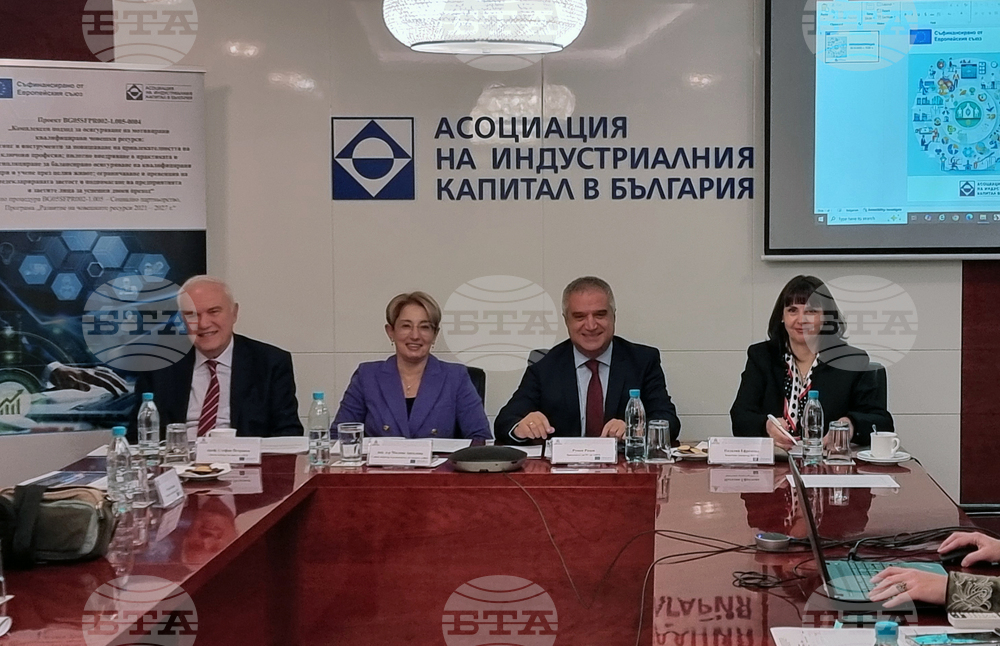
The Bulgarian Industrial Capital Association (BICA) Management Board presented to journalists the composite index "Economy in the Light" and the sub-index "Employment in the Light" for 2024 on Monday. According to Prof. Stefan Petranov, creator of the index, Bulgaria's economy continues to improve, with the share of its grey economy reaching 20–21% in 2024.
The index registered a value of 79.44 points last year, compared to 78 points in 2023. BICA has been calculating the index for the 14th consecutive year. However, a deterioration was reported in the "Employment in Light" sub-index, which covers labour relations. Last year, it was 80.21 points, compared to 82.24 points in 2023.
According to Prof. Petranov, the combination of moderate economic growth and declining inflation in 2024 has contributed to the economy "brightening" further. He stressed that no radical new reforms aimed directly at combating the grey economy had been undertaken during the year, but a number of legislative acts adopted in previous years had been implemented more effectively and with increased control. The professor also noted the beginnings of structural transformation through various government programmes for digitization, technological modernization, innovation, and competitiveness, which, in principle, limit the grey economy as they strengthen the formal sector, increase transparency, and make it more difficult to conceal activities. He also recalled the practice during the COVID-19 pandemic of providing state support only to the formal economy and expressed hope that this approach would continue.
At the same time, Petranov pointed out that the administrative increase in the minimum wage has led to an increase in the practice of "envelope wages", as reflected by the decline in the "Declared Employment" sub-index. Although the share of the grey economy has fallen to its lowest level since records began, it remains relatively high compared to other European Union countries. He added that this is due to persistent structural factors, including state intervention in the labour market through the minimum wage and minimum social security income, labour shortages, and pressure from rising labour costs, especially in sectors such as construction, services, and agriculture.
Prof. Petranov clarified that the BICA does not directly study the grey economy in the EU and told BTA that, according to studies by other authors, the average size of the grey economy in the European Union is between 11 and 13% in different years. The countries with the best performance in this regard are Austria, the Netherlands, the United Kingdom, and Denmark. In these countries, the shadow economy is estimated to account for around 7–8% of GDP. He noted that, since the BICA began its research in 2010, Bulgaria's grey economy has accounted for 37%, whereas in the 1990s, according to other authors, it accounted for over 50%.
BICA Management Board Chair Rumen Radev stated that, despite certain public attitudes, the Bulgarian economy is moving towards greater transparency with reported improved tax and excise duty collection, greater control and a growing proportion of cashless payments. He added that, in 2024, the BICA's activities in combatting the grey economy and undeclared employment were recognized as best practice by the European Labour Authority. Commenting on public discontent, Radev noted that people were most dissatisfied with "the insensitive political imposition of a governance model which, even if it pursues higher standards, provokes and disappoints people because it seems that their problems are not being heard". He added that analyses by the BICA show that some young people who, according to statistics, are neither working nor studying are in fact participating in the labour market through unregulated practices, making them particularly vulnerable to the grey economy.
Deputy Labour and Social Policy Minister Natalia Efremova, said that the State has no other national instrument similar to this for measuring the grey economy and that a better standard of living can only be achieved where the level of the informal economy is as low as possible. She noted that tackling the grey economy and undeclared employment requires a set of measures, as well as a change in public attitudes and a sustained intolerance of unscrupulous practices throughout working life.
/TM/
Additional


news.modal.image.header
news.modal.image.text
news.modal.download.header
news.modal.download.text
news.modal.header
news.modal.text