site.btaRomanian Magistrates Raise Concerns Over Judicial Independence at Meeting with President Nicusor Dan
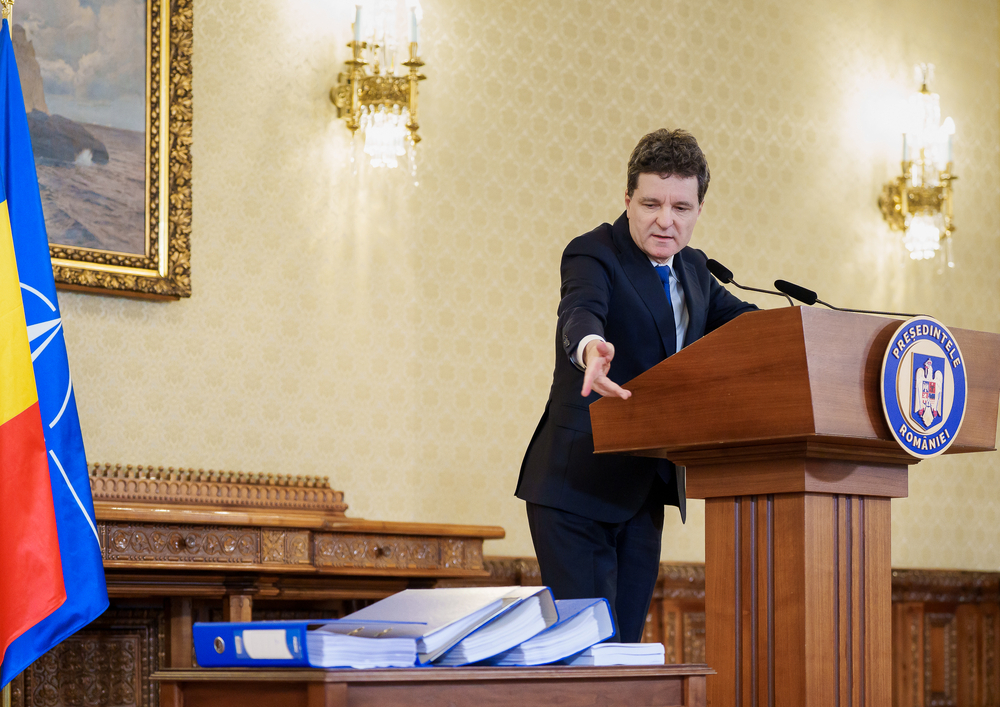
Romanian President Nicusor Dan and magistrates discussed issues in the justice system at a meeting on Monday, which lasted three and a half hours. It took place at the presidential Cotroceni Palace in Bucharest and was broadcast live on the Internet.
Although over the past few days more than 250 magistrates from 27 courts and 14 prosecutor’s offices across the country sent letters to the President outlining their criticisms, only 11 people attended the public meeting with him. Another 20 spoke with Dan afterwards. They requested separate meetings and confidential discussions without media presence, fearing possible repercussions.
At the end of the talks, Dan said: “This was an extremely useful discussion for professionals and people interested in the functioning of the system. This is the first debate. The discussions will continue. Many of the issues reported require checks, which will take time. And those who felt affected during today’s discussion will have the opportunity to respond under the same conditions.”
Improper conduct by senior officials in criminal cases, issues related to promotion procedures, or exceeding authority were some of the situations highlighted by the magistrates attending the meeting. The proposals made included a psychological test for magistrates seeking promotion, limiting the mandates of judicial inspectors, and simplifying the procedure for appointing members of the Superior Council of Magistracy.
Alexandru Oanca, who resigned as prosecutor in Gherla, Northern Romania, on November 1, said: “I do not think anything can be changed in the system in a relatively short time. We are talking about key institutions that are controlled. There are no mechanisms to remove this situation. Legislative intervention is needed. Does the political class want this intervention?”
Marius Vartic, a retired prosecutor from the National Anti-Corruption Directorate, commented: “The first trial against democratic Romania, that against dictator Nicolae Ceausescu, was a sham. Ion Iliescu and the system of followers managed to stop every substantial process through which Romanians could learn the mechanisms by which communism continuously and clearly confiscated their future and stole their freedom. This whole web of lies created networks of formal and informal power, which updated over time and made the failure of President Constantinescu possible. The arrival of Traian Basescu was marked by the acceptance of political condemnation of communism and the rehabilitation of trust in justice. President Klaus Iohannis had an unjustified response when he restricted freedoms and rights during the pandemic. There was an inadequate political and institutionalized response to the major corruption arising from the centralization of public procurement.”
A former judge stated that it had been known in advance who would lead the General Prosecutor’s Office, the National Anti-Corruption Directorate, and the Directorate for Investigating Organized Crime and Terrorism in Bucharest. “I believe the justice system looks like this because Romanian society has allowed politics to intervene in justice far too often.”
The discussion at the presidential palace was accompanied by a protest outside. A group of citizens gathered in front of the building and sang specially composed songs in the form of Christmas carolling. One of the songs went like this: “Open your eyes, Nicusor. You can do something. Protect justice. Go to the Superior Council of Magistracy and remove the sinecure positions. All we want is to see all the corrupt in prison.”
Meanwhile, deputies and senators from PEACE – Romania First initiated a petition for the removal of President Nicusor Dan from office due to “attacks on the independence of the judiciary.” Their dissatisfaction was prompted by a referendum proposed by him.
“This action represents a direct intervention in an independent constitutional body, violating its powers as provided in the Constitution and undermining the principle of separation of powers,” says the petition, addressed to the presidents of the Senate and the Chamber of Deputies (the two chambers of the Romanian parliament).
/YV/
news.modal.header
news.modal.text