site.bta2026 to Show Whether Bulgaria Becomes Active Player in Europe's New Energy Model - Analysis
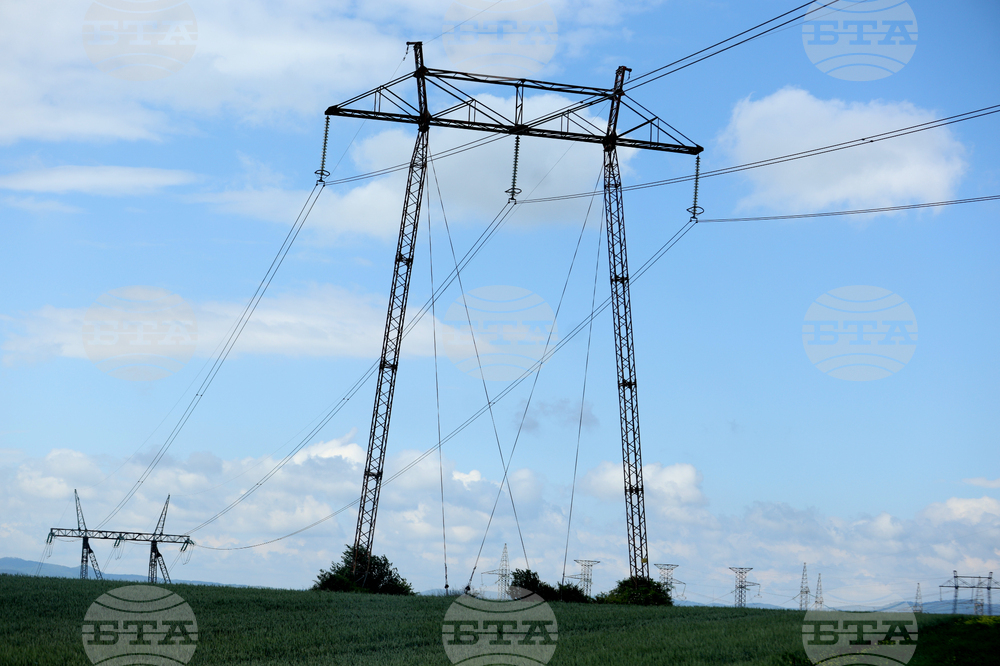
According to an analysis released on Monday by Veselin Todorov, Chair of the Association Solar Academy Bulgaria, 2026 will be a year of decisions in the energy sector, when it will become clear whether Bulgaria will seize the opportunity to position itself as an active participant in Europe's new energy and industrial architecture or remain on the periphery, being dependent on external factors and old models.
Todorov said that at the end of 2025, the Bulgarian energy and renewable energy source (RES) sector will enter a decisive phase. On the one hand, the European Union is accelerating the energy transition with new targets, regulations, and industrial policies. On the other hand, the Bulgarian system is already feeling the pressure from the rapid growth of renewable sources, limited grid capacity, and delayed market reforms.
The analysis points out that in 2023, the revised Renewable Energy Directive (RED III) came into force, raising the overall mandatory target for the share of RES in the EU to a minimum of 42.5% by 2030, with an ambition of 45%. This means almost doubling the current share of renewable energy in Europe and puts strong pressure on Member States to accelerate projects, permits, and related infrastructure.
Bulgaria has already made a national commitment to achieve a 34.1% share of RES by 2030 – a target that seems achievable on paper but in practice requires a significant acceleration in the electricity, heating, cooling and transport sectors. In the transport sector, the country has already adopted an indicative target of at least 14% of energy coming from renewable sources by 2030, which is another level of pressure on the system. Meanwhile, in 2024, the EU finalized the reform of the electricity market. The new design allows for wider use of long-term contracts and aims for more stable prices, less dependence on fossil fuels, and better protection for end users. This changes the long-term conditions for investment in RES and for industry, the analysis notes.
Added to this picture is the Net-Zero Industry Act, a regulation that sets a target for 40% of the annual volumes of net-zero technologies (solar panels, batteries, wind, hydrogen, etc.) to be produced in the EU by 2030. This is no longer just an energy issue, but an industrial policy. Bulgaria has a chance to attract some of this production, but only if it creates a predictable environment and trains personnel, according to the analysis.
The report notes that while Bulgaria has achieved significant growth in RES, especially in photovoltaics, in recent years, three clearly visible problems are emerging that will define 2026. Those are the limited grid capacity, the uncertainty surrounding the liberalization of the household market, and rising prices for households.
The Net-Zero Industry Act sets the goal of having 40% of the technologies needed for the green transition produced in the EU by 2030. This affects not only batteries, photovoltaics, and wind turbines, but also electronics, system integration, software solutions, service, and training. Key decisions will be made next year on where to locate new production facilities and industrial zones. It will become clear which countries are ready to offer qualified personnel. Bulgaria has a real advantage in terms of its geographical location, EU membership, and an already active RES market, but it also has a serious deficit—a lack of trained specialists on the necessary scale. If there is no systematic investment in the training of engineers, technicians, designers, and energy project managers, Bulgaria risks remaining a site for projects and a market for foreign technologies, instead of developing its own added value, the analysis warns.
The document concludes that for households, 2026 will not bring a sudden shock, but it will send a clear signal that the old model of cheap electricity without investment and without change is not sustainable.
/NZ/
news.modal.header
news.modal.text