site.btaCompetition Watchdog’s Sectoral Analysis Reveals Severe Structural Distortions in Bulgaria’s Agricultural Commodities Market
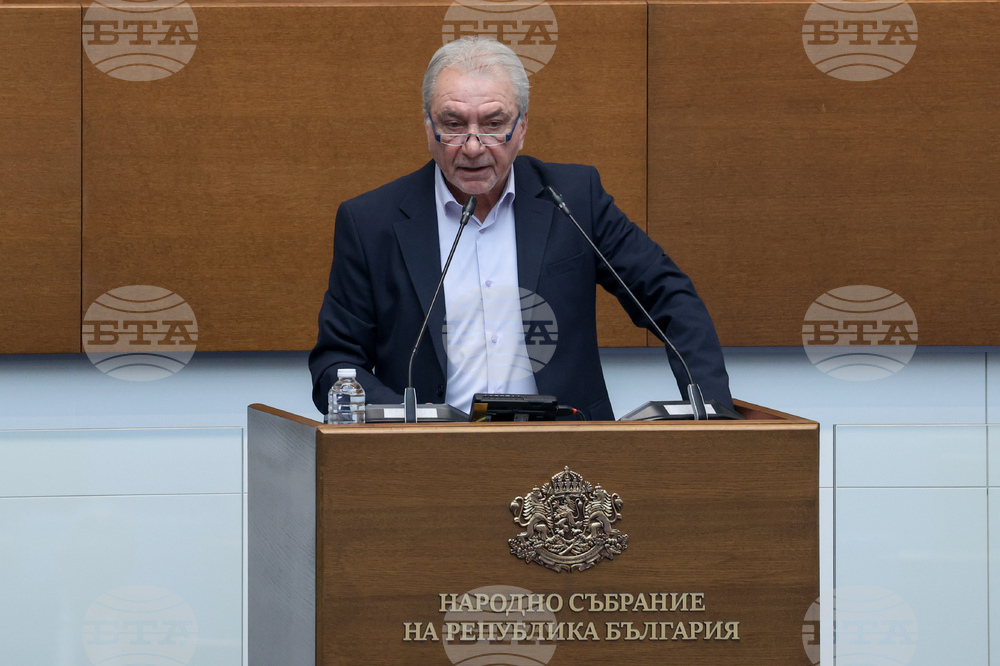
Speaking during a parliamentary hearing on the speculative increase in the prices of certain goods and services, Commission on Protection of Competition (CPC) Chair Rosen Karadimov Wednesday said that the sectoral analysis of food products, which served as the basis for the price review, had revealed severe structural distortions in Bulgaria’s agricultural commodities market. The hearing was requested by the Movement for Rights and Freedoms - New Beginning parliamentary group.
Karadimov noted that the agricultural sector is facing a crisis. “The distortions we are seeing are not the result of speculation today, but of 35 years of accumulated problems and lack of vision and management policies,” he added. Over the past four years, milk and dairy production has declined by 25%, while imports of milk and dairy products have risen by 42%. While the long-term sectoral analysis will further examine measures, the interim report focused primarily on consumer price levels, he added.
Within the CPC’s powers, the commission had two possible approaches after drawing its conclusions: enforcement-based or dialogue-based. Karadimov said that the first one would have involved ”using the full authority of the commission against some of the large retail chains.” ”That approach would have placed a burden on businesses and would not have solved the problem, because the distortions exist along the entire supply chain,” he said. ”Instead, we opted for dialogue and self-regulation, holding meetings and discussions with industry organizations, traders, processors, and retail chains,” the CPC Chair noted. As a result, he noted, large retailers in the sensitive segment of staple foods are currently acting responsibly, with price freezes, discounts, and extensive promotional campaigns in place. The CPC has found that major retailers are maintaining relatively uniform price levels across the country, which is normal practice, although purchasing power varies by region.
Karadimov said that the main conclusion of the sectoral analysis, within the commission’s remit, concerns producers rather than consumers — and the situation there is “dramatic.” He added the CPC has forwarded the full sectoral analysis to all parliamentary groups.
An analysis of what is referred to as traditional trade is also underway. In this segment, it is the supplier — not the retailer — that holds a dominant position. The commission has therefore sent more than 400 letters to small shops, seeking information on how many times suppliers have increased prices, including during December and January, Karadimov said.
The CPC has also launched a sectoral analysis of the pharmaceutical market, following numerous alerts about sharp price increases in October, November, and December last year, Karadimov added.
He stressed that these problems cannot be resolved without action by both the executive and legislative branches.
“For the first time, the entire agricultural sector — including dairy, food production, and processing industries — has stood behind the CPC,” Karadimov said.
/RY/
news.modal.header
news.modal.text