site.btaBGN 1.5 Bln Shortfall in Public Purse after Cabinet's Decision to Abandon 2026 State Budget Bill
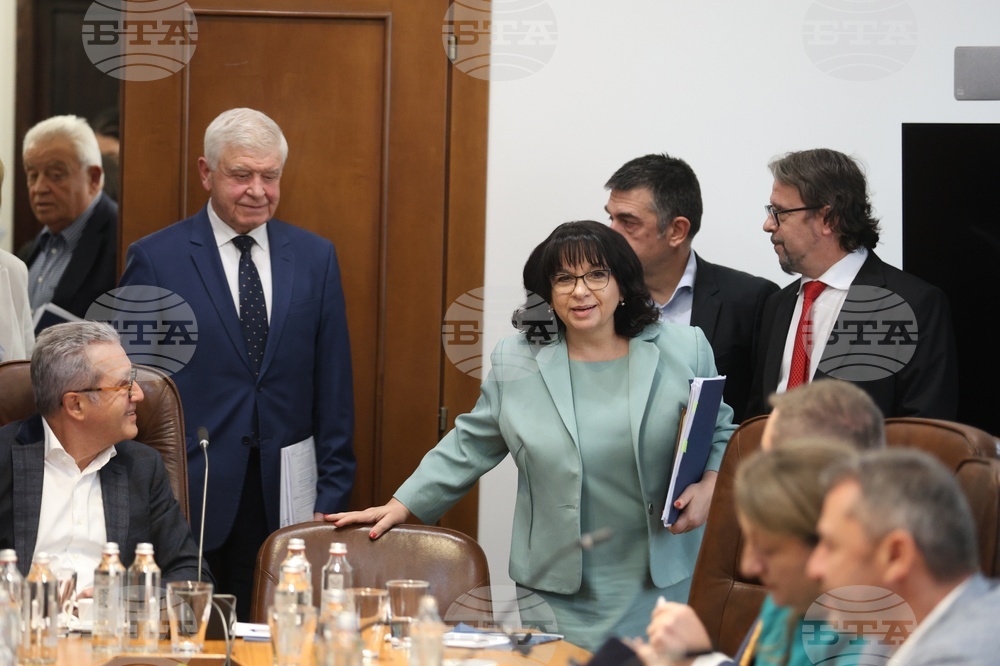
As Finance Minister Temenuzhka Petkova met with employers’ organizations and trade unions on Tuesday, it transpired that the government is trying to fill a BGN 1.5 billion shortfall in the public purse after a decision to revisit the 2026 state budget bill. "The effect of the measures that the governing majority has decided to remove from the new draft budget for 2026 will create the need to find nearly BGN 1.5 billion, which will be sought through reducing the expenditure side of the budget, including capital investments, as well as through measures on the revenue side," she said.
Petkova noted that the government-backing majority is abandoning an increase of the dividend tax to 10% from 5%, raised social security contributions (by 2 percentage points), and a requirement for businesses to use sales management software approved by the National Revenue Agency (SUPTO). It will also be proposed to drop the mechanism linking remuneration in certain sectors to the level of the average wage in the country.
"Based on the decisions taken by the governing coalition, what we are looking for is EUR 1.492 billion," Petkova said. According to her, this amount will not be compensated through new debt, but instead a review of the capital programmes of the ministries with the largest capital expenditures will be carried out, and opportunities will be sought there, along with measures on the revenue side.
Petkova emphasized that the withdrawn budget is based on policies from previous years, and that it must be taken into account that the governing coalition has been in office for only 11 months. She highlighted as government achievements the country’s entry into the eurozone and the received funding under the National Recovery and Resilience Plan.
Rumen Radev, chairman of the Association of Industrial Capital in Bulgaria and rotating chairman of the Association of Bulgarian Employers’ Organizations, presented the business sector’s demands. Among them are dropping the increase of social security contributions and the dividend tax, dropping SUPTO, as well as expanding the list of goods with elevated fiscal risk. Business representatives also propose that the increase of the maximum insurable income be set at BGN 4,430, rather than the BGN 4,600 as was proposed, and they call for abolishing any automatic wage adjustments.
Plamen Dimitrov, president of the Confederation of Independent Trade Unions in Bulgaria, stated that a distinction must be made between automatic wage adjustment and policies for increasing incomes, giving as an example the wage increases in the education sector.
He stressed that CITUB is in favor of raising the maximum insurable income to the initially proposed amount, as this increase reflects the growth in the average insurable income. A similar position was expressed by the Podkrepa Confederation of Labour.
The trade unions pointed out that income increases are something the government cannot back away from, with Plamen Dimitrov highlighting sectors such as the BDZ Passenger Services rail operator, the Sofia public transport companies, and Bulgarian Posts. Podkrepa insisted on raising unemployment benefits as well as benefits for childcare up to the age of 2.
Prime Minister Rosen Zhelyazkov also attended the meeting, emphasizing that dialogue with the social partners has been restored, noting that it is better for this to happen late than never .
"The purpose of any government that enjoys parliamentary support is to be able to propose a financial framework that corresponds to the capabilities of the economy and the needs of society," he said.
Zhelyazkov noted that the optimization of the administration is an issue under consideration.
Dobri Mitrev, the head of the Bulgarian Industrial Association, stated that employers are not calling for mass layoffs in the administration, but for reductions where there are unfilled staff positions and employees who have reached retirement age.
Petkova said in conclusion that dialogue will continue and information will be exchanged regarding the new 2026 budget draft. According to her, another meeting in the same format may take place as early as this week, and once the measures are clarified, the National Council for Tripartite Cooperation (NCTC) will convene.
At the proposal of Prime Minister Zhelyazkov, the next working meeting will be on Friday, and the NCTC will convene next week.
/MR/
news.modal.header
news.modal.text