site.btaEuropean Heritage Label Puts Provadia-Solnitsata in Europe’s Spotlight
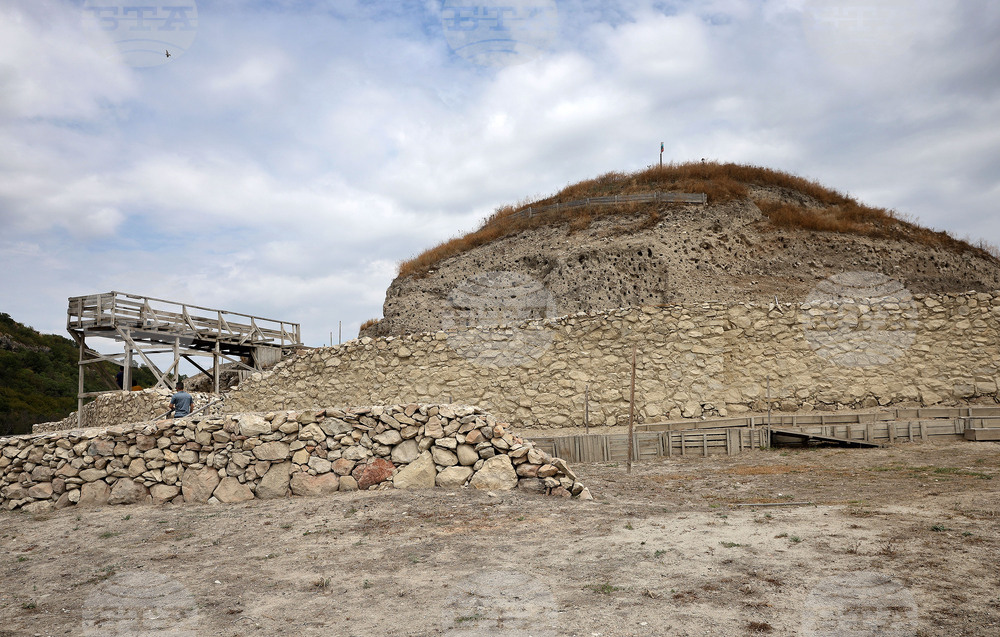
The Provadia Salt-Production and Urban Centre, Provadia-Solnitsata received the European Heritage Label for 2025, the European Commission’s website said on Wednesday.
The Bulgarian site was among 13 new recipients of the label, which recognizes places with a key role in Europe’s history and culture.
This brought the total number of sites in the network to 80. The new recipients included sites in Austria, Belgium, Czechia, Germany, Spain, Finland, France, Italy, Malta, Poland and Portugal.
“On Wednesday, 13 outstanding sites receive the prestigious European Heritage Label for 2025. From St Paul’s Catacombs in Malta to the Industrial Heritage of Varkaus in Finland, each site is a living legacy and a storyteller, capturing the essence of Europe’s rich history and evolution. They bring Europe’s shared history to life by giving people the chance to learn about Europe’s roots and to turn the complexity of our past into a living dialogue that connects cultures and empowers young people. They contribute to a deeper understanding of the experience that has shaped the European Union as we know it today,” European Commissioner for Intergenerational Fairness, Youth, Culture and Sport Micallef said.
On Wednesday, 13 outstanding sites will receive the prestigious European Heritage Label for 2025. From St Paul’s Catacombs in Malta to the Industrial Heritage of Varkaus in Finland, each site is a living legacy and a storyteller, reflecting the richness of Europe’s history and its ongoing evolution. They bring Europe’s shared past to life by enabling people to learn about Europe’s roots and by turning the complexity of our history into an ongoing dialogue that connects cultures and empowers young people. They also foster a deeper understanding of the experiences that have shaped the European Union as it is today, Micallef said.
The 13 sites were selected by a panel of independent experts from a shortlist of 21 approved candidates. The selected sites will be invited to the European Heritage Label award ceremony on 22 April in Brussels, Belgium, in the presence of Commissioner Micallef.
The Commission noted that, as a flagship initiative under the Creative Europe programme, the label recognizes sites that have made a significant contribution to the European Union’s history, culture and development. This year saw a notable rise in the number of sites awarded, with the highest number of recipients since 2014, underscoring the cultural sector’s continued importance. The label also demonstrates a commitment to public outreach and awareness-raising, with a particular focus on engaging and inspiring young people.
The National Archaeological Institute with Museum at the Bulgarian Academy of Sciences said the label highlighted the significance of the Provadia-Solnitsata archaeological complex not only at national level but also across Europe. It added that the award opened opportunities for the site to join European networks and projects, exchange good practices, and showcase its cultural heritage to international audiences. The institute said the label would foster more active protection, research and promotion of the site, and strengthen its role as a cultural bridge between past and present that inspires and educates future generations. It also noted that the distinction was an incentive to continue its work and expand public access to the unique history of Provadia-Solnitsata, while reaffirming its status as a key cultural and historical site of European significance.
The prehistoric complex of Provadia-Solnitsata, near present-day Provadia in northeastern Bulgaria, is Europe’s oldest salt-production centre, dating to 5600 to 4350 BC, and the continent’s earliest prehistoric urban centre, dating to 4700 to 4350 BC. Built on the Mirovo salt deposit, the only one in the Eastern Balkans, the complex covers about 30 hectares and comprises a production area with ritual pits, a fortified settlement with stone ramparts, a ritual field, and several necropolises. Salt was produced by evaporating brine in ceramic vessels, the earliest known evidence of this technology in Europe. The resulting salt became a strategic resource and a form of exchange, underpinning the site’s role as the first “mint” in prehistoric Europe. In later periods, the area also hosted an Early Bronze Age necropolis, a Scythian grave from the 6th century BC, the residence of a Thracian ruler dating to the 2nd to 1st century BC, and a Thracian burial mound. Archaeological research at the complex has been conducted since 2005 by an interdisciplinary team with international participation.
/RY/

news.modal.header
news.modal.text