site.btaAuthor Elizabeth Kostova to Young Writers: "Be Yourselves"
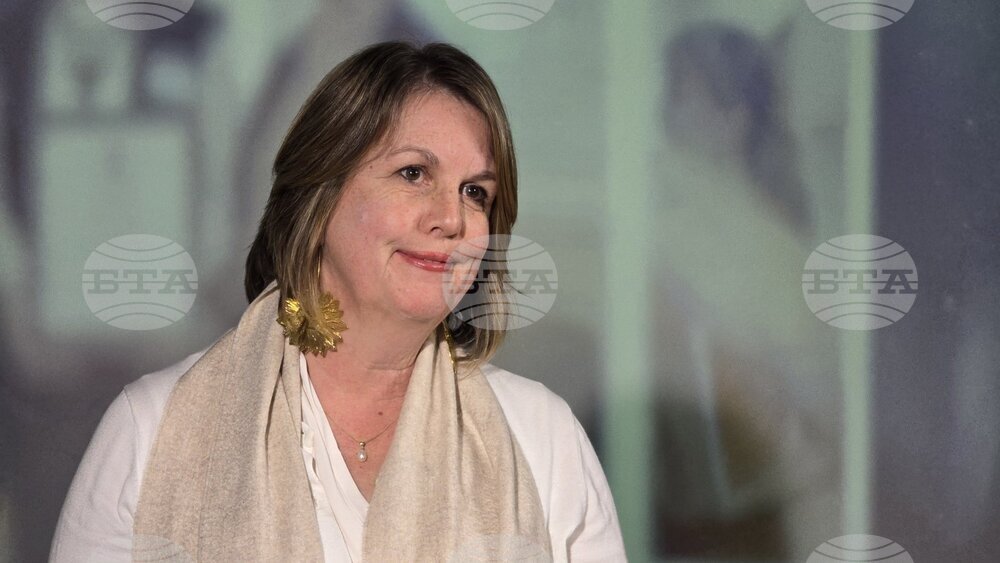
In an interview for BTA here on Wednesday, US author Elizabeth Kostova advised authors, particularly young ones, to be themselves. She was a guest at the BTA Multimedia Centre while visiting Bulgaria for the Sofia International Lit Fest and the 20th anniversary of her debut novel The Historian. She is also scheduled to meet with readers at Sofia's National Palace of Culture on December 14.
In the interview with BTA's Emanuel Smarkov, Kostova talked about her ties with Bulgaria, her creative process, and the activity of the Elizabeth Kostova Foundation in support of Bulgarian authors and translators.
"The happiest ending" is the beginning of The Historian, where Elizabeth Kostova writes about her travels through Eastern Europe and Bulgaria. Asked whether there are Bulgarian places today that inspire future storylines, she replied that there always are. She would like to do research on some Bulgarian places that are new to her. "One place that fascinates me and that I don’t really know that much about, except in a tourist way, is Plovdiv [South Central Bulgaria]. So maybe someday I will make the opportunity to learn much more there."
In her three historical novels - The Historian, The Swan Thieves, and The Shadow Land - Kostova creates strong connections but also different thematic horizons. When asked what she seeks as an author in the historical genre and how the creative process works for her, she said: “I try very hard not to care about genre. So I try to think only about what shape a particular story has for me, or what shape will really fit a particular story. Sometimes that is borrowing from a genre, like the Gothic novel of The Historian, or the novel I have just finished, Mystery Play. But sometimes it's something much more amorphous, something I have to invent for that particular story."
"I wish I could say that I have one creative process, but I have found it different with every book. So with The Historian I wrote in the order of events you read in the book, because I didn’t know it was possible to do anything different. And one day I was talking with a friend who is also a novelist, and I asked her how her work was going and what chapter she was writing in her new book. And she said: 'I don’t know. What do you mean, what chapter?' And she told me that she was writing whatever was really alive for her in the story in her mind, not necessarily in the order in which the reader would read the chapters. And I was very surprised, because I didn’t know a book could be written this way. And I wrote my second novel that way, inspired by her."
The Elizabeth Kostova Foundation has existed for over 15 years and has supported hundreds of authors, translators, and literary professionals. Asked which projects or moments she considers crucial in this work, Kostova said it was hard for her to choose after having been together for 18 years. "We have had many amazing moments, experiences. I think one of them for me was bringing Nobel Prize winner Orhan Pamuk to Sofia University, which was the biggest crowd I have ever seen outside of a demonstration in Sofia. There were about 1,000 people for 400 seats, everyone trying to get in, and it was like a rock concert. And it was wonderful to see that people were so excited about his work."
She also commented on the increasing number of translations of Bulgarian novels into English, many of them supported by the Foundation. When asked what she believes most impresses foreign readers in Bulgarian literature, she said: "Some readers of Bulgarian literature already know Bulgaria, and so they are drawn to read the books we have helped come into English. But many encounter Bulgaria for the first time through a work of literature. In my experience, they are really fascinated by two things. One, the landscapes in the books, and they often look up pictures, photographs, films. And another, Bulgaria's history, which has made such radical shifts and changes over a relatively short period by the standards of the US."
During the interview, Elizabeth Kostova often talked in Bulgarian before switching to English. Replying to the final question about her advice to young Bulgarian authors, she said in Bulgarian: "Be yourselves. That's the most important thing, especially for young writers. The most important thing, at least in my opinion, is not to try to be someone else. We all have a voice."
Elizabeth Kostova was born in Connecticut in 1964. She holds a BA in British Studies from Yale College and an MFA in creative writing from the University of Michigan, where she won Hopwood Awards in both fiction and non-fiction. Her first book, The Historian (2005), was the first debut novel in US publishing history to debut at first place on the New York Times Bestseller List, has been translated into 40 languages, and won Quill and Independent Bookseller Awards.
Her works have been published in The Best American Poetry, Michigan Quarterly Review, Mississippi Review, and Poets & Writers Magazine, among others. Kostova has taught in programmes at the University of North Carolina at Wilmington, the University of Michigan, Drexel University, the University of the Arts in Philadelphia, and Penn State University, as well as at the Sozopol Seminars on the Bulgarian Black Sea and Bear River Writers’ Conference in Northern Michigan. She reads and lectures internationally and serves on the University Council of the American University of Bulgaria in Blagoevgrad and on the Council of the University of North Carolina Press. She has received awards for service from the Bulgarian Ministry of Culture and the town of Sozopol (on the Black Sea).
She is co-founder of the Elizabeth Kostova Foundation, which provides competitive opportunities for Bulgarian writers and translators, as well as opportunities for native-English writers to travel to Bulgaria. Her love for this country was born as early as her student years, when she studies Bulgarian history and folklore. She visited Bulgaria for the first time in 1989. The idea for her debut novel was born after her trips to Bulgaria and Eastern Europe. She speaks conversational Bulgarian and often spends time in the country, especially in Sozopol, where annual writers' seminars are held. In addition to being an author, Kostova is also an active supporter of international literary dialogue and works to promote Bulgarian literature among English-speaking audiences.
Elizabeth Kostova enjoys spending time with her family and friends, has a soft spot for environmental causes, Buddhist meditation practices, and the mountains of North Carolina and Bulgaria.
/RY/

Additional


news.modal.image.header
news.modal.image.text
news.modal.download.header
news.modal.download.text
news.modal.header
news.modal.text