site.btaEuropean Council on Foreign Relations Presents Europeans’ Views on Role of EU and US
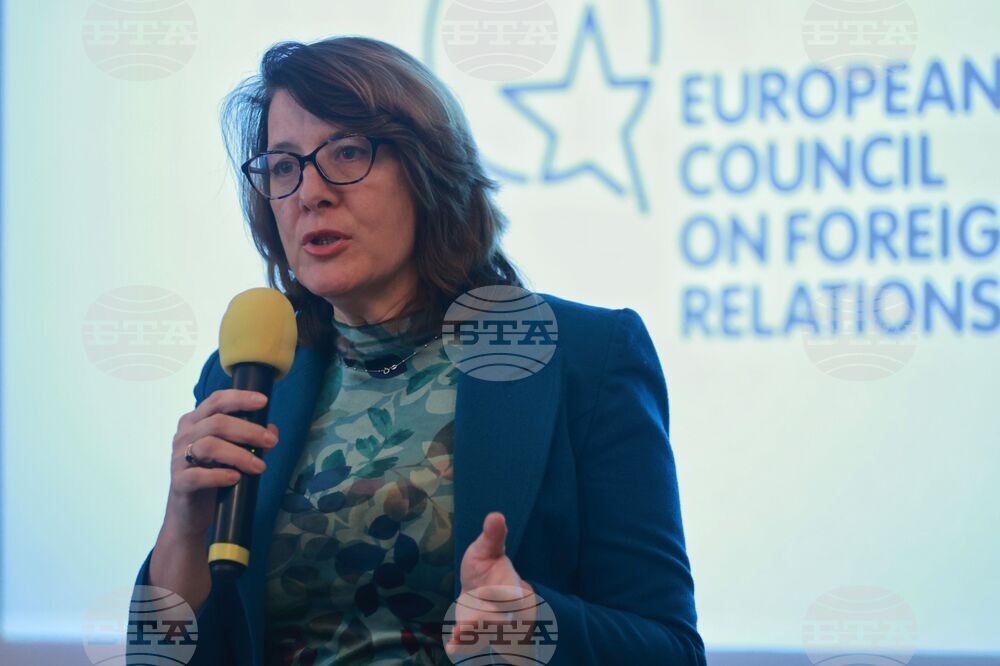
A sociological survey by the European Council on Foreign Relations (ECFR) examined Europeans’ attitudes towards the role of the European Union (EU) and the United States (US). The findings were presented at an event held in Sofia on Thursday.
The survey was conducted in November 2025 in several member states of the EU, including Bulgaria. It also covered Switzerland, Ukraine and the United Kingdom. In Bulgaria, the poll was based on a nationally representative sample of 1,020 respondents.
Each year, the ECFR conducts a large-scale survey covering at least two-thirds of European citizens. “We are very pleased that Bulgaria is included in this year’s edition”, said Vessela Tcherneva, ECFR Deputy Director. The main focus is on transatlantic relations, she explained. According to her, the findings point to growing scepticism in Europe regarding the role of the US.
“Just 16% of Europeans consider the US an ally. Most see America as a necessary partner, but also as a potential rival in certain aspects”, she said. In Bulgaria, the figure is even lower, with just 10% viewing the US as an ally, she added.
The survey data show that the majority of Bulgarians (44%) view the US as a “necessary partner” of the EU, while 10% describe America as an “ally”, 11% as an “opponent,” and 13% as a “rival”. Regarding the EU’s global role, 34% believe the EU is a great power, whereas 48% say it is not.
Tcherneva highlighted the growing support among Europeans for an increased spending on defence. She said this refers to joint defence efforts to protect against a potential attack from Russia and the risk of a new war in Europe. In many cases, Europeans are also willing to back the reintroduction of compulsory military service, with the strongest support recorded in France and Germany. Bulgaria ranks third in this respect, with notable enthusiasm for reinstating compulsory military service.
According to Tcherneva, public attitudes towards Europe’s foreign policy challenges are becoming increasingly important for decision-making institutions.
/RY, KK/
news.modal.header
news.modal.text