site.btaBulgaria Never Abstained on Freezing Russian Assets - Outgoing Foreign Minister
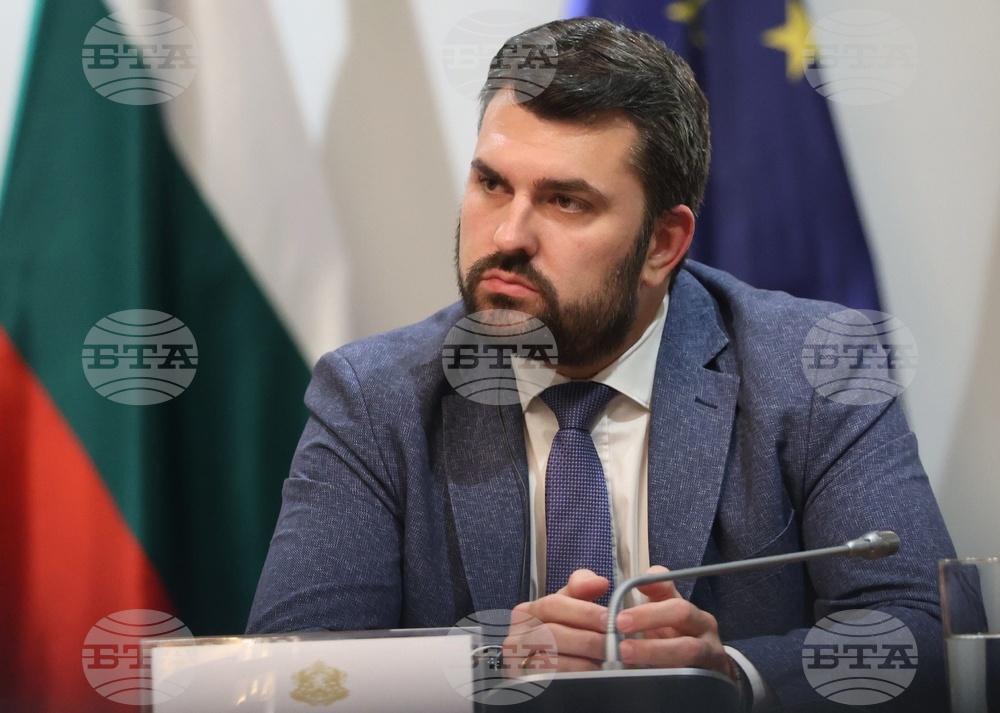
Bulgaria has never abstained when it came to the freezing of Russian assets and voted in favour of their long-term freeze, outgoing Foreign Minister Georg Georgiev told Bulgarian National Television on Sunday. He was asked to clarify Bulgaria’s position after this country, along with Italy, Belgium, and Malta, abstained from a vote on using frozen Russian assets as a reparations loan, while at the same time supporting an interest-free EUR 90 billion loan for Ukraine.
Until now, the freeze on Russian assets had been reconfirmed every six months, but a decision has now been taken to extend it indefinitely. Bulgaria voted in favour, Georgiev said. Bulgaria joined a joint declaration with Italy, Belgium, and Malta stating that any potential spending of the assets must comply with European legislation and rules, he added. "This declaration does not change our vote. It does not change the significance of our decision. It does not change our actions," Georgiev said. "We voted in favour together with all other European countries. There was a European consensus on this issue. We merely made a clarification, which does not alter the nature of our position," he added.
Initially discussions had focused on spending the frozen assets themselves, but the EU’s approach has since changed. It is about EUR 90 billion, which will potentially be provided as a loan from the EU budget, Georgiev said. It will be further clarified when and how the funds will be allocated. "This is why there should not be any speculate on the matter," the outgoing Foreign Minister added.
Asked how much of the EUR 90 billion comes from Bulgaria, Georgiev said it was too early to comment.
Responding to a question about whether the outgoing government should avoid decisions such as approving a loan to Ukraine, Georgiev said that the Constitution makes no distinction between a regular government and an outgoing one. "Our powers are not limited because the government is outgoing," he said, adding that their work continues. "We cannot put the country on hold because of political developments," Georgiev noted.
Asked whether President Rumen Radev would change Bulgaria’s foreign policy course if he made a political "breakthrough," Georgiev said that he expects something along those lines to happen as the head of State "holds a different vision for the country’s foreign policy." "He has repeatedly expressed views and issued messages that are in conflict with the country’s foreign policy," Georgiev added.
/IV/
news.modal.header
news.modal.text