site.btaBulgarians on Both Sides of the Danube Commemorate Vasil Levski in Bucharest
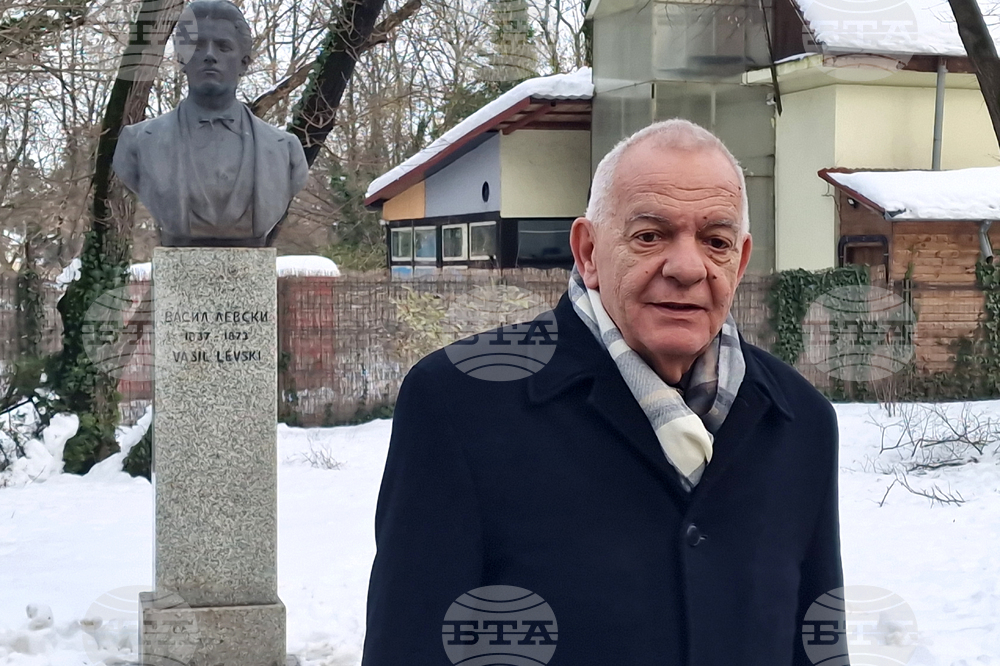
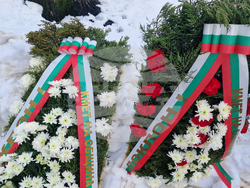
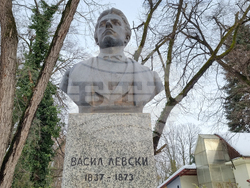
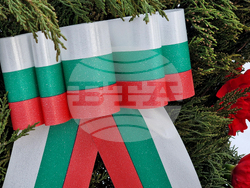
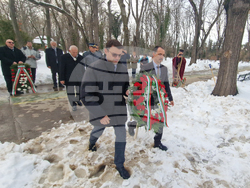
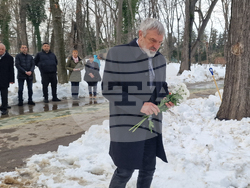
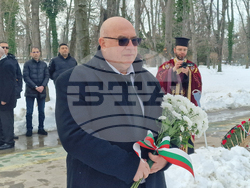
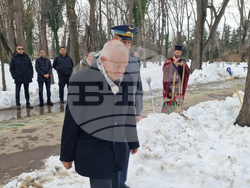
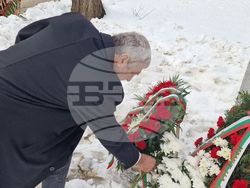
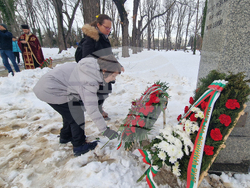
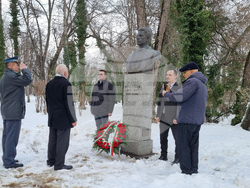
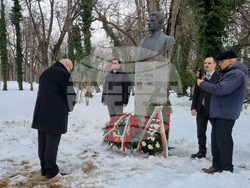
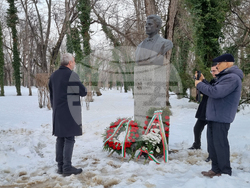
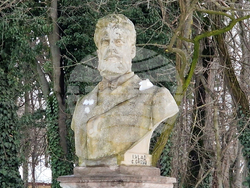
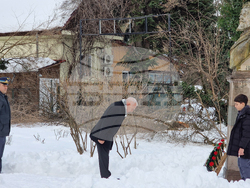
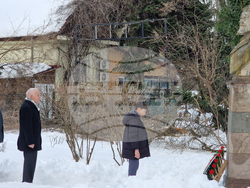
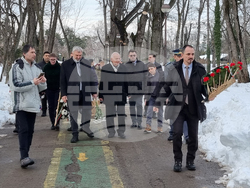
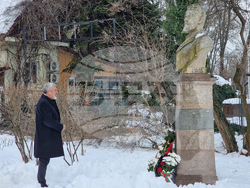
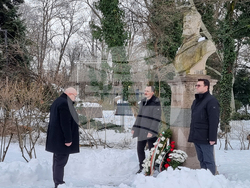
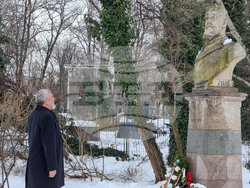
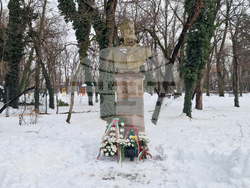
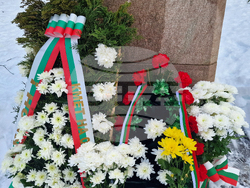
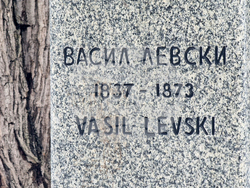
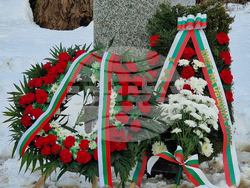
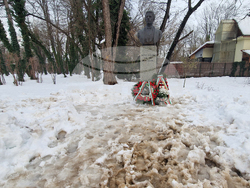
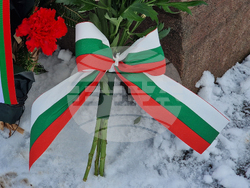
Bulgarians living on both sides of the Danube laid wreaths and flowers to commemorate national hero Vasil Levski (1837-1873) in Bucharest. The event that took place in front of Levski's bust in King Michael I Park was organized by the Bulgarian Embassy in Romania.
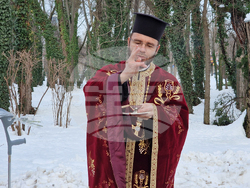
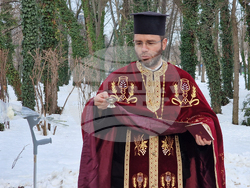
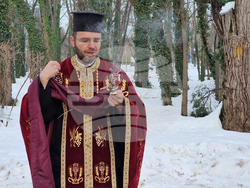
The ceremony began with a memorial service conducted by Archpriest Kiril Sinev, spiritual leader of Bulgarians in Romania and representative of the Bulgarian Patriarchate in Bucharest since early 2023. "John the Evangelist says there is no greater love than to lay down one's life for one's friends. Vasil Levski - Hierodeacon Ignatius, as he is called in church circles - laid his soul on the altar of the people for his friends," the priest said.
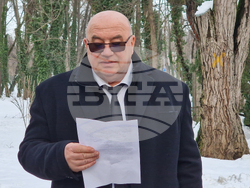
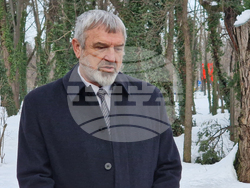
Among the guests were Ruse Regional Governor Dragomir Draganov and Encho Enchev, Ruse Deputy Mayor responsible for education and culture.
Draganov said: "Vasil Levski is one of the brightest figures in Bulgarian history, beloved by the Bulgarian people. He fought for a pure and holy republic so that all Bulgarians could be equal to other nations." He added that 153 years after Levski's death, his ideals are alive and will inspire the younger generation.
"Brotherly Romania made it possible for Levski's ideas to be realized," Draganov added.
Encho Enchev reflected on Levski’s legacy: "153 years ago, one man lost his life but gained immortality. Vasil Levski left us not wealth, not power, and not even a free state. He left us something far more important - the measure by which we evaluate ourselves and our deeds. He sought not followers, but companions. He wanted action. Today, standing here in the heart of the Romanian capital, thanks to the Bulgarian diplomatic mission and the active Bulgarian communities in Bulgaria's northern neighbour, we show that his work is not confined to textbooks; the work of Vasil Levski is alive. It lives in the language we preserve, in the traditions we pass on."
Enchev said that the greatest tribute to Levski is not in wreaths or flowers, but in "making brave decisions, being honourable in our deeds, and united for Bulgaria".
Bulgaria's Ambassador to Romania, Radko Vlaykov, also addressed the gathering. "There are four dates that the Bulgarian Embassy has marked consistently over the years: January 6 and July 18 - the birthdays of revolutionaries Hristo Botev and Levski, and February 19 and June2 - the dates when they lost their lives. Here in Romania, we cannot separate them. It was here that they formed their strongest friendship and collaboration. History records that they spent a winter together in a mill, presumed to be in the Solakov Inn. These events make Bucharest and Romania particularly significant in the lives of two of the brightest figures in Bulgarian history - Vasil Levski and Hristo Botev.”
The diplomat also highlighted Romania's role in supporting the organization of Bulgaria's national liberation struggle, noting that the Romanian people provided a safe haven for some of the brightest figures in Bulgarian history.
Recalling events marking the 150th anniversary of the April Uprising, Vlaykov said: "Levski laid the foundations of that uprising. He sacrificed himself at a young age, travelling across the country to set up committees and organize people. A bright figure who has united the Bulgarian people for 153 years."
The ambassador was referring to a December 2025 event which honoured the sites where the Giurgiu Revolutionary Committee held its meetings, the Romanian port from which Hristo Botev's detachment boarded the steamship Radetzky, the Pantheon of National Revival Heroes and the tomb of Zahari Stoyanov in Ruse as part of the 14 Centuries of Bulgaria in Europe Initiative of the Bulgarian National Television, the Bulgarian News Agency (BTA) and Bulgarian National Radio. The forum in Ruse and Giurgiu marked the beginning of discussions on the 150th anniversary of the April Uprising, which are being organized in 2026 at BTA's national press clubs in Veliko Tarnovo, Sliven, Vratsa and Panagyurishte - the centres of the four revolutionary districts during the 1876 April Uprising.
The 14 Centuries of Bulgaria in Europe Initiative will commemorate anniversaries in Bulgarian history that are significant for European history until 2032, the year of the 1400th anniversary of the establishment in 632 of Old Great Bulgaria, the first Bulgarian state in Europe.
Ambassador Vlaykov reflected on the symbolism of the day: "It is fitting that there is so much snow today. Its white colour is a symbol of purity, and there is no greater symbol of purity in ideals and life than Vasil Levski. February 19, 1873, when Levski was hanged at the outskirts of Sofia, was an extremely cold day, much like today. It is a symbol that his innocent soul remains with us forever."
He concluded by linking past and present: "Levski spoke of Bulgaria being equal to other nations. I am delighted that today, for the first time, we can tell Vasil Levski that Bulgaria is fully and completely a member of the EU. Last year Bulgaria joined Schengen; this year the eurozone. I believe this is the clearest expression that we are following the path laid out by Levski."
The ceremony ended with a group photo, and participants laid flowers at the nearby bust of Hristo Botev.
/DD/
Additional





news.modal.image.header
news.modal.image.text
news.modal.download.header
news.modal.download.text
news.modal.header
news.modal.text