site.bta106th Birth and 13th Death Anniversary of Poetess Leda Mileva
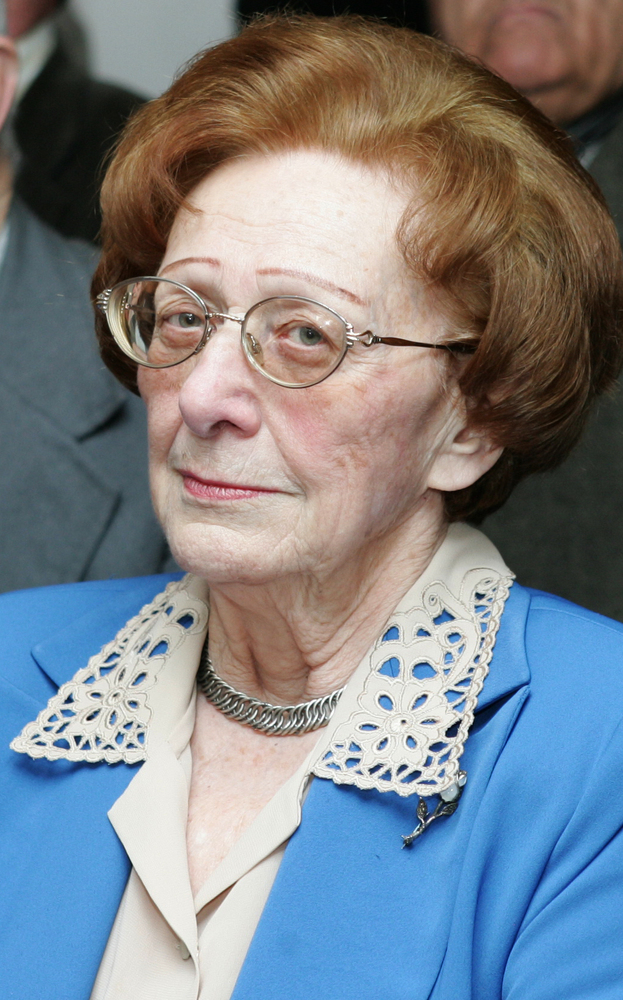
Thursday marks the 106th birth and 13th death anniversary of prominent Bulgarian poetess, writer, journalist, translator and cultural figure Leda Mileva (1920-2013).
She was a profound thinker, broadly cultured, and projecting a strong creative presence. Her poetry for children combines sincerity, imagination, a sense of humour and warmth. Quite a few generations of Bulgarians have been brought up on these poems.
She wrote her most famous work in this department, a poem titled "Little Snow-White Bunny", completely by chance and in a hurry. In 1940, when she was managing editor of the First Steps magazine, the printing house found that half a page of an issue was left blank and, as a filler, she jotted down these few verses, which were later set to music by composer Petar Stupel.
Here is the first stanza of this poem, which is familiar to almost every Bulgarian child. The translation is by Randall Baker.
"Little snow-white Bunny
On a morning sunny
Went out in the wood all day
With his friend, the deer, to play,
Went out in the wood all day
With his friend, the deer, to play."
"I want the poems I write to make children a little smarter, more honest, and kinder. To give them the strength to fight against ugliness, so that beauty may prevail... Teach children from an early age to remember that it is not so important how many books they have read but what they have learned from them," Mileva said. "It is only natural that new heroes will emerge. Life goes on, and children are part of it. However, this does not mean that traditional, timeless heroes will disappear. Because every child discovers the world for themselves. They discover the sun, the sunrise, the stars, the forest, flowers, love for their mother, for their family... And these heroes and eternal themes of good and evil, moral themes, will never leave the stage. They must always be at the heart of children's literature."
Mileva is also remembered as a diplomat promoting Bulgarian culture on the international scene, serving as a cultural intermediary between this country and the rest of the world. For this she earned respect in global literary and educational institutions.
"Undoubtedly, our culture is something we can be proud of, and especially our ancient culture," Mileva went on record as saying. "It is precisely culture that proves that have been part of the civilized world since the dawn of time. But that is not enough. If Europe sets specific benchmarks to its development, it will be dangerous. We still have reason to be proud of our culture, but let's hope we are smart enough to develop our own identity and not just copy everything foreign."
Following is the original news item in English by which BTA's External Service reported Leda Mileva's passing in 2013:
"115 WRITER LEDA MILEVA DIES (Amplified)
Writer Leda Mileva Dies at Age 93
Sofia, February 5 (BTA) - Writer Leda Mileva died on Tuesday at age 93, her family told BTA. Mileva died on her birthday. Born in Sofia in 1920, she was one of the nation's best poets for kids, a distinguished translator and editor, director of Bulgarian National Television in the late 1960s, and Bulgaria's permanent representative to UNESCO in the 1970s.
Culture Minister Vezhdi Rashidov offered his condolences to the bereaved, his ministry said. In another expression of sympathy, the Bulgarian P.E.N. Centre described Mileva as 'one of the worthiest builders of Bulgarian culture.'
Mileva was born into a family which has left an imprint on Bulgarian history. Her father was the eminent poet Geo Milev, who is also known for his writings on current affairs and his translations. Her paternal grandfather, Milyo Kassabov, was a figure of the National Revival Period who worked as a teacher and owned a bookshop and a publishing house. Mileva's maternal great-grandfather was a priest who wanted every firstborn son in the family to become a priest as well. He saw this as a way to preserve the Bulgarian nation and language at a time when Bulgaria was only beginning to emerge from Ottoman control. Mileva's grandfather on her mother's side, Dimo Keranov, was a judge, a teacher and a lawyer, and two of his four children were actors, including Mileva's mother, Mila Keranova.
Mileva graduated from the American College in Sofia in 1938, from the Children's Teachers Institute in 1940 and from the Law Faculty at Sofia University in 1941. Between 1944 and 1951 she worked as editor-in-chief for children's and youth programmes at Radio Sofia. She was an editor with the Narodna Mladezh publishers and the Bulgarski Pissatel publishers between 1951 and 1956. From July 1966 until October 1970, Mileva was director general of Bulgarian National Television. Between 1970 and 1972, she was deputy head of the Press and Cultural Cooperation Department at the Ministry of Foreign Affairs.
Mileva served as Bulgaria's permanent representative to UNESCO from September 1972 until January 1979. She chaired the Bulgarian Translators' Union between 1979 and 1989. In January 1995, she became honorary chairperson of the Geo Milev International Foundation. She was also editor in chief of Panorama magazine, a Member of Parliament between 1981 and 1990, and a Member of the 7th Grand National Assembly between 1990 and 1991.
Mileva wrote more than 30 books of poems for children. She also authored current affairs and literary criticism articles. Together with her husband Nikolai Popov, she compiled the poetry anthologies American Poets (1975), Night Rain: Contemporary English Poets (1980) and African Voices (1987). Poems and plays by Mileva have been published in France, Germany, Russia, Belarus, Romania, the Czech Republic, Poland, Hungary and Syria, among other countries. She translated contemporary American, English, Russian and French poetry.
She was honoured with the Order of Saints Cyril and Methodius, First Class, in 1959, and the Order of the People's Republic of Bulgaria, First Class, in 1970. On May 18, 2006, Mileva received the Order of the Balkan Range, First Class, for her extraordinary contribution to Bulgarian culture. LY/PK/VE"
Mileva received the French Ordre des Palmes académiques (1985), and in 1979 the International Board on Books for Young People (IBBY) entered here on its Hans Christian Andersen Honour List for her book Coloured Tales.
/LG/
news.modal.header
news.modal.text