site.btaBulgarian Kilim Foundation Presents Five Rare Ancient Bulgarian Kilims
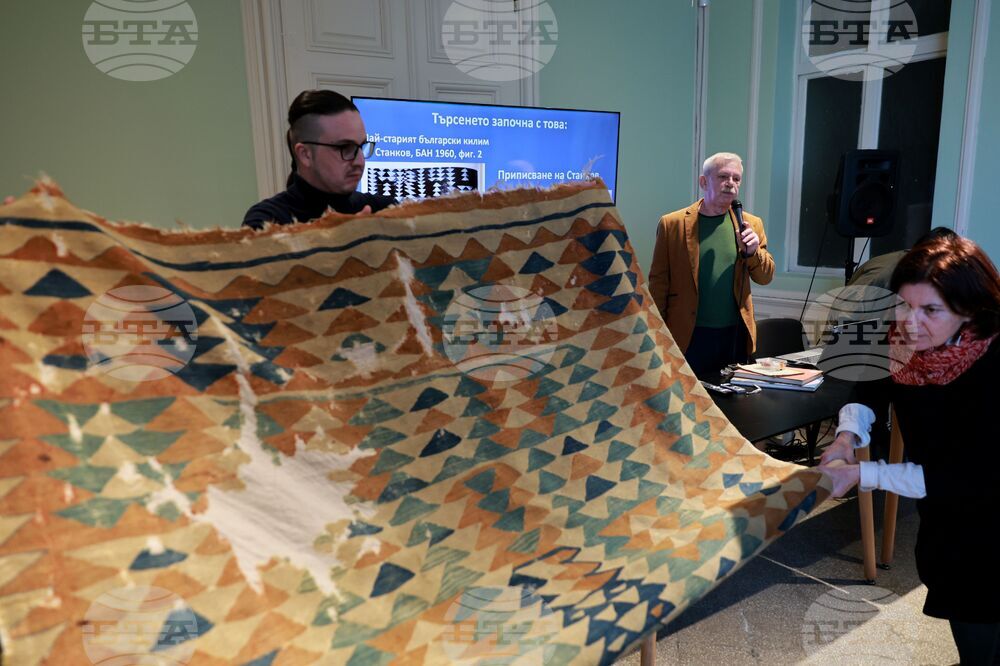
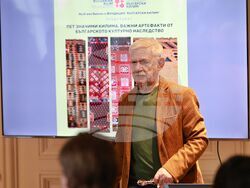
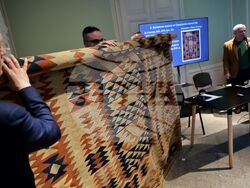
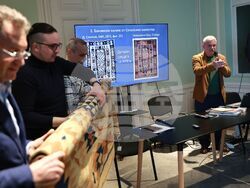
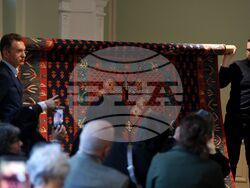
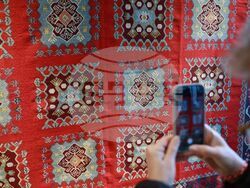
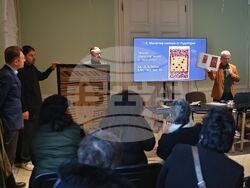
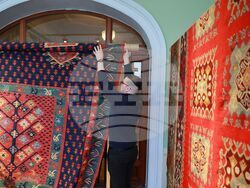
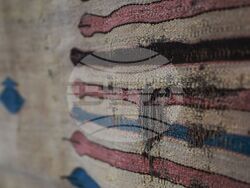
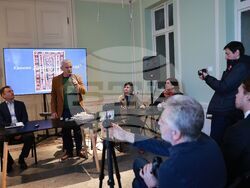
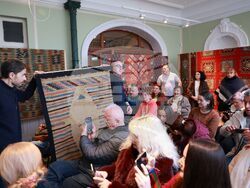
The Bulgarian Kilim Foundation Tuesday presented five recently acquired ancient kilims believed to be significant importance as artifacts of Bulgaria’s cultural heritage. The most notable among them is believed to be the oldest known documented Bulgarian kilim, of the Bakamski style, discovered in a private home in Bulgaria after a three-year search led by the Foundation’s founder, Jacob van Beelen. The kilim was dated to the late 17th century by Bulgarian Academy of Sciences researcher D. Stankov in 1960.
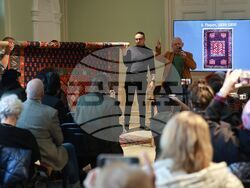
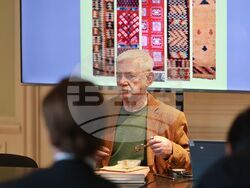
The kilim has undergone professional cleaning and restoration, with part of it now reinforced with a linen backing. It was rolled out before the audience at the press conference as van Beelen told its story.
“It is not only the oldest but also amazingly beautiful,” he said.
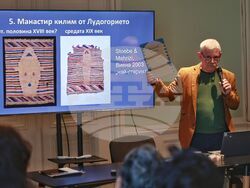
The other four kilims shown to the public by the foundation on Tuesday, originate from Pirot, Chiprovtsi, Kotel, and the Deliorman region, and date from the 18th and 19th centuries.
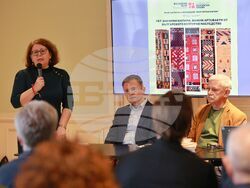
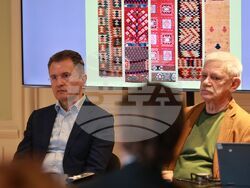
According to Dr. Mila Maeva, Director of the Institute of Ethnology and Folklore Studies with the Ethnographic Museum, the pieces illustrate the exceptional craftsmanship of kilim weavers from across the Bulgarian lands.
Earlier on Tuesday, the Institute and the Bulgarian Kilim Foundation signed a partnership agreement under which 81 kilims from the foundation’s collection will be studied and identified.
Bozhidar Parvanov, the institute’s deputy director, told BTA that the process is expected to take about one year. He explained that the research forms part of the established procedure for registering a public collection.
Dr. Maeva noted that van Beelen’s collection holds not only artistic value but significant scientific importance and is expected to contribute to research in the field. Some of the pieces in the collection, she added, are “quite remarkable.”
Van Beelen is among the major world collectors of Bulgarian kilims and has played a key role in preserving and promoting the country’s weaving traditions. After holding a number of exhibitions and kilim-related events, he is certainly the most recognizable kilim collections in Bulgaria.
He has already donated 225 kilims from his personal holdings to the Bulgarian Kilim Foundation, which he established. His long-term goal is to document and identify Bulgaria’s kilim heritage, repatriate important pieces currently held in foreign private collections, and ultimately find a permanent home for the collection in a dedicated museum or gallery.
The Foundation’s acquisitions shown Tuesday come from a variety of sources. One of the kilims was purchased on eBay in Chicago, with subsequent research tracing it back to an antiques dealer in Hong Kong. Two others were bought from a German collector in Istanbul, while a fourth was acquired from the grandson of the man for whom the kilim had originally been woven.
Some of the Foundation’s kilims will be displayed this October and November in a special exhibition of Bakamski kilims at the Ethnographic Museum in Plovdiv. The exhibition will also include pieces from international collections, van Beelen said.
He added that he will soon travel to the Netherlands to meet with the Bulgarian ambassador and leaders of the Bulgarian community there to discuss the possibility of organizing an exhibition of historic Bulgarian kilims abroad.
Jacob van Beelen's collection has already been shown in Paris during an exhibition at the Bulgarian Cultural Institute in 2024.
/NF/
Additional






news.modal.image.header
news.modal.image.text
news.modal.download.header
news.modal.download.text
news.modal.header
news.modal.text