Explainer
![Machine Voting in Bulgaria: Timeline]()
![Machine Voting in Bulgaria: Timeline]() A voting machine in the southeastern village of Enchets, September 13, 2022 (BTA Photo/Valentina Stoeva)
A voting machine in the southeastern village of Enchets, September 13, 2022 (BTA Photo/Valentina Stoeva)
site.btaMachine Voting in Bulgaria: Timeline
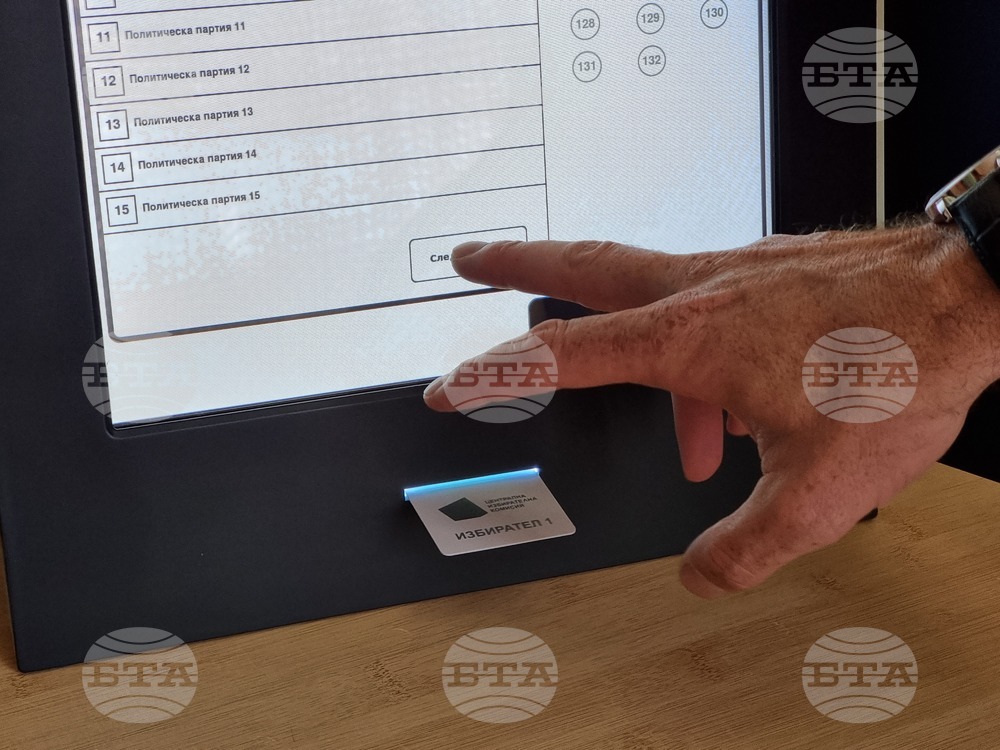
Revising the Election Code to strengthen the role of machine voting has become a major issue during the ongoing consultations with the parliamentary forces that President Rumen Radev is holding ahead of asking them to form a government following the resignation of the Rosen Zhelyazkov cabinet on December 11, 2025.
Machine voting has had a turbulent life in Bulgaria. The idea of voting by a device was pioneered as early as 2004, but it was only in 2021 that predominantly machine voting was introduced in practice, intended as a tool to streamline the balloting process and eliminate irregularities. Not all parties were happy with this method and sowed distrust in the process among voters. Just a year later, paper ballots were reinstated and voting machines started to be used merely as printers, with the voting record paper slips they produced promoted to "machine-voting ballot" status but counted by hand. The all-important machine tallying was scrapped altogether.
Here is a timeline of the ups and downs of machine voting in Bulgaria:
September 1, 2004: First attempt to introduce machine voting. Electronic Voting Bill is submitted to 39th National Assembly by former prime minister Ivan Kostov and United Democratic Forces MP Asen Agov. Bill is defeated at committee stage.
March 6, 2009: Same draft is reintroduced in 40th National Assembly by three United Democratic Forces MPs. Bill's progress through legislature is blocked again.
March 5, 2014: Machine voting is formally introduced by new Election Code, which allows method on experimental basis for up to 500 polling stations until conduct of 2015 local and 2016 presidential elections. Machine results are excluded from official tallies. For 2015 and 2016 elections, machine results are to be taken into account when determining election results, and experimental vote counting is provided for in presidential elections. Immediate before 2016 presidential elections, number of polling stations with machine voting is increased from "up to 500" to "at least 500".
October 25 and November 1, 2015: In two-round local elections, non-experimental machine voting is used for first time at 50 polling stations in Sofia, limited to balloting for municipal councillors. Mayors are elected by paper ballots only.
May 26, 2016: For first time, Election Code revisions envisage possibility for electronic voting on experimental basis in one constituency, with three simulations of remote e-voting to take place until January 1, 2018 and experimental e-voting planned for three successive elections, including by-elections, after January 1, 2018.
November 6 and 13, 2016: In two-round presidential elections, voting by machine is available as fully equivalent option besides paper ballots at 500 polling stations in 79 settlements. First non-experimental use in this type of election.
March 26, 2017: Despite legal provisions requiring it, machine voting is not implemented at parliamentary elections. Central Election Commission terminates voting machines procurement procedure. Voting takes place by paper ballots only.
Early 2019: Yes, Bulgaria! Party conducts first large-scale remote electronic voting over internet. Method is used in internal primaries to rank candidates for European Parliament. Platform is developed by movement volunteers, contrasting with modest state efforts.
March 12, 2019: Election Code amendments regulate mandatory machine voting in European Parliament elections (in at least 3,000 stations) and local elections (in at least 6,000 stations) and provide for machine voting only after 2019 local elections with minor explicitly listed exceptions.
May 26, 2019: In European Parliament elections, non-experimental machine voting is used at 3,000 polling stations. Machine results are added to paper-ballot counts.
July 30, 2019: Election Code is amended yet again, scrapping machine voting for 2019 local elections and all other local elections thereafter. Remote e-voting is postponed.
October 8, 2020: Mandatory machine voting is introduced for set number of polling stations in parliamentary elections by Election Code revisions which, however, rule out method for local elections.
April 4, 2021: In parliamentary elections, full-scale machine voting is used countrywide for first time. Machines are available in all 9,389 domestic polling stations with more than 300 voters, as alternative to paper ballots.
April 29, 2021: Election Code amendments make machine voting mandatory in polling stations with more than 300 voters in Bulgaria and abroad. Paper ballots can be used as exception for smaller or special sections.
July 2, 2021: Constitutional Court rules that mandatory machine voting does not violate Constitution and does not infringe equal suffrage.
July 11, 2021: In early parliamentary elections, mandatory machine voting is held predominantly for first time. Machines are used in more than 9,600 polling stations in Bulgaria and abroad. Limited technical failures trigger political controversy.
October - November 2021: Central Election Commission adopts and later revises rules for partial manual counting of machine-printed paper slips, following challenges at court and political disputes. Decision evidences continued institutional resistance to machine voting.
November 14 and 21, 2021: Machine voting is used in two-round presidential and one-round parliamentary elections, with 30% of machine-printed paper slips counted for control purposes.
December 2, 2022: National Assembly adopts controversial Election Code amendments restoring paper ballots alongside machines and reintroducing manual counting. Mandatory machine voting is dismantled. Amendments are pushed through by GERB-UDF, BSP for Bulgaria, and Movement for Rights and Freedoms. President Rumen Radev vetoes revisions, but Parliament overrides veto. Mixed paper and machine voting system is reintroduced. Entire framework on experimental remote electronic voting is repealed.
April 6, 2023: Non-governmental Institute for Public Environment Development reports, based on constituency tally sheets, that about 1,477,000 voters (59%) use machines in April 2 parliamentary elections, while 1,021,000 vote by paper ballot.
April 10, 2023: Democracy and Law Association blames return of paper ballots for rise in invalid votes and calls for full functionality of voting machines.
September 25, 2023: Central Election Commission has repeatedly proposed development of new, State-commissioned machine-voting software, Commission Chair Kameliya Neykova says during parliamentary hearing. No institution responds.
October 25, 2023: There Is Such a People and Vazrazhdane claim that voting machines have been compromised by Deputy Electronic Governance Minister Mihail Stoynov.
October 27, 2023: Central Election Commission votes, 12-2, to order use of paper ballots only in October 29 local elections and possible November 5 runoff. Decision cites lack of certified devices. To justify step, Commission refers to memo from State Agency for National Security (SANS) of October 26 alleging suspected security breach by Deputy Electronic Governance Minister Stoynov who videoed machines’ compliance test. Prime Minister Nikolay Denkov urges resignation of SANS Deputy Chair Denyo Denev who signed memo. SANS Chair Plamen Tonchev refuses to fire Denev. On November 3, Denkov urges President Rumen Radev to dismiss Tonchev. President rejects demand.
October 30, 2023: By final judgment, Supreme Administrative Court revokes Central Election Commission decision and restores voting machines for November 5 second round of local elections.
December 7, 2023: Constitutional Court votes unanimously to pronounce unconstitutional Election Code provision excluding machine voting abroad in absence of certain conditions.
June 9, 2024: In national parliamentary and European elections, Bulgarians at home and abroad vote by paper ballot or machine. For technical reasons, machine voting is unavailable to voters excluded from European Parliament elections. All ballots are counted and tallied manually.
January 8, 2025: Five bills revising Election Code, moved by MPs of Vazrazhdane, There Is Such a People, BSP-United Left and CC-DB, are adopted on first reading in plenary. Principal proposals are to introduce vote counting commissions, to purchase ballot scanning machines, and to switch to machine voting only. Bill consolidating these five pieces of draft legislation is stranded at Constitutional and Legal Affairs Committee since February 17, awaiting second reading.
/NF/
news.modal.header
news.modal.text