site.btaWhy Bucharest Mayoral Race Has National Implications
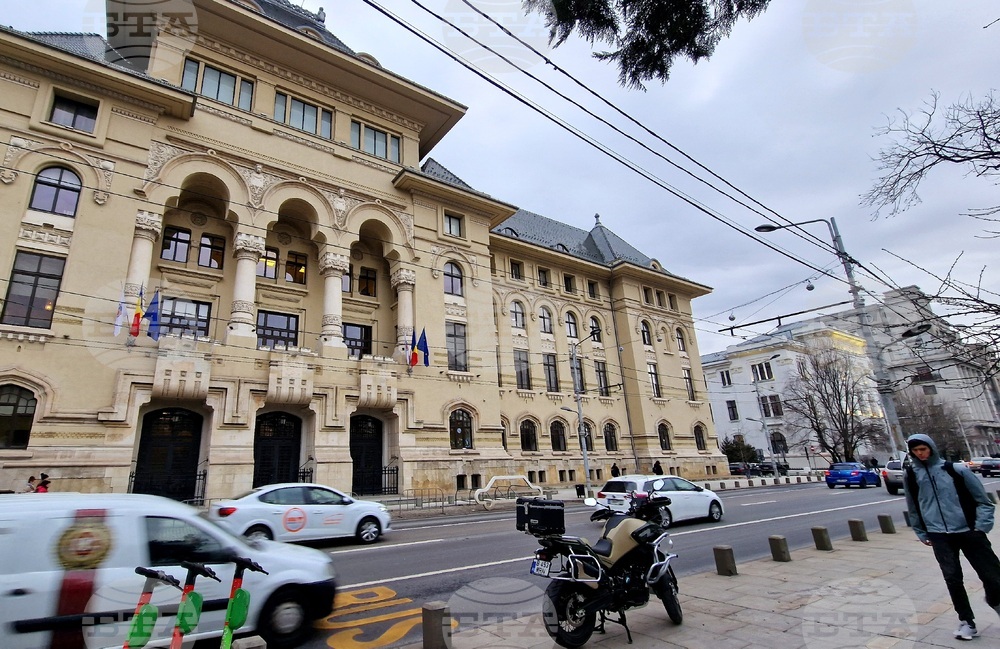
On December 7, residents of Bucharest will elect a new mayor after Nicusor Dan, who earned a second mayoral term in the summer of 2024, ran for president of Romania and won the post in May 2025. The mayoral position in the capital was temporarily taken over by Dan’s deputy, Stelian Bujduveanu of the National Liberal Party (PNL), and now 17 candidates are competing for the post. These include representatives of the parties from the governing coalition, a candidate backed by the largest opposition party, contenders from smaller and extra-parliamentary political formations, and independent candidates.
The mayoral race in Bucharest reveals political trends in the country and has the potential to significantly influence national politics.
The threat from the far right
During the pre-election period, the four-party governing coalition discussed the possibility of a joint candidate for the capital.
MP Raluca Turcan of the PNL supported the idea in an interview with Radio France Internationale, explaining that a joint candidate with genuine backing from all four parties was necessary to prevent the far-right Alliance for the Union of Romanians (AUR) from winning in Bucharest, which Turcan described as a "perfect storm."
However, Ciprian Ciucu, the district mayor of Bucharest's 6th sector and first vice-chair of the PNL, noted that the coalition's joint candidate in the presidential elections, Crin Antonescu, failed even to reach the second round.
"We pulled an unprepared candidate out of a hat. Do we want to end up there again? Or do we give people what they want, with real leaders, not fake ones (...)" Ciucu asked rhetorically on Digi 24 TV regarding these discussions.
Confident in his own chances of winning, Ciucu insisted that the parties in government field separate candidates for the mayoral elections.
Amid growing nationwide support for the opposition AUR, which has led the polls in recent months, the ruling parties did not dare to field a joint candidate against the sovereignist candidate in Bucharest. Meanwhile, the Social Democratic Party (PSD) threatened to leave the coalition if the PNL and the Save Romania Union (USR) nominated a joint candidate who might have a strong chance of success, given the traditionally centre-right orientation of most Bucharest residents.
Three ruling coalition candidates and one opposition
Ultimately, Romania's largest party, the PSD, nominated the mayor of Bucharest's 4th sector, Daniel Baluta, the PNL nominated the 6th sector mayor, Ciprian Ciucu, and the reformist USR proposed its former leader, Catalin Drula.
From the ruling coalition, only the Democratic Union of Hungarians in Romania (RMDSZ) did not field a candidate in Bucharest, as the party's electorate is primarily based in other regions of the country.
The largest opposition force, the AUR, chose to support journalist Anca Alexandrescu, who is running as an independent.
The municipal electoral office accepted a total of 18 candidacies for Bucharest mayor, and one candidate – influencer Alexandru Zidar, known as Makaveli – withdrew one day before the start of the campaign, on November 22, in favour of Anca Alexandrescu. Makaveli became known for supporting former presidential candidate Calin Georgescu, who was strongly backed by the AUR.
These four candidates are consistently leading in polls, far ahead of the other contenders. The frontrunners appear to be the two district mayors, but in recent surveys, the candidate backed by the far right, Anca Alexandrescu, gained strong support, and if this pace continues, she could overtake her rivals from the country's two largest parties, noted journalist and political analyst Emiliano Isaila from the news website Spotmedia.
Competition within centre-right spectrum and president-prime minister relations
The Bucharest mayoral election now pits candidates from the two largest centre-right parties against each other: Ciprian Ciucu from the PNL and Catalin Drula from the USR. At a secondary level, this also pits Prime Minister Ilie Bolojan, who leads the PNL, against President Nicusor Dan, founder of the USR.
A manifestation of the unofficial rivalry between the two parties was the requested – and granted – resignation of presidential adviser Ludovic Orban last week, just a month and a half after his appointment.
Orban, former leader of the PNL and prime minister of Romania from 2019-2020, criticized the USR for using the president's image in the Bucharest mayoral campaign, warning that it could alienate some of the president's electorate. The president did not comment specifically on the case but asked Orban to leave the presidency, stating that he had exceeded his authority as an adviser.
During the pre-election period, Nicusor Dan publicly admitted having a preference for one of the mayoral candidates but refused to name them. The president said that, as a Bucharest resident, he has only one vote and wants the future mayor to meet two key conditions: to be able to coordinate major infrastructure projects and to be able to oppose the "property mafia". In statements to journalists, Nicusor Dan hinted that two of the district mayors participating in the race had dealt with "property speculators" in a way he could not publicly detail due to constitutional restrictions. No one doubted which two candidates he meant.
Tensions between the PNL and USR candidates escalated last week with statements by Catalin Drula, who attacked rivals from both major parties, accusing them of using fake polls to influence results.
A poll by the Inscop agency placed Catalin Drula in fourth place with 11.6% of the vote, far behind the top three: Daniel Baluta (26.6%), Ciprian Ciucu (24.2%), and Anca Alexandrescu (19.1%). After these results were announced, Drula mainly attacked the PNL candidate, saying: "It is ugly that Ciprian Ciucu uses this. He – who told me so many times that the PNL has a tendency to get involved with the state, that dirty games are played with criminal files, and that he is afraid."
Romanian media cited Ciucu's response: "What fault is it of mine that he is in fourth place?!? I am in a race with Baluta, let that be clear."
Inscop founder and head Remus Stefurak told Radio Free Europe that there are always politicians unhappy with their poll results, but he has "never seen such a reaction before". Stefurak noted that the candidates' campaign teams have their own data on public support "which is similar to what we published."
A decline in support for Catalin Drula, if confirmed on election day, is not good news for President Nicusor Dan, as it could also be read as "insufficient support" for the head of state, says journalist and political analyst Andreea Pora.
"On another level, this is a battle between the candidate backed by the prime minister and the one backed by the president. Depending on who wins, we could see interesting shifts after the elections," Pora told Radio Free Europe.
Political analyst Vlad Adamescu also believes that the Bucharest mayoral race will have direct consequences for relations between President Dan and Prime Minister Bolojan. According to Adamescu, a victory for Ciprian Ciucu would strengthen Bolojan's position in the PNL, while a defeat for the liberal candidate could weaken Bolojan's leadership and lead to his replacement.
Adamescu considers that the president made a mistake by supporting his former party colleague Catalin Drula in the mayoral race. "This was a serious political mistake that will only intensify the future conflict between the president and the prime minister (...)," the analyst told Radio Free Europe.
Two fight, the third wins
Journalist and political analyst Andreea Pora told Radio Free Europe that the candidacies of Ciprian Ciucu and Catalin Drula split the centre-right vote, which benefits PSD candidate Daniel Baluta. According to Pora, the two centre-right parties PNL and USR easily fell into the PSD's "threat" that it would leave the ruling coalition if they ran with a joint candidate.
Nicusor Dan won the Bucharest mayoral elections in 2020 and 2024 as a USR candidate or as an independent supported by centre-right forces, including the PNL. Now, candidates from this part of the political spectrum are attacking each other and competing directly. Other contenders benefit from this: Daniel Baluta from the PSD and Anca Alexandrescu, backed by the AUR.
"Unfortunately, these attacks (between Drula and Ciucu) do not look good; they risk demobilizing part of the public and increasing support for, say, parliamentary opposition candidates," sociologist Remus Stefurak told Radio Free Europe. "This is not the best scenario for the Bucharest elections, especially given the vote fragmentation," he added.
The hotly contested mayoral race is already affecting the ruling coalition. On another level, it influences president-prime minister dynamics, notes Radio Free Europe. Fragmentation of centre-right votes and the fact that the elections are held in a single round could lead to surprising results on December 7.
/VE/
news.modal.header
news.modal.text