site.btaEU Allocating EUR 1.3 Bln to Coal Regions in Bulgaria through Just Transition Fund
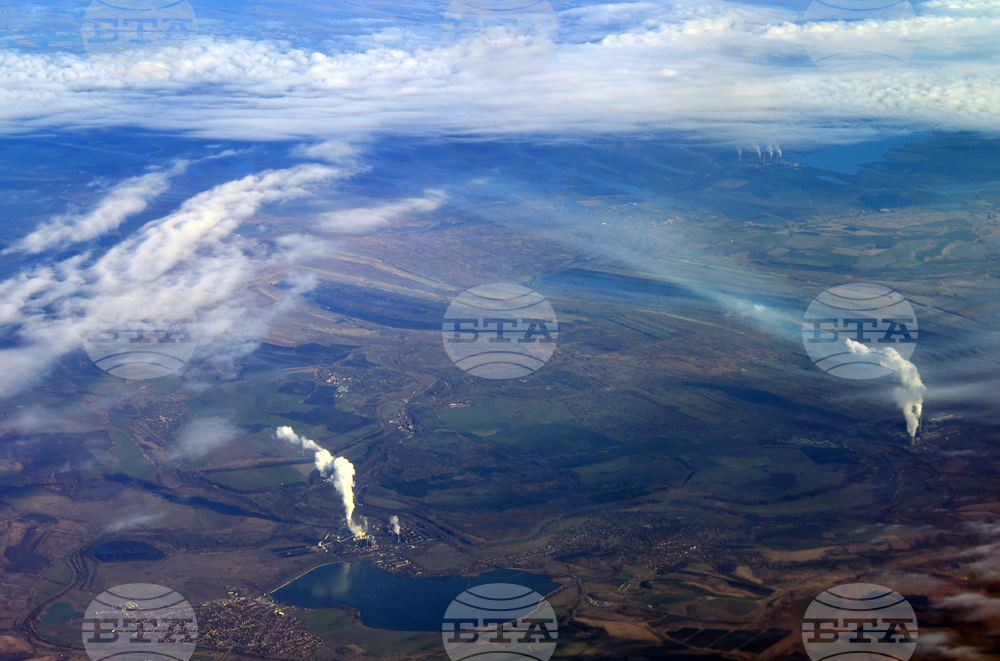
Bulgaria has between EUR 1.178 billion and EUR 1.3 billion available from the Just Transition Fund (JTF), which is part of the EU's support package for regions affected by the closure of coal mines and power plants. The main target areas are the Stara Zagora, Pernik and Kyustendil regions, with funds being directed towards economic diversification, business support and retraining workers.
The JTF is designed to mitigate the impact on employment, as well as the social, economic and environmental consequences, of the closure of coal mines, power stations and all carbon-intensive industries by 2030. It supports regions that depend on coal, peat, shale or other fossil fuels. The intention is broadly to reduce the adverse effects of the climate transition by supporting the most affected territories and their workforces, thereby achieving socio-economic balance.
Unlike directives, which have the force of recommendations and are transposed, the regulations adopted by the European Parliament have the legal force of laws and are directly applicable in EU member states. Transposition is the process by which EU directives are incorporated into the national legislation of EU member states. Unlike regulations and decisions, directives are not directly applicable in EU countries but require national laws to introduce their rules into the country's legislation.
This is the topic of the day of BTA's EU Law BG Section, which monitors the application of EU law in Bulgaria.
When adopting the regulation on the Just Transition Fund, the European Parliament and the Council of the EU consider the European Commission's proposal after the draft legislative act has been submitted to the national parliaments, as well as the views of the Court of Auditors, the European Economic and Social Committee, and the Committee of the Regions.
The Just Transition Fund has a total budget of EUR 17.5 billion, provided by the Multiannual Financial Framework and the EU's NextGenerationEU instrument. Member States can also transfer additional funds from other cohesion funds, bringing the total resource up to approximately EUR 19.7 billion. Between EUR 1.178 billion and EUR 1.3 billion has been allocated to Bulgaria (placing it fifth in the EU), primarily targeting the regions of Stara Zagora, Pernik, and Kyustendil.
In Bulgaria, the Just Transition Fund is implemented through funding from the Regional Development Programme (RDP) 2021-2027 under Priority 4, "Just Transition", as explained to BTA by the Product Contact Unit at the Ministry of Economy and Industry.
By Decision No. 634 of the Council of Ministers of September 8, 2020, the Ministry of Regional Development and Public Works was designated as the agency responsible for ensuring the implementation of the territorial plans for a just transition, including through the JTF within the framework of the RDP 2021-2027. By Council of Ministers Decision No. 712 of October 6, 2020, the Directorate-General for Strategic Planning and Regional Development Programs was designated as the Managing Authority for the RDP. Its responsibilities include the implementation of the regulation, the selection of projects, and monitoring. The resources available for management until 2027 were estimated at almost EUR 3.5 billion (national and European funding), which is more than twice the resources under the Operational Program "Regions in Growth" for 2014-2020, according to the website of the Regional Development Program 2021-2027.
In Bulgaria, the goal of the Just Transition Fund is reflected as a means of financing aimed primarily at supporting regions heavily dependent on coal and carbon-intensive industries. In Bulgaria, these are primarily the regions of the Maritsa Basin, Pernik Region, and Stara Zagora Region.
For decades, the economic development of the Maritsa Basin, Pernik, Stara Zagora and Kyustendil has been closely linked to coal mining and electricity production. These activities provide employment for thousands of people and form the basis of the local economy. However, in the context of European decarbonization policies, these regions are facing serious socio-economic risks, including job losses, a decline in economic activity, and adverse demographic effects.
Successful implementation of the Just Transition Fund Regulation could transform these areas from coal-dependent economies into centres of innovation, sustainable production and quality employment. The key to this process is a long-term approach that actively involves local communities and their residents.
Within the framework of Bulgaria's approved Territorial Just Transition Plan, the JTF will direct investments towards economic diversification, developing alternative sectors and supporting affected workers and communities. The main goal is to ensure that the transition to a low-carbon economy creates new opportunities for sustainable growth and does not exacerbate regional inequalities.
In Bulgarian coal mining areas, the JTF funds a wide range of activities. These include support for small and medium-sized enterprises, the promotion of innovation and research, investment in clean technologies and energy efficiency, and the rehabilitation and reuse of industrial sites. Particular emphasis is placed on retraining and upskilling workers affected by the restructuring of the coal sector, with a view to their successful transition to new economic activities.
Here, the EU requires performance indicators through the JTF - for example, if a mine is closed, the owner is obliged to organize and pay for training for its laid-off employees so that they can obtain the qualifications for new professional opportunities, according to EC experts quoted by BTA.
/YV/
news.modal.header
news.modal.text