site.btaPortuguese Deputy Finance Minister on Bulgaria's Eurozone Entry: Good Things Will Come
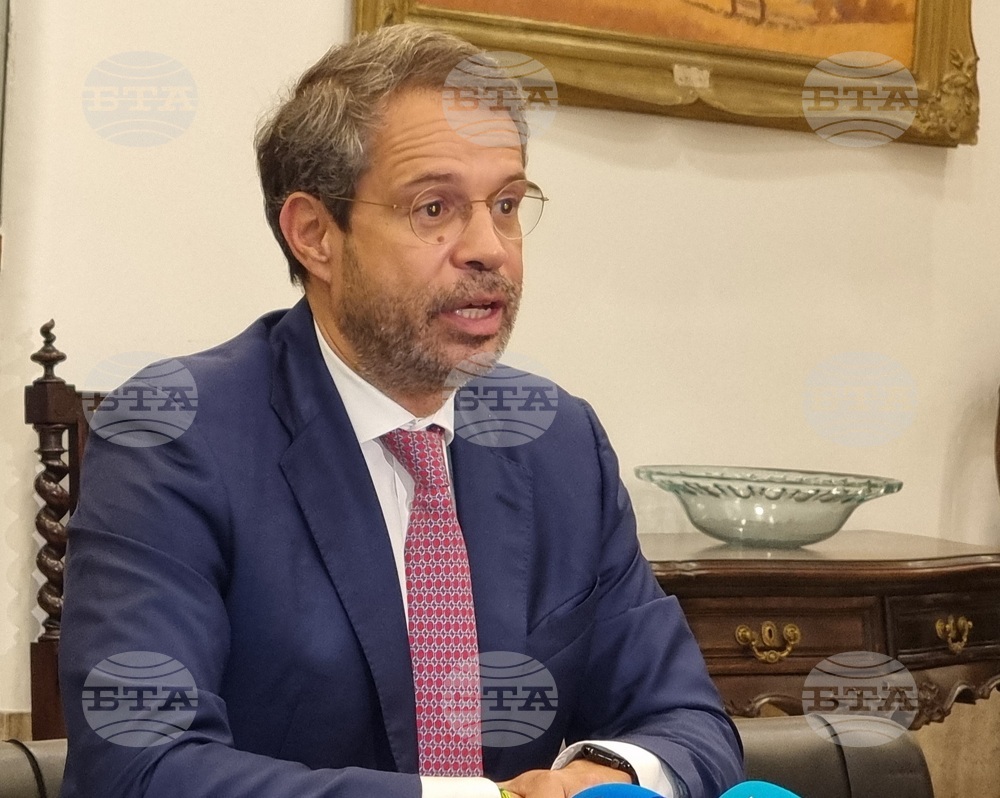
With membership in the eurozone, Bulgaria is joining a very strict club. When the euro was created, it was easier to increase external debt, but that is no longer the case, Jose Maria Brandao de Brito, Deputy Minister of Finance and Secretary of State for the Budget of Portugal, told BTA in response to a question on how Portugal reduced its external debt in its new budget.
The deputy finance minister met with Bulgarian journalists in Lisbon to share his country’s experience of joining the eurozone.
He noted that there are no fiscal rules for the euro system per se, “but the fact that you are in the eurozone and cannot adjust monetary or exchange rate policy means that fiscal policy must be very disciplined.” He also said that politicians in any country find it easier to justify difficult fiscal decisions precisely because of their membership in the euro club.
“Even before the eurozone, we had rules for a 3% budget deficit and others. Now, the accession process is very difficult, because you essentially work and invest over many years to join a very strict club,” he explained.
Deputy Minister Brandao de Brito gave the example of Portugal, one of the first 11 countries to adopt the euro as an electronic currency in 1999 and physically on January 1, 2002, when banknotes and coins were introduced. He said that at that point, citizens truly understood what the euro meant for them.
“Actually, what happened to the Portuguese economy was that external debt increased significantly after we entered the eurozone. Why? Because we suddenly started using the euro to pay our bills. There were no major restrictions on domestic spending, so we spent and imported a lot from other countries, but paid in euros, and external debt rose significantly. This was a key factor behind Portugal’s financial crisis. But afterwards, the European Union established a set of conditions that significantly limit external debt growth and make it easier to control,” he said, adding that procedures now monitor whether countries maintain sound performance across many macroeconomic variables, including external debt.
He noted that there is currently strong pressure from the European Commission to ensure countries maintain stable macroeconomic indicators.
According to him, the benefits for Bulgaria from joining the eurozone will include the ability to use a single currency with very stable and low interest rates, which will encourage economic growth, investment, and trade.
“Therefore, you need to be patient, because the good things will come,” he emphasised to Bulgarian media.
Brandao de Brito welcomed Bulgaria’s membership, which will take effect in less than three weeks.
“We are very pleased to have another member in the eurozone family and wish you success. I think this will be very good for Bulgaria and also for Europe, as it adds another country, expanding the group, which means greater potential for trade in goods and services, including tourism, a larger market for investment, and of course, another voice in the European Central Bank, effectively creating a beautiful chorus of European voices,” he said.
He added that before the Portuguese escudo was replaced by the euro, there were many fears, especially among older people, about price increases. “People tend to have fears, which is natural, but in every country that adopted the euro, these fears proved unfounded,” he stressed.
Brandao de Brito noted that the Bank of Portugal and the country’s statistical service conducted extensive studies showing that the introduction of the euro did not lead to significant price increases.
He also emphasized the importance of a single currency for tourism, which constitutes a significant part of Portugal’s GDP.
“Tourists pay high fees when exchanging levs for euros when they visit Portugal, or Portuguese citizens when travelling to Bulgaria to exchange euros for levs, and then back again. Tourism will definitely benefit from adopting the euro, as will foreign direct investment, because companies investing in Bulgaria will no longer face uncertainty over exchange rates, financing costs, and because Bulgaria’s economy will be more integrated as part of the same currency bloc,” he said.
He pointed out that 23 years later, young people like his children, who have always lived with the euro, cannot tell the difference compared to the past, but they are much more at ease.
“It’s like a treasure – the ability to pay with a single currency,” concluded the Portuguese Deputy Finance Minister.
The report follows a visit by Bulgarian journalists to Portugal, organized as part of the Bulgarian Foreign Ministry’s activities under the Action Plan for the implementation of the Communication Strategy on information and publicity regarding Bulgaria’s accession to the eurozone.
/VE/
news.modal.header
news.modal.text