Wrap-up
![National Library Celebrates 147th Anniversary]()
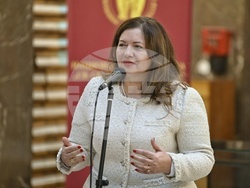
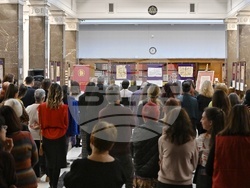
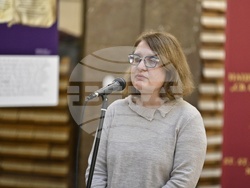
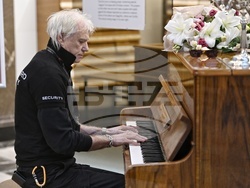
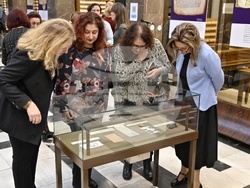
![National Library Celebrates 147th Anniversary]() The Sts Cyril and Methodius National Library celebrates its 147th anniversary, Sofia, December 10, 2025 (BTA Photo/Aleksandrina Peteva)
The Sts Cyril and Methodius National Library celebrates its 147th anniversary, Sofia, December 10, 2025 (BTA Photo/Aleksandrina Peteva)
![Национална библиотека „Св. св Кирил и Методий“ - годишнина]()
![Национална библиотека „Св. св Кирил и Методий“ - годишнина]()
![Национална библиотека „Св. св Кирил и Методий“ - годишнина]()
![Национална библиотека „Св. св Кирил и Методий“ - годишнина]()
![Национална библиотека „Св. св Кирил и Методий“ - годишнина]()
![Национална библиотека „Св. св Кирил и Методий“ - годишнина]()
![Национална библиотека „Св. св Кирил и Методий“ - годишнина]()
![Национална библиотека „Св. св Кирил и Методий“ - годишнина]()
![Национална библиотека „Св. св Кирил и Методий“ - годишнина]()
![Национална библиотека „Св. св Кирил и Методий“ - годишнина]()
![Национална библиотека „Св. св Кирил и Методий“ - годишнина]()
![Национална библиотека „Св. св Кирил и Методий“ - годишнина]()
![Национална библиотека „Св. св Кирил и Методий“ - годишнина]()
![Национална библиотека „Св. св Кирил и Методий“ - годишнина]()
![Национална библиотека „Св. св Кирил и Методий“ - годишнина]()
site.btaNational Library Celebrates 147th Anniversary
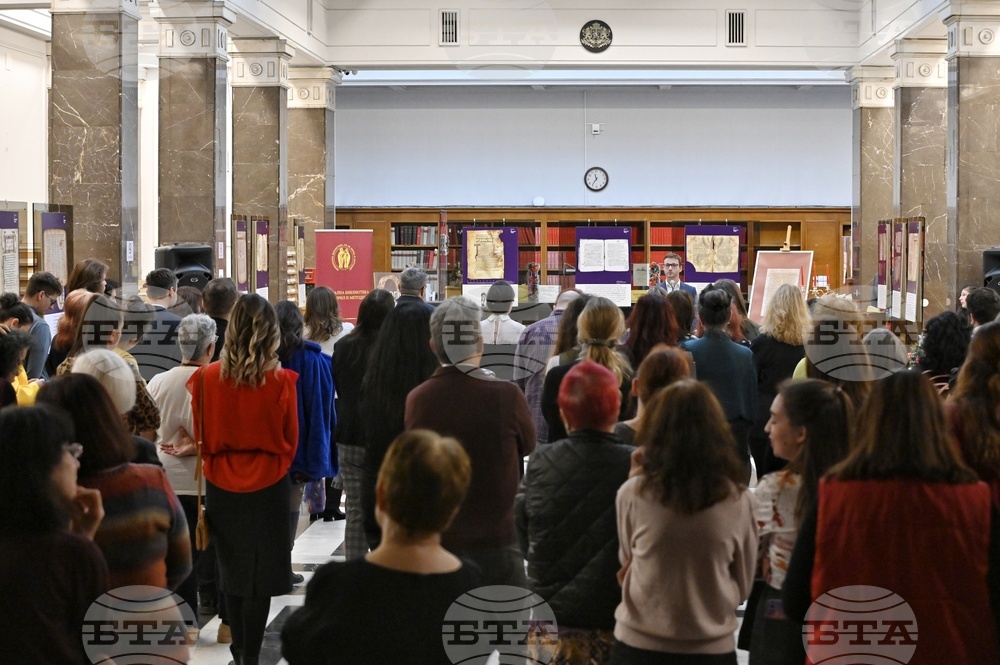
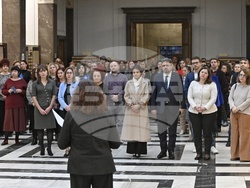
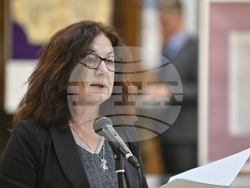
The Sts Cyril and Methodius National Library celebrated its 147th anniversary on December 10. At the event, Director Kalina Ivanova said that the National Library team is entering its 147th year with confidence in its mission. "We, the successors of the founders of Bulgaria's National Library, are called upon to unite our efforts and to draw the attention and support of society at large, including the Library's Public Council, the media and all stakeholders, to ensure the modern and lasting preservation of the nation's literary heritage," she said.
Modernizing the storage facilities is among the institution's most urgent priorities, said Ivanova. The current premises lack proper air conditioning and ventilation, and the shelving is outdated. New projects will aim to introduce specialized systems, improve accessibility, and address the building's long-term sustainability. Talking about the 150th anniversary of the National Library in 2028, Ivanova said that, to mark the anniversary of Bulgaria's oldest cultural institution with renovated storage facilities and a modernized environment, a donation programme and dedicated account will be launched.
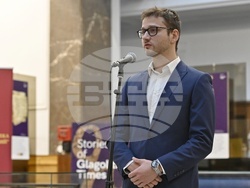
BTA Director General Kiril Valchev said the Library's upcoming150th anniversary would be a good occasion to have the building completed as it was designed. He called for legislative changes in Sofia's urban planning in order to facilitate the completion of this project, which can be viewed as inspiration, a source of pride and a symbol of unity.
Valchev said the history of the National Library has many dates that are worth commemorating, such as April 4, 1878, when Mihail Bubotinov, a teacher and secretary of the City Council in Sofia, proposed to have a public library established; June 5, 1879, when the Sofia Public Library was granted the status of a state institution under the name "Bulgarian National Library" on the recommendation of historian and philologist Marin Drinov.
In 1939, construction began on the new library building, which was almost destroyed during the bombings of Sofia in 1944. In 1963, the library was renamed from Vasil Kolarov, after the Bulgarian communist leader, to Sts Cyril and Methodius, the creators of the Glagolitic alphabet.
Valchev read a BTA article from December 16, 1953, when the opening of the new building of the state library took place. The article reported that the library would boast a modern book storage facility after its completion, which never happened. The head of BTA said: "The library was not finished, and the space around it is currently empty. It is up to our generation to complete the work of our ancestors.
Rositsa Kirova MP said: "The written word is humanity’s strongest weapon, and you in this hall are its keepers". She described the National Library as a "treasure house of the nation's memory", preserving the story of Bulgaria's struggles, resilience and contribution to Europe and the world. Kirova noted that education and the love of learning have always sustained Bulgarians, even in the hardest times. She called for shared resolve to protect and develop this heritage and to ensure better, more dignified working conditions for those who safeguard it.
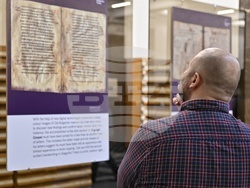
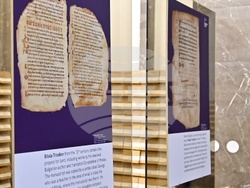
In a congratulatory address, Culture Minister Marian Bachev said the National Library has been a spiritual stronghold since its founding as an institution that has safeguarded and interpreted the riches of Bulgarian literature for nearly 150 years. "Your work ensures continuity between generations and provides the stable intellectual foundation on which any society aspiring to enlightenment, culture and progress must stand," he said. Significantly, this year's celebration is accompanied by the opening of Stories from Glagolitic Times, an exhibition which draws attention back to the roots of Bulgarian spirituality.
Anton Aleksandrov, INSAIT doctoral researcher and lead scientist behind BgGPT (the first open large language model for Bulgarian), said the Institute for Computer Science, Artificial Intelligence and Technology (INSAIT) greatly values its partnership with the National Library and aims to support its digital development. Since March, the two institutions have been working together on AI solutions for cataloguing, digitization and improved reader services. He urged the public not to fear such technologies, noting that AI is a practical tool, the next step after the typewriter-to-computer leap.
Snezhana Yoveva, Director of the State Institute for Culture at the Minister of Foreign Affairs, said the exhibition Stories from Glagolitic Times is another result of their fruitful cooperation with the National Library. It has become an active element of their travelling-exhibition programme, successfully shown in London, Prague and Bratislava. Produced in English, it supports the joint mission to promote Bulgarian culture and history abroad. This is the second joint project with the National Library in less than a year, she noted.
Assoc. Prof. Desislava Naydenova, who was involved in creating Stories from Glagolitic Times, said it shows that the Glagolitic script and the Cyrillic alphabets coexisted in Bulgaria for centuries. The Glagolitic is largely absent from the national narrative, not just because only about 20 manuscripts survive, many fragmentary, but also due to a National Revival-era church council that officially replaced the Glagolitic with the Cyrillic alphabet. For years this led scholars to assume the Glagolitic vanished by the late 11th century, but research by philologists, historians, archaeologists and calligraphers now shows both alphabets were used in parallel at least until the 15th century.
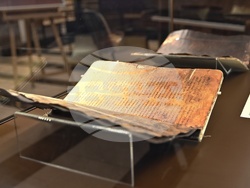
The exhibition Stories from Glagolitic Times was organized with the support of the State Cultural Institute at the Foreign Ministry and the Institute for Bulgarian Language at the Bulgarian Academy of Sciences. Created by Prof. Yavor Miltenov, it presents images from medieval manuscripts that illuminate the life of the Glagolitic script. Assoc. Prof. Naydenova noted that modern digital technology now allows visitors to see Glagolitic texts up close for the first time. She stressed that the script was used not only for liturgical works but also for medical notes, amulets and numerous marginal notes, including a stone inscription from the village of Chernoglavtsi in Northeastern Bulgaria, which says that local beehives had been raided by thieves.
To honour the 1,170th anniversary of the creation of the first Bulgarian alphabet, the National Library designated 2025 the Year of the Glagolitic under the patronage of Vice President Iliana Iotova. The Year of the Glagolitic ended with a national scholarly conference with international participation titled "Alphabets, Memory, Continuity", which took place on December 8 at the Sts Cyril and Methodius National Library.
/RD/

Additional



news.modal.image.header
news.modal.image.text
news.modal.download.header
news.modal.download.text
news.modal.header
news.modal.text