site.btaMedia Review: April 3
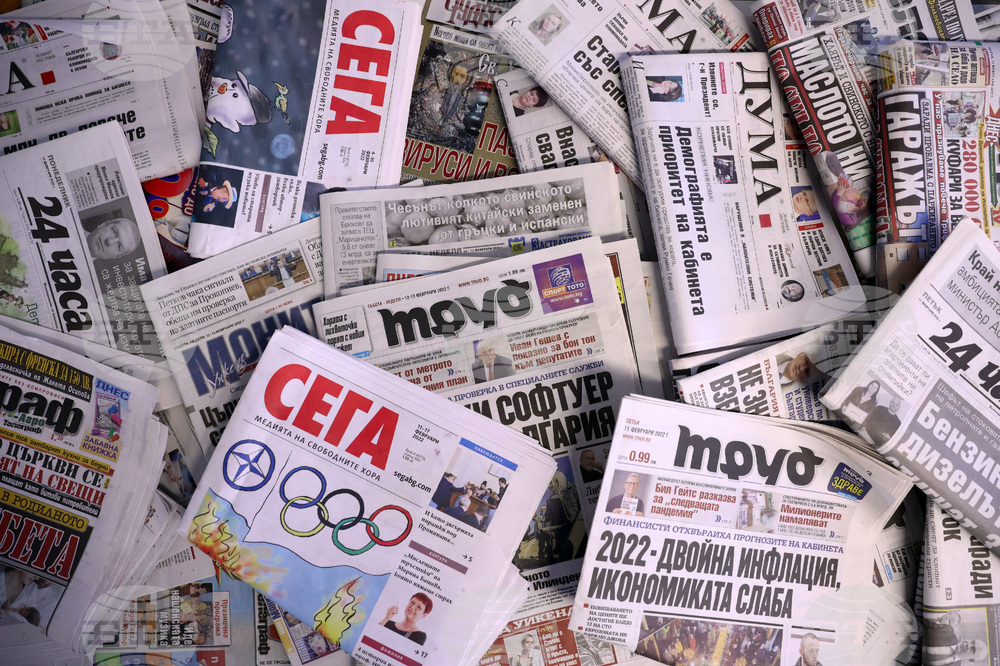
ECONOMY – ENERGY
The media cover the requested price increases by heating utilities.
Trud: Bulgarian district heating companies have requested significant price increases for heating and hot water starting July 1, 2026, with Toplofikatsia Sofia seeking a nearly 30% hike and Toplofikatsia Veliko Tarnovo around 26%. Other providers have proposed smaller increases, while some, like Toplofikatsia Ruse, want no change.
The companies justify the hikes with higher projected natural gas prices, rising material costs, and the need for repairs and higher wages. However, forecasts for gas prices vary widely between companies, raising questions about pricing assumptions.
Bulgaria’s Ombudsman Velislava Delcheva strongly opposed the proposed increases, warning they would be unaffordable for many households and criticizing the lack of transparency and service quality. She called on the regulator Energy and Water Regulatory Commission to thoroughly review the pricing and protect consumers.
Despite lower gas prices compared to last year, households are already paying higher heating costs. Meanwhile, global energy market tensions - including statements by Donald Trump on the Iran conflict - have pushed up fuel prices, contributing to uncertainty about future energy costs.
Nova TV also reported that energy expert Ivan Hinovski described any sharp increase in district heating prices as absurd and said Toplofikatsia Sofia was in a state of “smouldering bankruptcy”. He argued that the utility had been left to drift under managers without the necessary engineering expertise and said its request for higher prices relied on exaggerated assumptions about gas costs and on unexplained repair spending.
Hinovski added that the company’s debts had reached BGN 2.7 billion and called for the State Financial Inspection Agency to audit its spending. He said an adequate rise in the price of thermal energy, based on current gas costs, should be no more than 7-8%, and argued that the utility should be restructured through partial privatization, private investment and more competition in heat production.
***
BNR reported that BNB Governor Dimitar Radev warned against anti-crisis measures on energy prices that bring only short-term relief while weighing on the public finances in the longer term. Speaking at a business meeting organized by the American Chamber of Commerce in Bulgaria, he said part of the country’s fiscal buffers had already been used in earlier crises, including in 2022.
“The right response today is not overreaction,” Radev said, calling instead for consistency in macroeconomic policy, fiscal decisions and long-term efforts to improve productivity and competitiveness. BNR added that the Bulgarian National Bank had prepared three scenarios for the impact of the Middle East crisis, with the baseline one putting average annual inflation in Bulgaria at 3.7% in 2026, rising by a further 0.7 percentage points in the adverse scenario and by 1.2 points in the severely adverse one.
***
Nova TV reported that former deputy finance minister and BNB Governing Council member Lyudmila Elkova said Bulgaria’s budget deficit was widening at an alarming pace, from a surplus of about EUR 200 million in January to a deficit of around EUR 600 million in February and EUR 1.5 billion in March. She said the trend itself was not surprising, but the speed of deterioration showed there was no real intention to curb spending.
The broadcaster added that economist Krasen Stanchev also criticized the fiscal stance, saying caretaker governments since 2022 had undermined budget discipline rather than protecting it. Elkova said revenue performance remained stable, but expenditure was the real problem, while Stanchev argued that wage and pension increases had been allowed to outpace economic growth and productivity.
***
bTV reported that transport operators said they were working at a loss and had no political motive for threatening protest action. The broadcaster said seven sectoral organizations, representing both bus and freight carriers, were considering stopping work on Monday and putting staff on leave because the government had still not adopted effective measures in response to rising fuel prices.
Speaking to bTV, Union of International Carriers Chair Yordan Arabadzhiev said the sector had proposed three steps to the caretaker PM: a virtual wallet mechanism to offset VAT and social security liabilities, a scheme to defer lease payments, and an increase in state aid from EUR 25 million to EUR 50 million after EU notification. He said delaying the toll increase was not enough, warned that key routes such as Plovdiv-Sofia could be hit, and insisted there was “no political motive” because every truck or bus currently on the road was operating at a loss of at least 10%.
JUSTICE
Nova TV reported that Caretaker Deputy Prime Minister and Caretaker Minister of Justice Andrey Yankulov said his Ministry was preparing a proposal to open disciplinary proceedings against Sofia City Prosecutor Emilia Rusinova. He said a report received from the Interior Ministry confirmed that Rusinova had travelled abroad with Petyo “the Euro” Petrov, and with Kristian Hristov in June and August 2021, well after Petrov had already been publicly identified with the Eight Dwarfs network of alleged influence peddling in the judiciary.
Yankulov added that the case was especially troubling because Sofia City Prosecutor’s Office is the only body competent to investigate high-level corruption, including among magistrates, yet it is headed by Rusinova herself. He also referred to European Public Prosecutor Teodora Georgieva’s claim that Rusinova had introduced her to Petrov’s circle, and said Rusinova’s silence on the allegation was deeply disturbing. “We are preparing a proposal to open disciplinary proceedings against Rusinova,” Yankulov said.
***
Duma: “I have a question for all parties running in the elections - have they heard about the Sofia City Prosecutor who was riding in a car belonging to Petyo "the Euro" Petrov,” said Krum Zarkov, Chair of the National Council of the Bulgarian Socialist Party, speaking to journalists in Sliven.
The socialist politician asked other election participants whether they find it acceptable that magistrates remain silent in response to the most legitimate questions. According to him, the Bulgarian public must understand that while a legislature is constantly being elected and reshuffles the executive, the judiciary is “occupied by a person who has no right to be there.” He clarified that he was referring to acting Prosecutor General Borislav Sarafov.
Zarkov added that unless the cases linked to Petar Petrov, Martin Bozhanov, and all related figures - from Teodora Rusinova to Emilia Rusinova - are fully pursued, Bulgaria will remain trapped in a cycle of elections and fruitless debates.
The BSP chair called on all parties seeking public trust to answer several questions: how they assess the status of Borislav Sarafov - whether they consider him legitimate or not; how they evaluate the actions of the Prosecutors’ College of the Supreme Judicial Council — whether adequate or inadequate; and what steps they will take to obtain answers from prosecutor Rusinova. He asked whether she had travelled in the car in question, whether she knew who she was with, and insisted that, unlike others, his party would not stop seeking answers.
INTERNATIONAL AFFAIRS – UKRAINE – IRAN
BNT reported that Deputy Foreign Minister Marin Raykov described Bulgaria’s agreement with Ukraine as essentially a political declaration rather than a document with concrete obligations. He said the text had been adopted by the Council of Ministers back in 2024 and contained no specific financial or material commitments, but rather expressed Bulgaria’s support for Ukraine in line with the position of its European partners.
***
Raykov also commented on the diplomatic note sent by Iran, saying Bulgaria was not at war and NATO was not at war, while the aircraft at Vasil Levski Airport were part of NATO’s forward presence. He said the Foreign Ministry did not want such correspondence to be exploited during the election campaign to spread fear or speculation. On North Macedonia, Raykov said the core issue was not bilateral but lay between Skopje and the EU, because the country had still not met the conditions linked to the rights of the Bulgarian community. He added that more than 210,000 people from North Macedonia had documented their Bulgarian origin before EU authorities.
***
“London and Paris to Lead Coalition for the Strait of Hormuz,” reads Dnevnik’s headline.
The United Kingdom and France will lead a future coalition aimed at ensuring the reopening of the Strait of Hormuz, which was blocked by Iran following the start of the military operation by the United States and Israel. The two countries are also leading the “Coalition of the Willing” in support of Ukraine.
Foreign ministers from nearly 40 countries, including Bulgaria, held talks via video conference hosted by London after U.S. President Donald Trump said he was considering ending military operations without reopening the key maritime route, suggesting that responsibility should fall to others who use it.
Participants in Thursday’s meeting included France, Germany, Canada, the United Arab Emirates and India. The United States did not take part in the video call.
European officials said the first meeting focused on identifying which countries were prepared to join the proposed coalition and what diplomatic and economic tools were available to persuade Iran to reopen the strait.
Although the meeting ended without concrete agreements, there was consensus that Iran cannot impose transit fees on ships using the waterway and that all countries must have access to the route, Reuters reported, citing diplomats.
Bulgarian Participation
Bulgarian Foreign Minister Nadezhda Neynski said Bulgaria would support all efforts to lift the blockade but would not participate in the use of force to achieve this goal.
The Foreign Ministry quoted Neynski as saying that all diplomatic channels for de-escalation and reopening the Strait of Hormuz, as well as ensuring freedom of navigation, must be used to limit negative consequences for the global economy.
The next stage of negotiations on the international coalition will be a meeting of military planners next week. Reuters reported that they will discuss options including potential mine-clearing operations and providing escorts for commercial shipping.
European countries initially rejected President Trump’s request to deploy their naval forces to the region due to concerns about being drawn into the conflict. However, rising fuel prices and shortages in some parts of the world prompted them to seek the formation of a coalition to determine how they could protect their own interests.
European diplomats said the coalition remains at an early stage, with the United Kingdom and France taking the lead. The United States did not participate in the conference organised by British Foreign Secretary Yvette Cooper.
French Armed Forces spokesperson Guillaume Vernet said at a press conference on Thursday that the process would be multi-stage and could not be implemented until military operations had ended.
Reuters noted that coordination with Iran would also be necessary to guarantee the safety of shipping, which Vernet described as something currently unlikely.
He added that discussions had also begun on what military assets could be provided.
“We will need to assemble a sufficient number of vessels and ensure coordination capabilities in the air and at sea, as well as intelligence-sharing capabilities,” he said.
Iran’s Position
Iranian Deputy Foreign Minister Kazem Gharibabadi announced on Thursday that his country was working with Oman on a protocol for safe maritime transit through the Strait of Hormuz, including rules on fees, according to Iran’s IRNA news agency. The future regulation would apply to the period after the end of the conflict.
Even in peacetime, ships would need permission from Iran and Oman to pass through the strait, Gharibabadi said, adding that Tehran would “soon” determine the level of fees charged for transit through the key waterway.
He also insisted that the strait had functioned normally at the beginning of the crisis, but that the escalation of U.S. and Israeli operations had caused disruptions to shipping.
Meanwhile, U.S. President Donald Trump said Washington could agree to a ceasefire with Iran if it reopened the Strait of Hormuz. Tehran, however, insists it will not do so without receiving security guarantees.
HEALTHCARE
bTV reported that patient advocates were again urging changes to the outdated rules under which in vitro procedures are financed in Bulgaria. The broadcaster said the I Want a Baby foundation wanted procedures using donor material and other ineffective restrictions to be removed without delay, arguing that the problem had remained unresolved for years while the number of people facing reproductive difficulties continued to grow.
The report added that, out of 14,000 procedures, only 4,000 had been financed by the Centre for Assisted Reproduction, leaving 10,000 to be paid for by patients themselves. The Health Ministry said it had set up a working group in 2025 to assess whether donor egg procedures should be covered, but discussions had not yet been finalized. Doctors interviewed by bTV also said the rules should be modernized, including by dropping the requirement for four insemination attempts before state-funded IVF can begin.
***
BNT reported that the Commission on Protection of Competition had alerted the General Directorate for Combating Organized Crime over misleading online advertising for a so-called non-invasive intelligent glucometer sold under the OMRON brand. The broadcaster said the inquiry was prompted by warnings from the authorized importer of OMRON medical equipment in Bulgaria, which said no certified and reliable glucometer capable of measuring blood sugar without a finger prick existed as of May 2025 and that OMRON did not produce such a device.
BNT added that the commission had found similar or identical images, texts and certificate visuals across a number of websites, while neither the real product nor the actual online seller could be clearly identified. It said this created the risk of misleading sales by suppliers outside Bulgaria in breach of the rules governing medical devices, and that the anti-cartel body had asked the cybercrime police to investigate the sites and take further action.
DALLBOGG INSURANCE COMPANY
Capital leads with a story about how a Bulgarian regulator halts DallBogg Insurance sales over solvency concerns.
Bulgaria’s Financial Supervision Commission (FSC) has ordered insurer DallBogg: Life and Health to stop selling insurance policies in the country with immediate effect, citing violations of market conduct rules and concerns related to the company’s financial stability.
The indefinite ban prevents the insurer from issuing new policies or renewing existing ones but does not affect current contracts, which remain valid. The company must continue servicing clients and paying claims, the regulator said.
The measure effectively freezes the operations of DallBogg, which ranked as Bulgaria’s market leader by premium income in 2024, particularly in motor third-party liability insurance.
The FSC said the decision was intended to protect policyholders and safeguard solvency. Industry reports indicate the insurer holds roughly 900,000 active policies, many outside Bulgaria.
DallBogg expanded aggressively across European markets in recent years, with Italy becoming its largest source of premiums. However, disputes with regulators in Poland and Romania over claims handling and organisational capacity led to restrictions on its cross-border operations in 2025.
Premium income fell to about BGN 432 million last year following regulatory actions, while claims costs nearly matched revenues in its core motor liability business, raising questions about pricing sustainability.
The Bulgarian regulator has requested an assessment from the European Insurance and Occupational Pensions Authority (EIOPA) covering solvency, liability valuation and risks linked to cross-border operations. Analysts say the latest ban indicates the review may have identified significant supervisory concerns.
Under Bulgarian law, failure to meet capital requirements would oblige the insurer to submit a recovery plan within strict deadlines, while rejection of such a plan could lead to licence withdrawal.
Dnevnik circulates the company’s position, in which DallBogg Insurance says it sees the decision of the Financial Supervision Commission (FSC) as an order by the oligarchy and the mafia. In a statement posted on Facebook, the company said that its financial “strangulation” had been ongoing since the start of the term of FSC Chair Vasil Golemanski, who was appointed exactly one year ago.
According to DallBogg, this has been happening at the proposal of Vladislav Goranov (currently a GERB parliamentary candidate) and under instructions allegedly given to Golemanski by Delyan Peevski. Both politicians have been sanctioned by the United States and the United Kingdom for corruption.
“The protection of insured persons’ interests is in no way the objective of such a criminal coercive measure,” the insurer said in its statement, adding that FSC supervision had turned into “administrative terror.”
CYBERSECURITY
Mediapool: A suspected ransomware attack hit the Bulgarian unit of insurer Uniqa in February 2025, likely carried out by the AKIRA group, with a reported ransom demand of around EUR 6 million. The company acknowledged an IT security incident at the time, temporarily shutting down systems, but has not disclosed details about the scope of the attack, affected data, or whether any ransom was paid.
Bulgaria’s data protection authority confirmed that a data breach was reported within the legal deadline, indicating that client data was compromised, though it remains unclear whether affected individuals were properly notified. An investigation is ongoing.
Experts warn that such attacks are increasingly common in Bulgaria, particularly targeting large companies holding sensitive data. Authorities stress that paying ransom is strongly discouraged, as it fuels cybercrime and does not guarantee recovery. The case highlights broader concerns about cybersecurity preparedness, regulatory oversight, and companies’ ability to respond effectively to such incidents.
SOCIETY
BNR reported that two recent child protection cases - the twins left for months in a Sofia hospital and the Yambol case in which citizens and police helped save a small child - had reopened the debate on parental responsibility and the role of foster families. In an interview with the radio, long-time foster parent and National Association for Foster Care representative Ginka Ilieva said foster parents were indispensable and warned that without them Bulgaria would have to rebuild the large child-care homes of the past.
Ilieva said the system was often slow and overly rigid, giving the abandoned twins as an example. She said she had personally found several foster families ready to take them in, but child protection departments did not support the placements, leaving the children in hospital for nine months. She also said foster parents faced low pay, insecure civil contracts and too much control rather than support, and argued that legislation should be changed because reintegration procedures in families marked by neglect or violence often took far too long. BNR added that, according to Ilieva, nearly 400 foster families are currently free, while family-type care centres continue to be filled.
SPORTS
24 Chasa: Major news for Bulgarian sport: up to 35% tax relief for businesses that support a healthy and successful future for Bulgaria. This was announced by Dimitar Berbatov, adviser to caretaker Prime Minister Andrey Gurov on youth and sports.
Berbatov revealed that the procedure has already been launched - the bill amends and supplements to the Corporate Income Tax Act has been officially published for a 30-day public consultation period, which he described as decisive. He said that this means that the new tax relief would allow business to invest directly in sports, circumventing the burdensome and slow administration.
/MY/
news.modal.header
news.modal.text