site.btaPM Gurov in First Interview: Caretaker Government’s Mission Is to Unite All Citizens, Hold Fair Elections
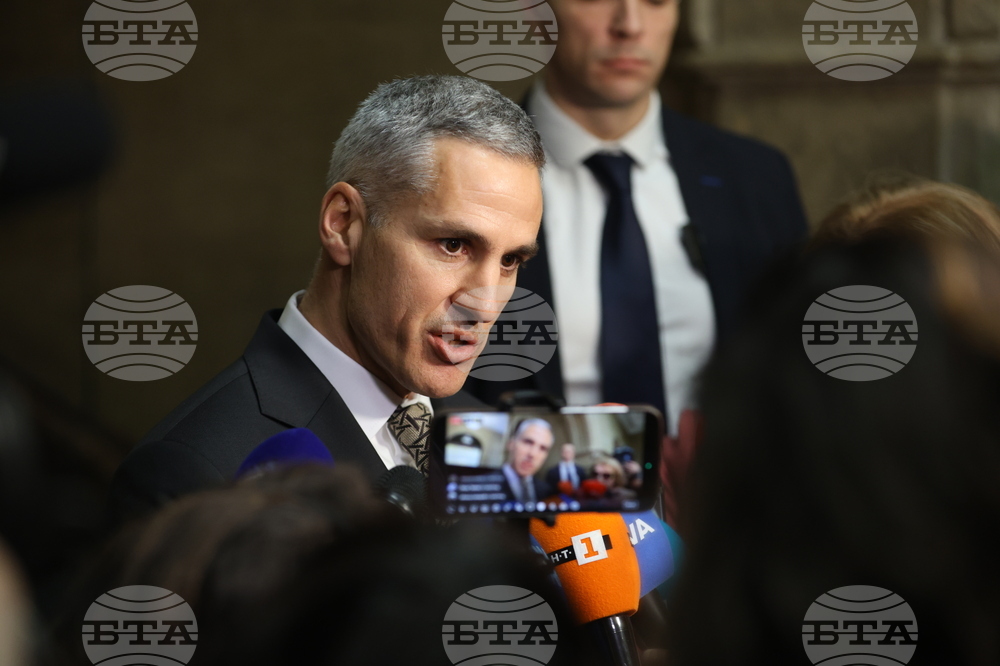
The Formula of the caretaker government is to unite all citizens, caretaker Prime Minister Andrey Gurov said in an interview with journalist Konstantin Valkov, broadcast Wednesday morning. In what was his first interview, he took questions about the upcoming elections, the Middle East crisis, the Ukraine war and the judicial reform, among others. The interview was made for The Konstantin Valkov Bureau which streams on YouTube, Spotify and Apple Podcasts.
Following are the highlights:
April 19 elections
The main task of the caretaker cabinet is to conduct fair elections, calm the public, and restore people’s sense that voting makes a difference, Gurov said. He noted that increased voter turnout would indicate that the government has done its job well. The goal is to avoid situations where citizens feel compelled to make "civil arrests", search vehicles, and find money used for vote-buying while the police are turning a blind eye, he said, referring to "citizens' arrests" during by-elections in the southern town of Pazardzhik. "The State must step into its proper role and do the necessary to prevent obvious electoral violations," the Prime Minister emphasized.
He said there is controlled voting and other methods of influencing Bulgarian citizens that the cabinet won't be able to eliminate 100% due to the short timeframe, but it will do its best.
Gurov said the government will take a firm and uncompromising stance toward newly appointed regional governors and regional Interior Ministry directors if they fail to meet professional standards, act without impartiality, or do not adequately protect citizens’ votes.
Regarding the replacement of regional governors, he said the aim was to appoint individuals not connected to the previous administration who can, within 60 days, quickly familiarize themselves with the work of the regional administration and carry out the necessary tasks. "Having independent individuals is necessary but not sufficient; this must be backed by strong organization and effective action, which will be closely monitored," Gurov stated.
He added that from Day One there has been resistance to the work of the caretaker Minister of Interior. "The attacks were relentless," he said. According to him, Minister Emil Dechev has not deviated for a single second from the main goal of creating the necessary organization for transparent elections. The replacement of the Interior Ministry Secretary General, the formation of the Interior Ministry’s leadership team, and the replacement of regional directors were carried out in close coordination, and Gurov said the Minister of Interior has his full support.
Middle East war
According to Gurov, key to convening the Security Council under the Council of Ministers are the reports of the security services, which provide information which is not available publicly. This involves gathering and analyzing data and taking into account that Bulgaria is a NATO member, the Prime Minister said.
He emphasized that if Bulgaria were not part of NATO, it would now be vulnerable to the unchecked actions of a regime such as Iran’s. Bulgaria does not have its own air defense system or missile shield, and only NATO membership provides reassurance that allied support will be available 24 hours a day, seven days a week, he stated.
"We must remain vigilant at all times, like a good homeowner who locks his house not out of fear but because it is good practice. The security services, the Interior Ministry, and citizens must be vigilant and report suspicious activities," he said.
He noted that the government is focused on evacuating Bulgarian citizens from the Middle East as quickly as possible. This involves analyzing information and data and acting in the safest and fastest way without endangering Bulgarian lives.
The Ukraine war
As for the Ukraine war, there is no doubt which side Bulgaria should be on, said Gurov. "Bulgaria must support Ukraine in the most consistent and strong way possible because Ukraine and its armed forces are defending not only their own territory but also Europe from an entirely unprovoked aggression," he said.
He argued that if Ukraine loses the war, it would pose a huge threat to the security of Europe and Bulgaria. "Our position must be clear and consistent," Gurov stated.
He pointed out that in recent months Russia has not achieved any of its strategic objectives. "On the contrary, it is losing international, military, and economic positions. However, this does not mean support for Ukraine should weaken. Bulgaria has supported Ukraine since the beginning of the war and will continue to do so. The caretaker government will remain consistent in this position," Gurov said.
Judicial reform
Regarding the acting Prosecutor General Borislav Sarafov, Gurov said replacing one person with another is never real reform, as demonstrated by the replacement of the previous Prosecutor General. The personnel change sought by the Minister of Justice is more about enforcing the law, which is very clear, than about systemic reform.
The caretaker government does not have the ambition to carry out judicial reform, and it would not be correct for people to expect such actions. However, there are basic tasks to complete: ensuring more openness and transparency in decision-making, avoiding arrogance, and strictly observing the law.
According to Gyurov, the entire judicial system owes society results. As long as investigations remain stalled, Bulgarian society will remain hostage. The goal is to free the judicial system from these stalled cases, which would be a serious prerequisite for better governance.
Formation of the caretaker Cabinet
He said the caretaker cabinet had to step in unexpectedly, after mass protests forced the previous government to resign in late 2025. "There was no time for preparation, and the cabinet had to act immediately. The most unpleasant task was forming the cabinet and making corrections in its composition in the very first days," the Prime Minister said.
He admitted that "two or three individuals" dropped out of the lineup on the day the names were announced. Nadezhda Neynsky was the first to agree to join the Caninet - as Foreign Minister.
It was helpful that there was already a prepared list of potential candidates, enabling the formation of a cabinet within a very short time: from Thursday to Wednesday. The cabinet was well received, and Gurov expressed confidence that he made the right decisions regarding both its profile and the individuals involved.
He said he held preliminary discussions with each minister about values, morality, decency, and common goals. In most cases, his assessment of people proved correct. Calmness is crucial for a caretaker cabinet, he noted. Despite political attacks aimed at provoking tension, he sought to absorb the pressure and prevent it from affecting the cabinet members.
Regarding keeping Atanas Zapryanov in the caretaker cabinet as Defence Minister, Gurov said the important issue is not party affiliation but whether someone advances key national priorities. His assessment was that Zapryanov had done good work, including modernizing the army and advancing important projects and programs. A conversation with Zapryanov convinced him that the right decision was to keep him.
On appointing Stoil Tsitselkov as deputy prime minister responsible for fair elections, Gurov said it was a clear message about the government’s focus. However, they did not get the opportunity to prove the usefulness of that position and had to part ways. He said the attacks against Tsitselkov came from "circles that had conducted the most unfair elections in Bulgaria".
There is a need for coordination among institutions, which was Tsitselkov’s task. Now part of that responsibility falls on Gurov himself. There are no plans to appoint a replacement. He does not regret the choice; it was the right decision, but there was no opportunity to demonstrate its effectiveness, the prime minister concluded.
/NF/
news.modal.header
news.modal.text