site.btaRare 5,000-Year-Old Textile Fragments Discovered in Bulgaria’s Magura Cave

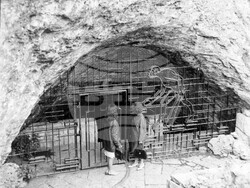
Rare textile fragments dating back approximately 5,000 years were discovered during archaeological excavations in Magura Cave, said the research director Dr. Vanya Stavreva. She was speaking at a press conference held at the BTA National Press Club in Vidin. The excavations have been conducted for a third consecutive year with the support of the Municipality of Belogradchik.
“I say five thousand years because these fragments were found in an archaeological structure from which charcoal samples were taken last year for radiocarbon dating. The samples that were analyzed date it to the period between 3300 and 3000 BC, that is, about five thousand years ago. This marks the beginning of the Early Bronze Age,” Dr. Stavreva explained. She added that laboratory analyses conducted at the National Academy of Art show that the fabric was made of hemp — one of the raw materials used during that period, alongside wool and flax.
“I am not saying that our find is unique; I will say that it is very rare,” the archaeologist emphasized.
According to her, finds from approximately the same period are known only from Devetashka Cave in North-Central Bulgaria. Otherwise, knowledge about prehistoric textile production is based mainly on spindle whorls and ceramic loom weights discovered at archaeological sites. The discovered fragments, together with a restored ceramic vessel, bone artifacts, and other finds from Magura Cave, will be presented in an exhibition in February at the National Archaeological Institute with Museum, where the cave will participate with artifacts for the first time.
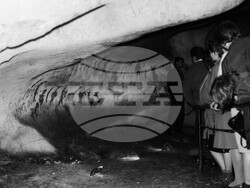
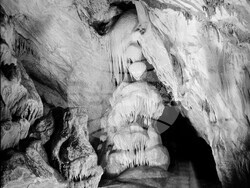
Dr. Stavreva noted that over the past three years the chronology of habitation of the cave has been expanded, including an earlier transitional period between the Chalcolithic (Copper Age) and the Early Bronze Age. The cave’s specific microclimate — high humidity and constant temperature — creates favorable conditions for the preservation of organic materials, which rarely survive at other archaeological sites.
All finds are housed at the Belogradchik Historical Museum, and in the future it is planned that some of them will be exhibited either inside the cave itself or in the museum.
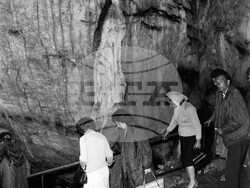
Magura Cave is a treasure not only for Bulgaria and Europe, but for the entire world, stated the Mayor of Belogradchik Municipality, Boyan Minkov, emphasizing the importance of the archaeological excavations conducted in partnership with the scientific team.
/NF/
Additional




news.modal.image.header
news.modal.image.text
news.modal.download.header
news.modal.download.text
news.modal.header
news.modal.text