site.btaVelichie Calls for Ombudsman and Deputy Ombudsman's Resignation
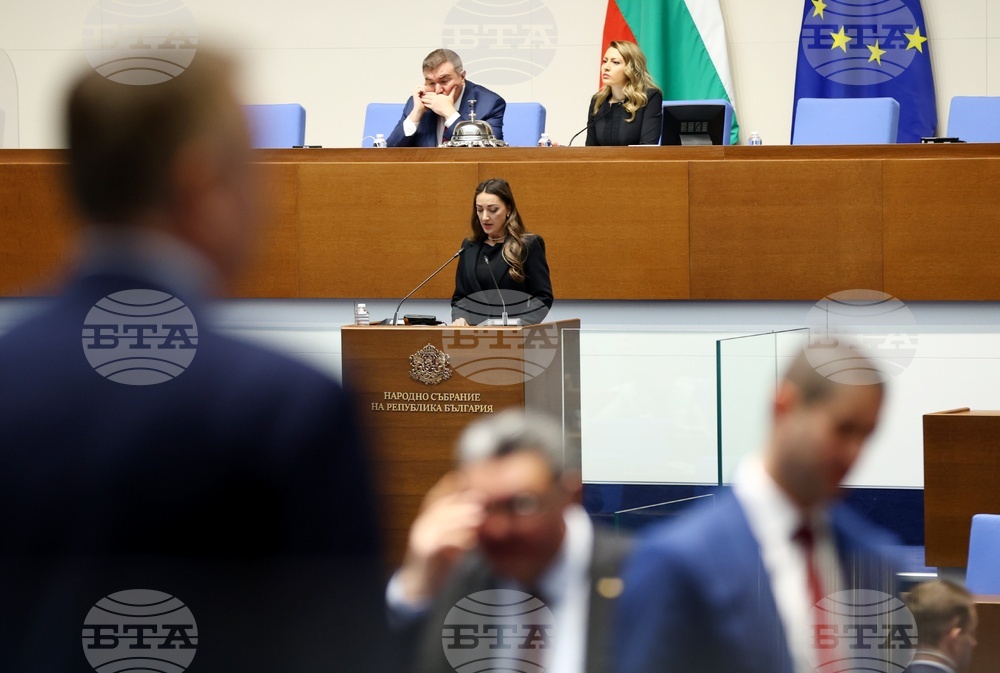
The parliamentary group of Velichie on Thursday issued a declaration calling for the resignation of the Ombudsman and the Deputy Ombudsman. The statement was read from the rostrum of the National Assembly by Velichie MP Larisa Savova. The declaration is based on a series of verifiable facts which, according to the party, demonstrate "complete institutional abdication" by bodies established to protect the fundamental rights of citizens and children, Savova said. She outlined two cases which, in the party’s view, illustrate this total institutional failure.
The first case concerns an imminent risk to the life of a person deprived of liberty, about which the Ombudsman was formally notified on November 28. The alert included specific medical data indicating a severe heart condition, the MP said, noting that the individual’s health was continuously deteriorating. The outcome was fatal, while the Ombudsman failed to activate any real preventive mechanism, as required under the Optional Protocol to the Convention against Torture, Savova stated. "Instead of immediate intervention or an independent medical assessment, the institution merely relayed assurances from the same administration whose actions it is mandated to oversee." The relatives of the deceased were denied a registration number when they attempted to file a complaint with the prosecutor’s office.
"The role of the Ombudsman is neither advisory nor symbolic, it entails active intervention, particularly in cases involving persons under state control whose life or health is at risk," Savova stated. "In this instance, neither the Ombudsman nor the Deputy Ombudsman fulfilled their obligations to respond or ensure accountability. No investigation was launched following the death," she added.
The second case involves two Bulgarian children in France, aged eight and ten, and again, according to Savova, reflects inaction on the part of the national public defender. The children were removed from their families in France, with the Paris Court of Appeal upholding the measure and transferring parental rights to the French child protection services. "The children are healthy, have strong bonds with their parents, and there is a clearly expressed wish by the parents for their return. Nevertheless, preparations are reportedly underway to place them in an institution for children with physical and mental disabilities, and to subject them to forced treatment," Savova said.
Instead of acting with maximum urgency, the Bulgarian state, particularly the Ministry of Foreign Affairs, has displayed what the declaration describes as a “strangely passive attitude, bordering on cynicism.” This amounts to an abdication of state responsibility, while the Ombudsman remains absent from the case, the declaration added.
"These two cases reveal an institutional model in which bodies tasked with protecting rights become passive observers," Savova stated.
According to her, institutions meant to safeguard rights have been turned into a “waiting room for the prime minister’s office.” The Ombudsman and her deputy have not acted, not out of ignorance, but because they are waiting, avoiding confrontation with political actors who hold the key to interim executive power, the declaration said. In addition to demanding the resignations of the Ombudsman and the Deputy Ombudsman, Velichie called for a parliamentary hearing of the outgoing foreign minister regarding actions taken in the case involving the children in France.
Under the Bulgarian Constitution, when a government resigns, the President of the Republic must begin consultations with the parliamentary groups and hand out up to three cabinet forming mandates to their prime ministers-designate. Should all three mandates be unsuccessful, the head of State is obliged to appoint a caretaker cabinet and schedule early parliamentary elections within two months. The pool of potential caretaker prime ministers from which the President may choose is limited to the Chairperson of the National Assembly, the Governor or Deputy Governor of the Bulgarian National Bank, the President or a Vice-President of the National Audit Office, and the National Ombudsman or a Deputy Ombudsman.
When Ombudsman Velislava Delcheva was elected to the post, she declared publicly that she sees herself as someone focused on protecting the rights of individuals and citizens, not as caretaker prime minister. Before being elected Deputy Ombudsman, Maria Filipova was questioned by the Parliamentary Committee on Direct Participation of Citizens, Citizens’ Complaints and Interaction with Civil Society whether she would accept the position of caretaker prime minister, but avoided a straightforward answer.
/RD/
Additional
news.modal.image.header
news.modal.image.text
news.modal.download.header
news.modal.download.text
news.modal.header
news.modal.text