site.btaLeading Candidates for President of Republika Srpska Cast Their Ballots in Banja Luka
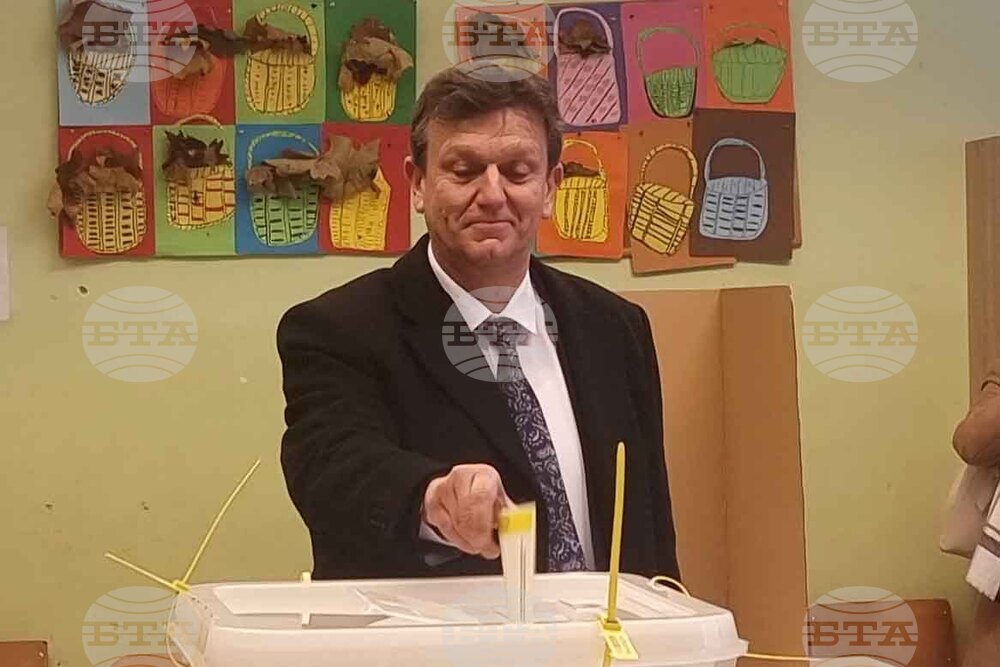
The leading contenders in the early presidential elections in Bosnia’s Republika Srpska, Sinisa Karan of the ruling Alliance of Independent Social Democrats (SNSD) and Branko Blanusa of the opposition Serb Democratic Party (SDS), cast their votes on Sunday in Banja Luka.
Election day in Republika Srpska, one of the two semi-autonomous entities within Bosnia and Herzegovina, began at 7 a.m. local time (8 a.m. Bulgarian time) and will conclude at 7 p.m. (8 p.m. Bulgarian time). The Central Election Commission (CEC) said that not all polling stations opened on time due to accumulated snowfall.
The first of the two frontrunners to vote was Branko Blanusa of the opposition SDS. He cast his ballot at Branko Radicevic Primary School in Banja Luka, accompanied by his wife. Speaking to journalists, Blanusa said the election campaign had been conducted in a fair and constructive atmosphere and voiced hope that the election day itself would follow the same pattern.
“I want as many citizens of Republika Srpska as possible to turn out to vote today,” he said. “I also expect the election day to unfold in a democratic spirit, culminating in the election of a president who will represent a better future for all citizens of Republika Srpska.” He urged voters to cast their ballots “in line with their own best interests”.
The candidate of the ruling party, Sinisa Karan, voted slightly later at Aleksa Santic Primary School in Banja Luka. He arrived without family members, accompanied only by his staff. Karan told reporters he was grateful to everyone contributing to the conduct of the elections in a democratic environment. “This is the democratic and lawful way for our citizens to exercise their right to vote. It is the way for the people of Republika Srpska to say they want a peaceful and stable Republika Srpska, and it is the only way we affirm peace and stability,” Karan said. He added that elections are a means of strengthening the institutions of Republika Srpska and ensuring peace, a better future, and prosperity for its citizens.
The Chair of the ruling SNSD and former president, Milorad Dodik, cast his ballot at a polling station in the town of Laktasi.
The early presidential elections in Republika Srpska were called after the former President of Republika Srpska Milorad Dodik’s mandate was terminated following a final court decision sentencing him to one year in prison and a six-year ban on holding public office for failing to comply with the decisions of the High Representative of the international community in Bosnia and Herzegovina. After replacing the prison sentence with a fine, Dodik actively joined the SNSD's election campaign.
A total of six candidates will compete on Sunday for the presidential post, with the leading contenders being Sinisa Karan from the ruling Alliance of Independent Social Democrats (SNSD) and Branko Blanusa, nominated by the opposition Serb Democratic Party (SDS) and supported by the majority of opposition parties. The other four candidates are Nikola Lazarevic, Chair of the Ecological Party of Republika Srpska, Dragan Dokanovic, nominated by the Alliance for New Politics, and two independent candidates - Slavko Dragicevic and Igor Gasevic.
A total of 1,264,364 voters are registered in Republika Srpska, and the organization of the elections costs Bosnia and Herzegovina EUR 3.1 million.
According to the Dayton Peace Agreement, which ended the war in Bosnia (1992–1995), the country is divided into two semi-autonomous entities - Republika Srpska, inhabited predominantly by Bosnian Serbs, and the Muslim-Croat Federation of Bosnia and Herzegovina, where Bosnian Muslims (Bosniaks) and Bosnian Croats live. Each entity has its own government, parliament, and police, but the two are connected through joint state-level institutions, including the judicial system, the army, security services, and tax administration. The Dayton Agreement also defines the role of the High Representative for Bosnia and Herzegovina, who has extensive powers, including the authority to impose laws and dismiss public officials.
/KK/
Additional





news.modal.image.header
news.modal.image.text
news.modal.download.header
news.modal.download.text
news.modal.header
news.modal.text