site.btaBTA Celebrates 128th Anniversary
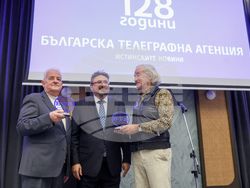
The Bulgarian News Agency (BTA) celebrated its 128th anniversary on Monday. In an address at a commemorative dinner on the occasion, BTA Director General Kiril Valchev compared the work at the Agency in 1898 to 2025.
"On February 16, 1898, BTA’s first director, Oskar Iskender, wrote seven news reports. In 2025, BTA produced 228,991 news stories – 7% more than in 2024 and 78% more than five years earlier, in 2020. Moreover, this growth has come with steadily improving quality and, above all, an ever broader diversity of content," Valchev noted.
Photography was only just beginning to gain mass popularity: in 1898, Bulgaria published its first Guide to Photography. Last year, BTA produced 260,982 photographs – 2.5% more than in 2024 and nearly 8.5 times more than five years earlier, in 2020, he recalled.
In Valchev's words, no one at the Agency was even thinking about video news. In 1898, Georges Melies released his first short films. This pioneer of cinema was among the earliest to create special effects. Last year, BTA produced 9,024 video items, including for TikTok and in podcast format. That was over 27% more than in 2024 and almost 9.5 times more than five years earlier, in 2020.
The first bulletin on February 16 was handwritten by Director Oskar Iskender himself and produced in six copies. A typewritten bulletin survives from December 4, 1901, yet for another two years bulletins continued to be written by hand. The Agency’s first computer arrived in 1988. Today, BTA has 558 desktop computers and laptops, and only 72 of them are more than five years old, Valchev said.
"The bulletins were delivered on foot to the Palace for the Prime Minister and ministers, and to selected newspapers, because in 1898 BTA had no automobiles, which were still a rarity worldwide. Later that same year, the first French Renault was tested, and the first automobile in Bulgaria had arrived only two years earlier; most people travelled on foot or by horse-drawn carriage. Today, BTA has 55 vehicles, of which 30 are fully electric and 10 are hybrid," the Director General noted.
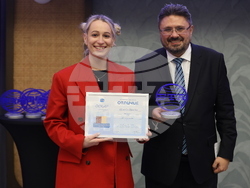
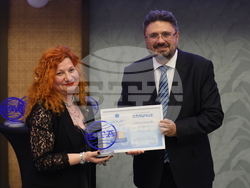
Until 1928, news was received by Morse-code telegraph, and publication typically lagged by about a day, he went on to say. "Today we use the Internet. Through it, we subscribe to news from five global agencies and exchange news free of charge with 51 national agencies. Serdar Karagoz, President and CEO of Turkiye’s Anadolu Agency, one of our partner agencies, is here for the announcement of BTA’s Balkan Athlete of the Year poll and for the celebration of BTA’s 128th anniversary," Valchev said, adding that with Karagoz' support, in 2022 BTA became the seat of the Association of Balkan News Agencies - Southeast Europe (ABNA-SE).
In 1898, BTA had two employees: Director Oskar Iskender and one assistant. Today, BTA has 350 employees, plus another 33 on fixed-term contracts working on the digitization of the archives, Valchev said.
In 1898, BTA had no correspondents, he recalled. Today, the Agency has 59 staff correspondents in Bulgaria and, abroad, six staff correspondents and 10 non-staff correspondents (stringers). With the opening on February 14 of a National Press Club in Athens, BTA now has 44 correspondent offices. Of these, 33 are permanent in Bulgaria, seven are abroad, and three are non-permanent: in Antarctica, aboard the Bulgarian research vessel Sv. Sv. Kiril i Metodii, and at book fairs around the country, Valchev said.
"In 1898, there were no airplanes; the first would appear in the United States five years later. In 2025, on almost every working day, someone from BTA flew on one of 98 round-trip air tickets. And the Agency reports on travel into outer space, where in 1979 Bulgaria became the sixth country in the world to send a person, Georgi Ivanov," the Director General recalled.
In 1898, people learned the news from newspapers. That same year, Marconi built the first factory for radio sets, while television would come much later. Today, television and radio stations use BTA’s news, Valchev said further. "Our guests this evening include Milen Mitev, Director General of Bulgarian National Radio; Anton Andonov, a member of the Management Board of Bulgarian National Television; and Simona Veleva, Chair of the Council for Electronic Media," Valchev said.
In 1898, no one could even imagine social networks, yet today BTA has a presence on nine of them, he went on to say.
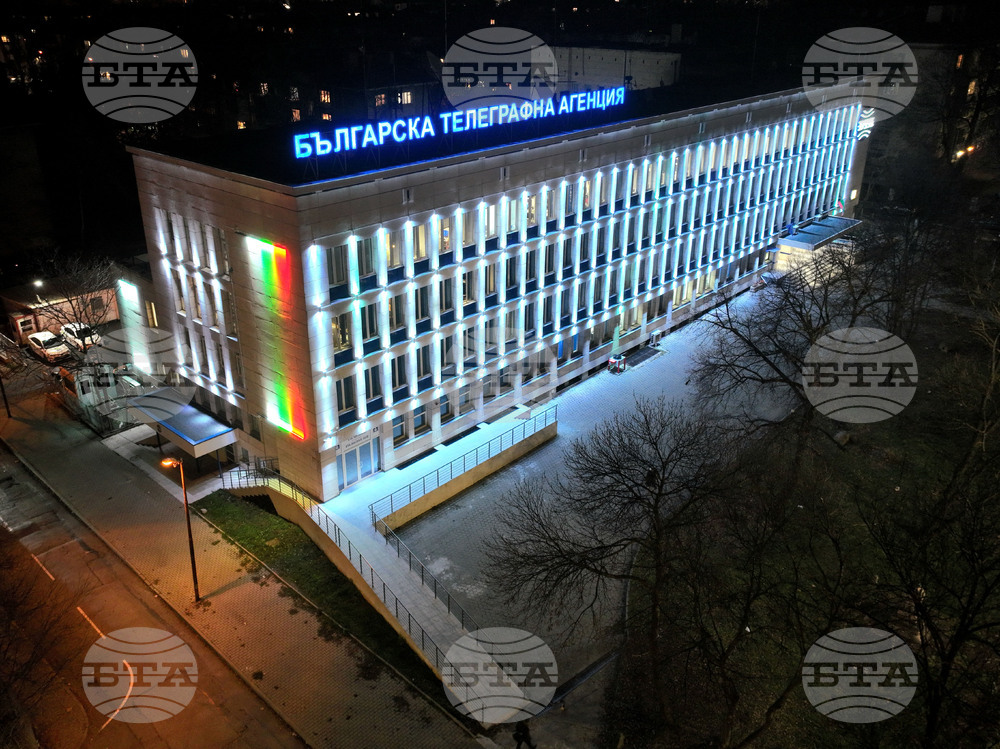
In 1898, there was no electricity: the first hydroelectric power plant for public lighting, Pancharevo, near Sofia, was commissioned in 1900. Today, BTA’s façade shines brightly, and this year the Agency is beginning construction of a rooftop photovoltaic power plant, Valchev announced.
"In 1898, communication took place mainly through letters, and, incidentally, today is the International Day of Postmen and Couriers. Today BTA has 200 smartphones; we began providing them to our reporters and correspondents in 2021," he went on say.
"In 1898, the most important things were learned by heart. Today, at BTA, the most important thing is learning how to use artificial intelligence (AI) better, in line with the rules we approved on this highly symbolic day," he also said.
In 1898, according to AI, people in government service earned between 60 and 250 gold leva, which in today’s money would be about EUR 600 to 2,500. In other words, salaries have not changed all that much, Valchev argued.
There were no parliamentary or presidential elections like those being held this year. Prime Minister Konstantin Stoilov led the government from 1894 to 1899, and the head of State, Prince Ferdinand, who established BTA by decree, was not elected by the people, the Director General recalled.
Buildings in Sofia were one or two storeys high. Today, BTA is housed in one of Sofia’s low-rise buildings, with its four storeys. "Yet although Bulgaria’s first elevator was probably installed in the Royal Palace three or four years before BTA was founded, we installed an elevator to the National Press Club on the fourth floor only in 2023," Valchev said.
In 1898, men wore three-piece suits, carried pocket watches, and sported moustaches and beards, while women wore floor-length dresses, corsets, high collars, and large hats. Today at BTA, it is hard to persuade colleagues in jeans, T-shirts, and short dresses to put on suits and long dresses in the name of institutional decorum, Valchev noted.
"In 1898, people did not bathe every day, because few homes had bathrooms, and perfume was used mainly to mask odors. Today, smells in our shared newsroom are no longer a problem, or at least they shouldn't be," Valchev said.
In 1898, there could not have been a refrigerator in the break room next to the newsroom, because people kept food cool in cellars. Nor did anyone think about workplace break rooms, since the discussion of workers’ rights was only just beginning, he also said.
"In 1898, celebrations most often featured piano music. The star Stefan Valdobrev will sing at our celebration today [Monday]," said Valchev.
"And so, 128 years after BTA was founded, let us wish that its employees will one day routinely live to at least 128. And let us also be grateful that we now live far longer than Bulgarians did at the end of the 19th century, when life expectancy was under 50. After all, Fleming discovered antibiotics only in 1928, and many essential vaccines had not yet been developed: the tuberculosis vaccine dates from 1921, and the polio vaccine from 1956," Valchev recalled.
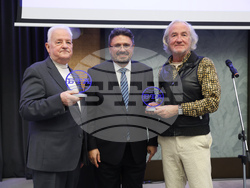
"But the most important thing, in our much faster-paced life 128 years after BTA was founded, is to remember where we began, so that we can take pride in how far we have come. That is why it matters that, on this festive evening, we are joined by BTA’s three former Directors General: Ivo Indzhev, Panayot Denev, and Borislav Chalakov," Valchev told those in attendance.
"And in our work we must remember the words attributed to the Spanish poet and playwright Federico Garcia Lorca, born in 1898: 'He knocks in vain upon the gate who knocks not also at the heart,'" the BTA Director General said in conclusion.
/DS/

Additional
































news.modal.image.header
news.modal.image.text
news.modal.download.header
news.modal.download.text
news.modal.header
news.modal.text