site.btaBudget Bill Clears First Committee Vote Despite 5.7% Deficit Concerns
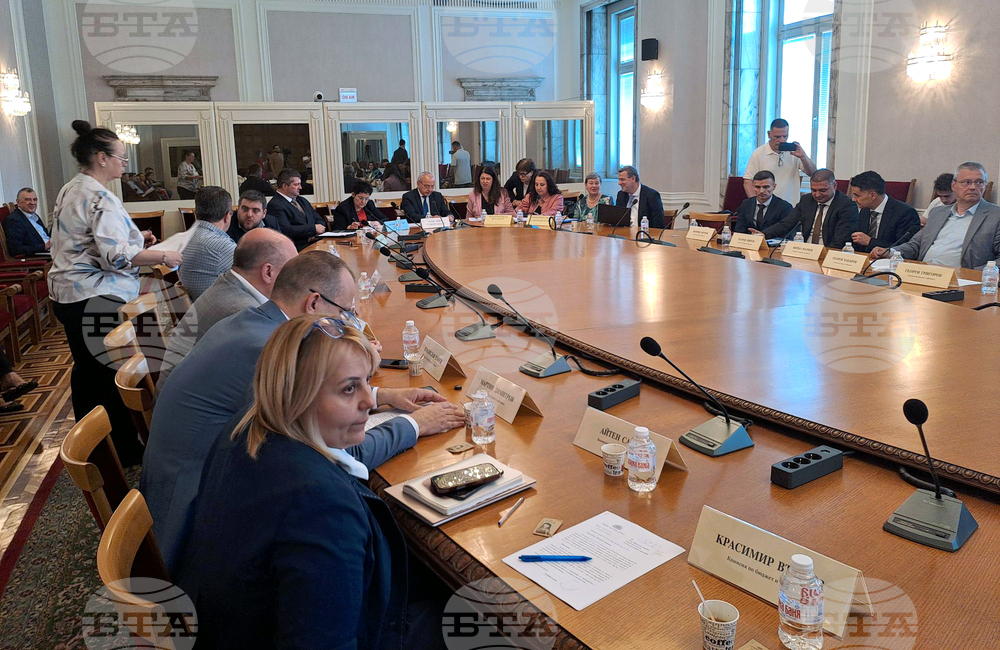
Bulgaria’s 2026 State Budget Bill passed at first reading in Parliament's Budget and Finance Committee on Tuesday. The committee approved it by 14 votes in favour, nine against and no abstentions.
Deputy Prime Minister and Finance Minister Galab Donev presented the bill, which sets a consolidated fiscal programme deficit of 5.7% of gross domestic product in 2026. “This is not a deficit of the current government, but a deficit accumulated over the last few years,” Donev said.
Revenue, grants and donations in the draft budget are projected at EUR 49.6 billion, while total expenditure is put at EUR 56.8 billion. The bill is based on expected economic growth of 2.6% and average annual inflation of 4.3%, measured by the Harmonized Index of Consumer Prices.
The draft caps new government debt in 2026 at EUR 10.1 billion. This includes a loan of up to EUR 3.261 billion under the EU’s Security Action for Europe (SAFE) instrument to strengthen the defence industry. Government debt is projected to reach EUR 37.7 billion, or 30.1% of GDP.
Total capital expenditure in 2026 is set at EUR 9.360 billion, including EUR 4.028 billion in national funding and EUR 5.331 billion in EU funding, including through the National Recovery and Resilience Plan.
The bill provides for a 10% cut in personnel costs from September 1, 2026. The exemptions cover municipalities, military personnel, employees under the Ministry of Interior Act, the State Agency for National Security Act, the National Service for Protection Act, the State Intelligence Agency Act, the Execution of Punishments and Detention in Custody Act, and medical establishments under Article 5 of the Medical Establishments Act.
The draft also cuts state subsidies for religious denominations and political parties.
It proposes higher revenue from the toll system and a 30% increase in vignette fees from August 1, 2026.
The government’s measures also include faster implementation of the 2025-2029 excise duty schedule, already introduced in the Excise Duties and Tax Warehouses Act, for a gradual increase in excise rates on tobacco products. Excise rates on tobacco and tobacco products are also due to change from August 1, 2026.
The bill introduces a licensing regime in the Gambling Act for affiliate operators promoting games of chance run by licensed operators in Bulgaria. It also introduces a two-component state fee on affiliate operators’ commission, based on pre-agreed performance indicators.
The draft projects EUR 50 million in revenue from a concession fee from Vasil Levski Sofia Airport. It also proposes optimizing current and capital subsidies for BDZ, the National Railway Infrastructure Company, Bulgarian Posts and others.
From August 1, 2026, civil servants under the Civil Servants Act and employees under the Judiciary Act will pay personal social insurance contributions. From that date, social insurance contributions will be split between the insurer and the insured person at a ratio of 80:20. From January 1, 2027, the ratio will become 60:40, as for other workers.
The bill provides for a review of the mechanism for setting the minimum wage. Until a new mechanism is adopted, the minimum wage is expected to remain at its current level of EUR 620.
The discussion included Bulgarian National Bank Deputy Governor Petar Chobanov, Fiscal Council member Lyubomir Datsov, National Association of Municipalities in the Republic of Bulgaria Deputy Chair and Troyan Mayor Donka Mihaylova, Bulgarian Industrial Association Deputy Chair Stanislav Popdonchev, Confederation of Independent Trade Unions in Bulgaria President Plamen Dimitrov, Boryana Abadzhieva of the Bulgarian Chamber of Commerce and Industry, Podkrepa Confederation of Labour chief economist Atanas Katsarchev, and Boyan Mitrakiev of the Confederation of Employers and Industrialists in Bulgaria.
Democratic Bulgaria (DB) MP Vladislav Panev said the planned deficit of 5.7% would put the country at risk if the economic cycle turned.
Movement for Rights and Freedoms (MRF) MP Atidzhe Alieva-Veli said the bill did not comply with the Public Finance Act, set an excessively high deficit and failed to follow European Commission recommendations. Alieva-Veli said the MRF would nevertheless back the budget at first reading because it represented an attempt to ensure the normal operation of key services in the country.
GERB-UDF MP Temenuzhka Petkova also said the draft budget seriously breached the Public Finance Act with its planned deficit of 5.7% of GDP. Petkova added that adopting a budget in breach of the law risked setting a dangerous precedent.
Democratic Bulgaria (DB) MP Martin Dimitrov said the situation could not be described as a budget crisis, but rather as a complicated budget situation. Dimitrov noted that record capital spending had been planned for a period of just five months and questioned whether projects were ready for actual payments to be made.
Donev said he saw no realistic way to cut capital spending and maintenance costs enough to bring the deficit down to 3%.
Donev also said the government would pursue fiscal consolidation, including a balanced budget in the future. He added that the authorities did not intend to raise the tax and social insurance burden in pursuit of lower deficit and government debt targets.
Continue the Change (CC) Chair Assen Vassilev said the budget had been drafted on the basis of underestimated macroeconomic indicators. “This budget in its current form cannot be supported, but it can be reworked,” Vassilev added.
Budget Committee Chair Konstantin Prodanov of Progressive Bulgaria said the budget proposed several reforms, including the removal of automatic pay-setting mechanisms, the tax on gambling operators, measures to bring more economic activity into the open, and others.
The Budget Committee rejected the State Budget Bill, together with the attached draft budget of the Supreme Judicial Council.
/RY/
news.modal.header
news.modal.text