site.btaRozhen Observatory Director Petrov: Open Day Combines Spirituality with Science
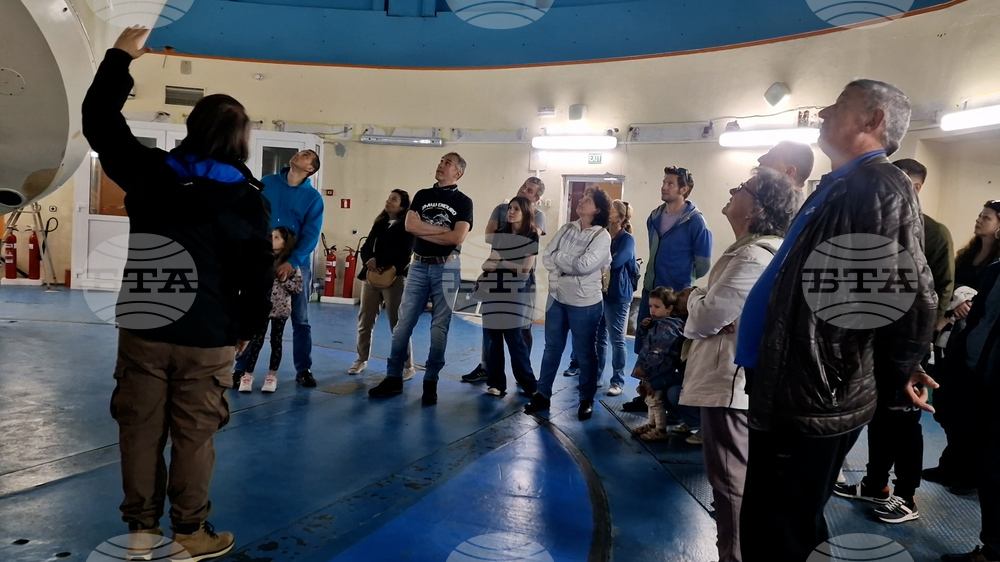
Visitors from across Bulgaria toured the Rozhen National Astronomical Observatory on Sunday, when its open day coincided with Pentecost and the feast day of Sveta Troitsa Chapel. Visitors toured the two-metre telescope tower and were briefed on the observatory’s scientific work during an open day at the largest astronomical complex in Southeast Europe.
“We combine spirituality with science. People can see Bulgaria’s traditions and also freely visit the observatory to learn what we do and what instruments we have,” Rozhen National Astronomical Observatory Director Nikola Petrov said.
Many families with children and school students were among the visitors. Tatyana Ivanova from Ukraine, who has lived in Bulgaria with her family for just over a year, said it was their first visit to an observatory. She said the site was interesting for both children and adults and offered an accessible introduction to science.
Tourist groups also joined the open day. Rositsa Georgieva of Pleven tour operator VIST TOUR said visitors showed strong interest in both the chapel and the presentations on the observatory’s work.
Many guests were struck by the scale of the two-metre telescope. Physics student Konstantin Atanasov served as a guide. He said the most common questions concerned the structure of the facility, its capabilities and the vast distances involved in the observations.
Among the visitors was Damyan Simeonov from Beden, a village near Devin, who attended the observatory’s opening more than 45 years ago as a student at the mechanical engineering technical school in Smolyan’s Ustovo district. On Sunday, he returned to the complex for the first time since then, together with his wife.
NAO Rozhen continues to expand its scientific capacity. The first Bulgarian station of the pan-European LOFAR radio telescope network is already under construction next to the complex. Petrov said work had begun and the facility was expected to be completed by the end of the year.
The new radio telescope will operate with dozens of similar stations across Europe and enable modern research into cosmic objects through radio-wave observations. Petrov said it would significantly expand the observatory’s capacity for scientific observation and international cooperation.
/КТ/
news.modal.header
news.modal.text