site.btaBulgaria Third in EU for Newly Installed Battery Storage Capacity, Report Shows
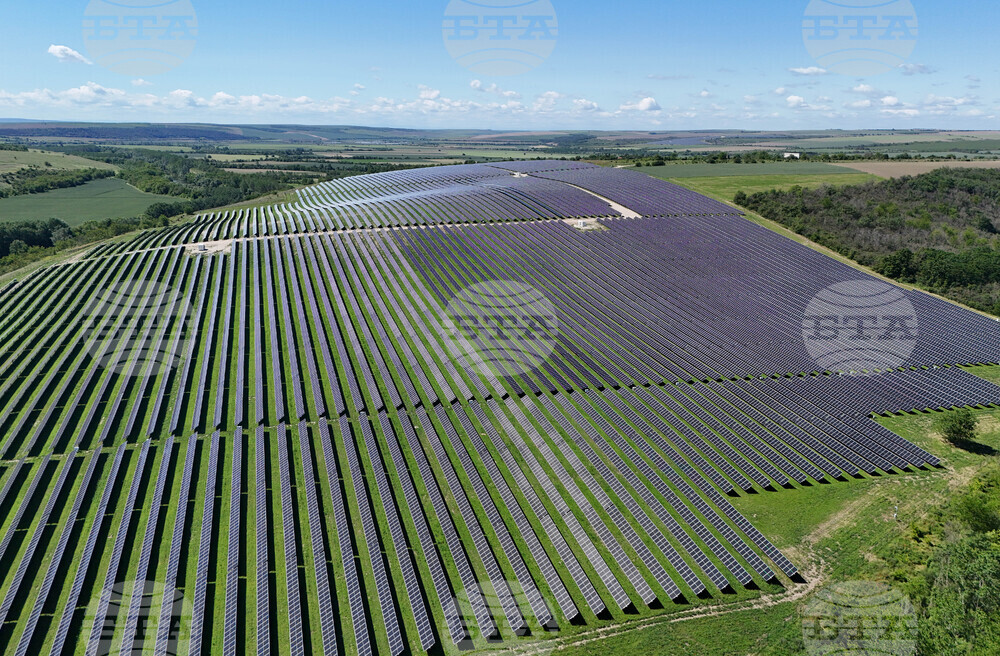
Bulgaria is third in the European Union for newly installed battery storage capacity in 2025, turning into one of the fastest growing markets in Europe, show data from the annual EU Battery Storage Market Review published by SolarPower Europe. In a single year, Bulgaria registered a capacity increase of over 1100%, from some 200 MWh in 2024 to nearly 2,500 MWh at the end of 2025.
This capacity is expected to grow four to five-fold this year, with over 10,000 MWh batteries being installed at the moment with funds from the National Recovery and Resilience Plan.
Last year set a record for the EU as a whole, with 27.1 GWh of new capacity installed, up by 45% from 2024. Germany and Italy led the battery storage market with 6.6 GWh and 4.9 GWh, respectively, followed by Bulgaria with 2.5 GWh. Italy and Spain complete the top 5 with 1.7 GWh and 1.4 GWh, respectively, the report reads.
Analyses of SolarPower Europe show that by 2030 the battery storage capacity in Europe should increase ten-fold to guarantee electricity systems' stability and the accelerated transition to clean energy.
Nikola Gazdov, Chairman of the Association for Production, Storage and Trading of Electricity (APSTE), commented that this speed of growth shows batteries are no longer something exotic and a technology of the future: they are a key element of today's energy sector. According to an APSTE press release, last year Bulgaria made a strategic achievement by opening Europe's first gigafactory for battery systems with a strategic status under an EU regulation for zero-emission industries. That places the country among the few EU Member States which simultaneously incorporate and produce key energy transition technologies, APSTE said.
Bulgarian construction and engineering companies also reported a successful year, the Association said. A Bulgarian company is the leading integrator of large solar power plants and industrial batteries in Europe, and together with dozens of other domestic companies, it implements projects across Europe, establishing Bulgaria as a benchmark for quality and expertise in the sector.
"For countries like Bulgaria, the energy transition is primarily an economic issue, not an abstract climate goal," Gazdov noted. "Electricity from renewable sources [RES] is extremely cheap. This makes the industry more competitive, attracts investment, and retains jobs," he added, as quoted in the press release.
According to him, RES have another key advantage. "Renewable energy is a local resource that increases our energy security. No one can turn off the sun and the wind - neither our big brother to the east nor the one to the west. This is fundamentally important in a world of crises and geopolitical tension," Gazdov argued.
Market data shows that electricity prices are lowest during the day when the sun produces the most electricity, and rise in the evening when consumption is highest. Solar energy is already a key factor in the country's energy mix. During the warm months, between March and September, it provides up to and over 70% of electricity consumption during daylight hours, the press release reads.
"Batteries allow cheap electricity from the sun to be stored during the day and used in the evening, when it is most in demand and most expensive," explained Gazdov. According to him, this means lower bills during the evening peak hours, both for households and industry.
Despite the positive news, APSTE also draws attention to a serious risk to the future development of RES and batteries - State product fees for future recycling. The problem is not with the idea of recycling itself, but with the way the fees are introduced and applied in Bulgaria. They are between five and ten-fold higher than in other European countries. Among the most striking differences are: EUR 460/ton for photovoltaic panels in Bulgaria compared to EUR 40/ton in the Netherlands, and EUR 2,800/ton for lithium-ion batteries compared to EUR 600/ton in Hungary and EUR 300/ton in Romania, APSTE said. According to the Association, instead of stimulating the market, this results in a significant increase in prices - solar panels become up to 35% more expensive and batteries, by nearly 20%.
According to data from the Ministry of Environment and Water, Bulgaria has no infrastructure in place for recycling these technologies, and the product fee is punitive in nature, with no connection to actual future costs. This creates a paradox in which businesses pay high fees at the moment, with no guarantee of actual recycling in 15-30 years and no mechanism for accountability and control, APSTE notes.
/RY/
news.modal.header
news.modal.text