site.btaUPDATED National Roundtable in Panagyurishte Honours 170th Anniversary of Bulgarian Revolutionary Rayna Knyaginya
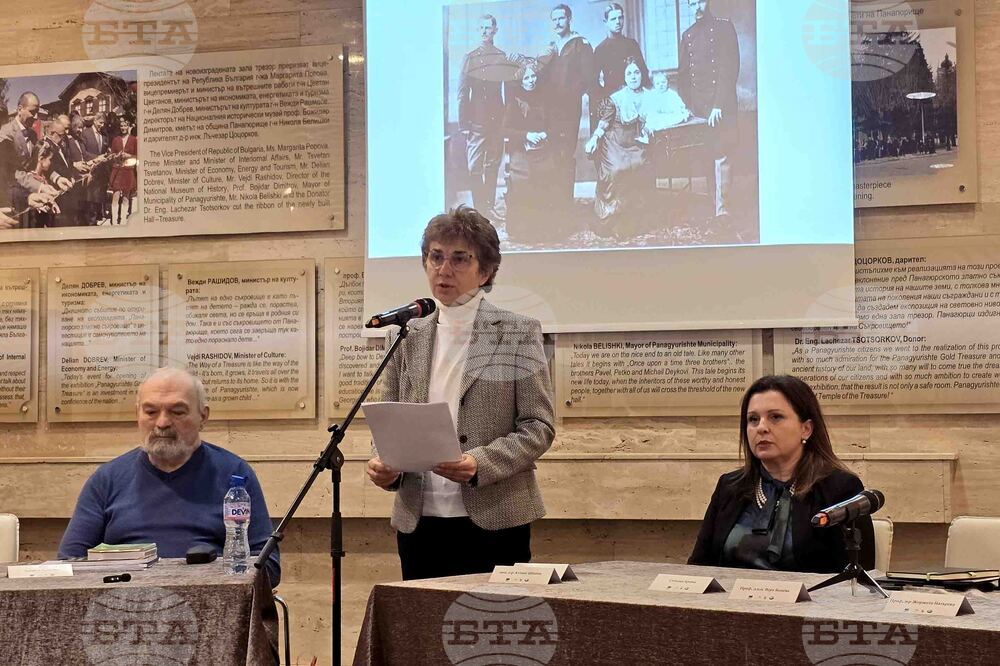
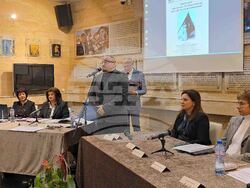
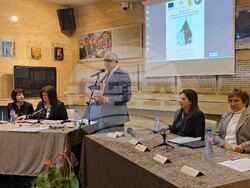
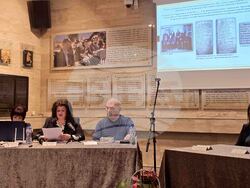
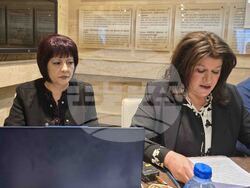
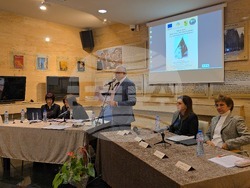
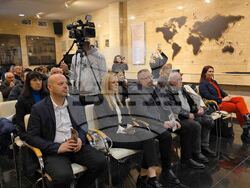
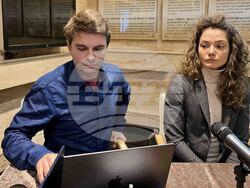
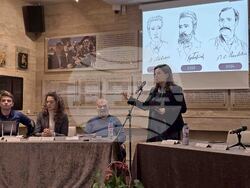
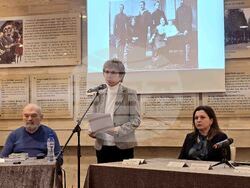
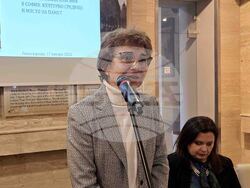
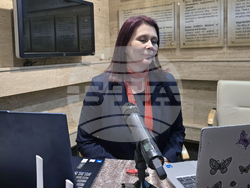
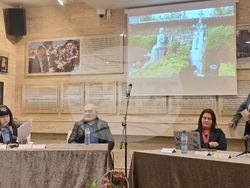
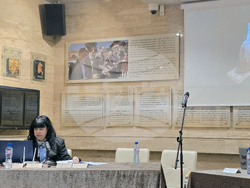
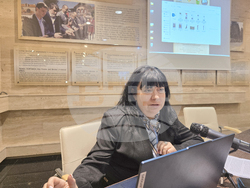
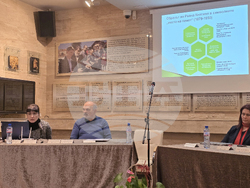
A national roundtable marking the 170th anniversary of the birth of Bulgarian revolutionary and teacher Rayna Popgeorgieva Futekova (1856-1917), known as Rayna Knyaginya, was held Saturday at the Historical Museum in Panagyurishte, where Rayna Knyaginya was born, under the theme “Rayna Knyaginya: 170 Years of Inspiration and Cultural Heritage for Panagyurishte.”
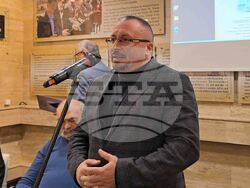
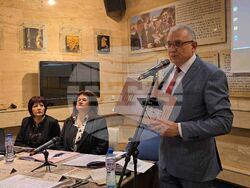
The event was opened by Assoc. Prof. Dr Atanas Shopov, Director of the town's Historical Museum and moderator of the roundtable, who recalled historical facts about Knyaginya and noted that a copy of the Freedom or Death flag, sewn for the 25th anniversary of the April Uprising in 1901, is preserved in her native home. Panagyurishte Mayor Zhelyazko Gagov welcomed attendees, describing Knyaginya as a figure who “walked through fire with the flag in her hands” and highlighting her courage and enduring legacy.
The roundtable brought together local officials, including Deputy Mayor Eng. Ivaylo Ivanov, museum representatives, and descendants of Rayna Knyaginya, including Atanas Dipchev and Zdravcho Zdravchev. Zdravchev presented his book Know Your Family and Be, which features a genealogical study tracing his familial links to Knyaginya and other prominent Bulgarians such as Georgi Rakovski and General Ivan Dipchev. He emphasised that the work synthesises key achievements and new historical information rather than providing a detailed biography.
Presentations also highlighted Rayna Knyaginya’s broader contributions as a teacher, midwife, and mother of six. Irina Boteva, Chief Curator at the Historical Museum, and Irina Konova, curator at the Rayna Knyaginya House Museum, spoke about the house museum as a “temple of the Bulgarian spirit” and detailed the creation of a digital model of the building in November 2025.
Prof. Vera Boneva from the University of Library Studies and Information Technologies noted Knyaginya’s emblematic status in Bulgarian history and outlined plans to restore her house in Sofia as an interactive cultural centre and educational space, preserving all authentic elements and artefacts.
Prof. Zhorzheta Nazarska of the same university presented on Knyaginya’s image in the national memory, tracing its evolution from historical figure to national heroine, and examining the role of celebrations, anniversaries, and symbolic sites in shaping her legacy.
Dr Iveta Rasheva from the National Library “St. St. Cyril and Methodius” highlighted the two monuments of Rayna Knyaginya created by sculptor Delcho Pukov, both funded entirely by local residents of Panagyurishte. One monument is located in the yard of the Rayna Knyaginya House Museum near her grave, while the other stands in the town square, representing a more mature depiction of the revolutionary. Rasheva noted Pukov’s broader contributions to Panagyurishte, including numerous busts and memorials of historical figures, and discussed the challenges she encountered in researching his life and works.
The project “Rayna Knyaginya’s Handwriting as a Digital Font,” presented at the roundtable, aims to digitize her handwriting and create a font for use in word-processing programs. Drawing on authentic documents from her youth and later work as a midwife, the project—part of the “Apostles of Liberation” program—follows earlier digitizations of the handwriting of Hristo Botev, Vasil Levski, and Georgi Rakovski, and is the first dedicated to a woman. Developed by Studio Punkt and graphic designer Jacqueline Zhekova, the font will undergo expert review before release and is intended for educational and cultural use in schools and institutions.
Assoc. Prof. Dr. Gergana Antova, head of the “Heritage BG” project at the University of Architecture, Civil Engineering and Geodesy, presented the creation of a digital model of the Rayna Knyaginya House Museum. Using advanced technologies—including geodetic measurements, photogrammetry, terrestrial laser scanning, and drone-based aerial imaging—the project produces an exact digital twin of the building, enabling millimeter-accurate restoration while preserving its authenticity. The initiative, part of the Center of Excellence “Heritage BG,” aims to safeguard Bulgarian cultural heritage in digital form, making it widely accessible for educational and public use.
The roundtable is part of the Panagyurishte project “Rayna Knyaginya: 170 Years of Inspiration and Cultural Heritage for Panagyurishte. New Horizons in Cultural Policy for Sustainable Development”, which includes multimedia lessons for students and cultural events highlighting her historical and educational contributions.
The event marks the third project activity this year celebrating the revolutionary’s 170th anniversary.
/MY/
Additional


news.modal.image.header
news.modal.image.text
news.modal.download.header
news.modal.download.text
news.modal.header
news.modal.text