site.btaFarmers to Protest MERCOSUR Trade Agreement in Strasbourg on January 20
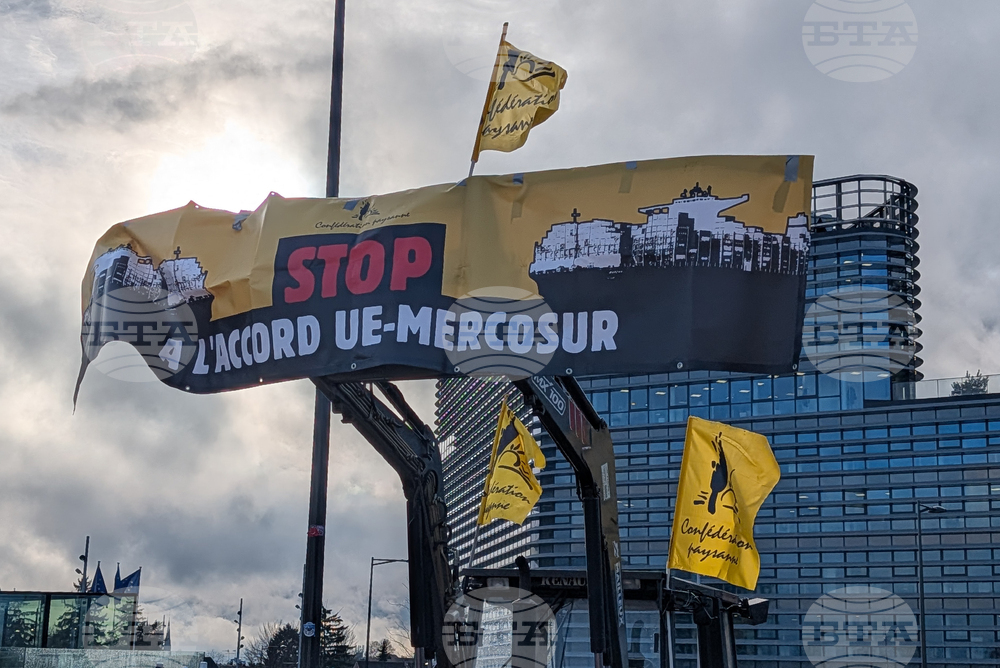
Farmers are expected to protest the MERCOSUR Trade Agreement in Strasbourg on January 20 as announced by Copa-Cogeca, Europe's largest agricultural organization. In a press release on Tuesday, the organization announced that it will support the demonstration called by France's largest farmers' trade union, the National Federation of Agricultural Unions (FNSEA) in Strasbourg, France, on that date.
Bulgarian participation in the demonstration on January 20 has been confirmed in a statement published on the official website of the National Association of Grain Producers on Tuesday. In the statement, the industry organisation officially announces its participation in the protest.
In a statement, Copa-Cogeca said: "Recent announcements, following the extraordinary AGRI-FISH Ministers meeting with the European Commission, fall short of addressing the urgency and challenges faced by Europe’s farmers and agri-cooperatives, while the Council’s vote and maneuvering on MERCOSUR further exacerbate frustrations." The organisation's leaders met in Brussels on Monday to analyse the situation, deciding that in the current political context of tense market conditions and unmet demands, they would support the demonstration in Strasbourg. Copa-Cogeca stresses that, given the extremely unstable market conditions for cereal production and livestock farming, and the fact that farmers are being squeezed by rising fertiliser and raw material costs and declining incomes, it is important to make political decisions that can restore long-term predictability and stability.
On December 18, over 10,000 farmers from all 27 Member States gathered in Brussels for a peaceful march organised by Copa-Cogeca. Farmers from Bulgaria also took part in the protest. The protesters made three key demands. First, they demanded that a strong, common and adequately funded Common Agricultural Policy be maintained after 2027, supported by a Multiannual Financial Framework that guarantees the competitiveness and sustainability of agriculture. Secondly, they demanded a fair and transparent trade policy that would protect European production standards and sensitive sectors while improving the competitiveness of farmers. The third demand was for real simplification of the rules, better regulation and greater legal certainty for the sector.
/RY/MR/
news.modal.header
news.modal.text