site.btaPoll Shows Rising Voter Engagement and Shifting Political Support ahead of Likely Early Elections
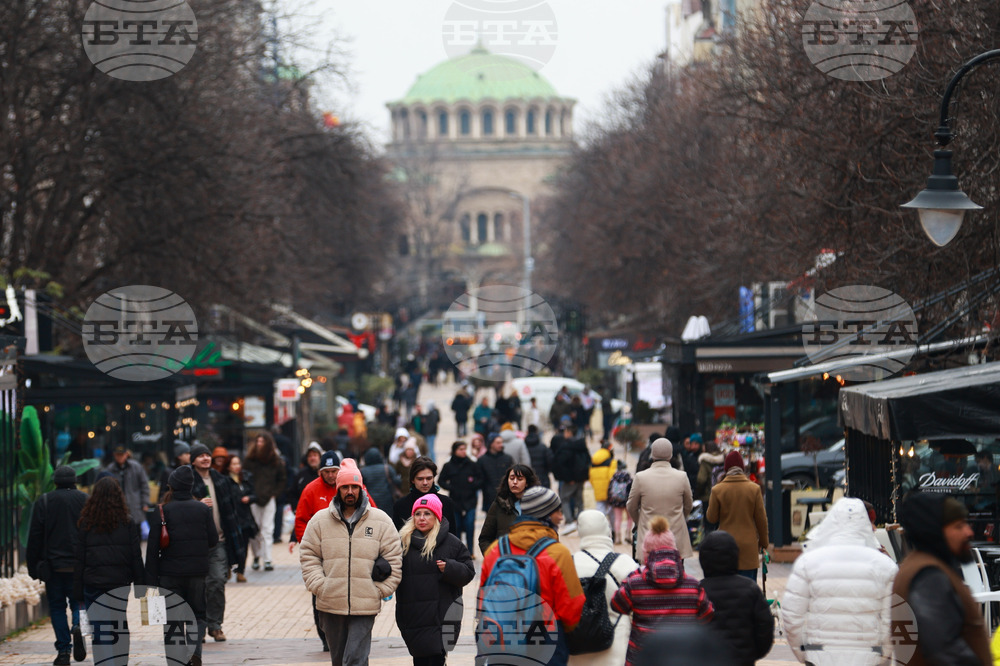
A nationally representative survey by Alpha Research Tuesday finds an increase of approximately 300,000 to 500,000 people willing to vote. The survey, conducted from December 5 to 12, 2025, and published on the agency’s website, is part of Alpha Research’s regular monitoring and was funded entirely by the agency. It included 1,000 adult citizens from across the country, with data collected through standardized in-person tablet interviews at the respondents’ homes.
The survey shows that during the week of protests and the government’s resignation, declared readiness to participate in early elections rose by 5 to 7 percentage points, translating to an additional 300,000–500,000 potential voters.
Analysts note that the behavior of Generation Z, which was highly active in the protests, remains uncertain.
According to the survey, 59% of respondents fully support the protests, while another 25% support them partially. The resignation of the cabinet is seen as a logical outcome of the protests, with over half of those surveyed believing it was necessary.
Electoral trends indicate a convergence of support for GERB and Continue the Change - Democratic Bulgaria (CC-DB), alongside a declining vote share for the Socialist party and There Is Such a People (both of which are part of the outgoing Cabinet). If elections were held today, GERB would lead with 21.4% of decided voters, followed by CC-DB at 17.8%, Vazrazhdane at 11.6%, and MRF-New Beginning at 9.4%. BSP - United Left and MECh would barely pass the 4% threshold with 4.9% and 4.2%, respectively, while There Is Such a People would receive 3.8%.
Nearly 10% of respondents planning to vote intend to support other parties, and 13.3% remain undecided, representing a significant pool that could change the electoral picture.
Looking ahead to 2026, the survey finds that Bulgarians remain more confident in their ability to handle personal life challenges than in the country’s or the world’s ability to solve problems. 35% of respondents expect 2026 to be a successful year for them personally, 27% disagree, and 38% foresee no significant change. Compared with previous years, optimism declined by 8 points, while pessimism rose by 11 points, largely due to concerns about rising prices and declining purchasing power.
Regarding expectations for the country, 28% remain optimistic, while pessimism grew from 40% to 45% over the past year. Young people and adults under 40 are the most optimistic, while retirees and the unemployed are the most concerned. Expectations for the world remain largely negative, though the share of pessimists has fallen by 6 points to 39%, with optimism unchanged at 26%.
For Bulgaria, 10% of respondents rate 2025 as better than the previous year, while 56% consider it worse. Global developments are viewed positively by only 8%, while 60% express a negative assessment.
Analysts note that the word "еuro" best characterizes the outgoing year and will also symbolize 2026, as the European currency adoption process began in Bulgaria this year and will conclude next year. They add that this will directly affect everyday life for every Bulgarian and will undoubtedly be a defining event in historical accounts of the period. Second in importance are "war" for 2025 and "peace" for 2026, reflecting the public’s perception and expectations.
/DS/
news.modal.header
news.modal.text