site.btaNovember 27, 1919: Bulgaria Signs Treaty of Neuilly
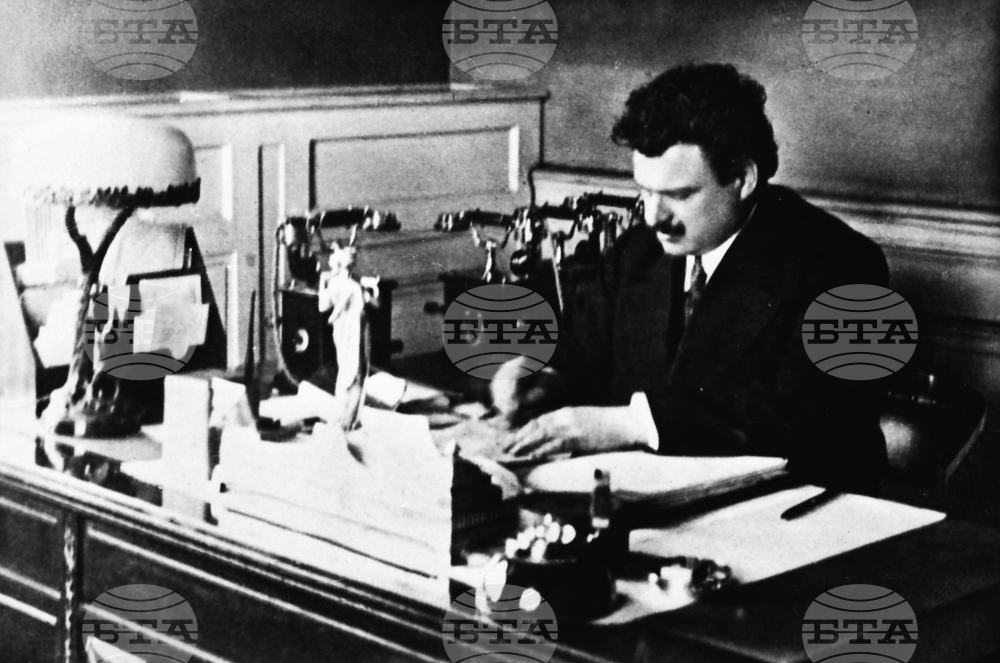
November 27, 1919: Prime Minister Alexander Stamboliiski signs the Treaty of Neuilly in Paris, effective August 9, 1920. Under this document Bulgaria, defeated in WW1, loses a territory of 11,278 sq km. It is denied the right to have its own army, navy and air force and its armed formations must not exceed 20,000 volunteers.
At the end of the First World War, Bulgaria was on the losing side and was forced to conclude a peace with the Entente powers at that time. Defeat in the war resulted in the abdication of Tsar Ferdinand, sparking a political crisis, military uprising, hunger riots and economic ruin. Following months of negotiations and discussions between the victorious countries, Bulgaria was forced to sign the harsh Treaty of Neuilly.
The Bulgarian delegation was led by Prime Minister and Minister of Foreign Affairs and Confessions Teodor Teodorov and included Minister of Justice Venelin Ganev, Minister of Trade, Industry and Labour Yanko Sakazov, Minister of Public Buildings Alexander Stamboliiski and former minister Mihail Sarafov. It arrived in Paris on July 26, 1919. Its members were accommodated at the Hotel de Madrid in Neuilly-sur-Seine suburb of Paris and placed under police surveillance. They could not meet with outsiders without the permission of the authorities.
The draft treaty, prepared entirely by the Entente, was presented to the Bulgarian delegation on September 19. A period of 25 days was given to review the text and raise any objections. The treaty deprived the Bulgarian state of the strategically important Western Outlands – Tsaribrod, Bosilegrad, parts of Tran and Kula, which came under the rule of the Kingdom of Serbs, Croats and Slovenes. Southern Dobrudja remained part of Romania, while the future of Thrace was to be decided by the Allies at a later stage. The Bulgarian state was obliged to pay 2.25 billion gold francs with 5% interest or a total of almost 5 billion gold francs over 37 years. The conscription system was abolished, and the Bulgarian army was established on a purely voluntary basis. The total number of personnel in this professional army (including officers and officials from auxiliary units) was limited to 20,000. Only one military school was allowed, and all other educational institutions and clubs were prohibited from engaging in military activities. Practical instruction in the use of weapons and any other exercises related to warfare were strictly forbidden during physical education classes.
Prime Minister Teodorov refused to sign the treaty and resigned his post in November 1919. A new government was formed with Alexander Stamboliiski as Prime Minister and the responsibility of signing the treaty fell on him. He attempted to soften some of the clauses but was unsuccessful since he was unable to arrange meetings with key figures from the Entente delegations. The official signing took place in the Paris suburb of Neuilly-sur-Seine by Stamboliiski for Bulgaria and by the victors, represented by the United States, the British Empire, France, Italy, and Japan as the main Allied powers and their allies on November 27, 1919.
The Neuilly Treaty marks the Second National Catastrophe in Bulgarian history. Bulgaria found itself in diplomatic isolation, and in the following years its governments strove first to overcome this isolation and only then to orient themselves towards a peaceful revision of the treaty. Years later, the memory of Neuilly would play an important role in Tsar Boris III's political decisions to join Germany's side during World War II.
The following is the Bulgarian News Agency’s coverage of the event:
Press Directorate, Bulgarian News Agency
November 27, 1919
During Thursday morning's ceremony at Neuilly town hall, delegates from the Allied and Associated Powers, along with Mr Stamboliiski, head of the Bulgarian delegation, will sign the following notes:
1. The peace treaty between the Allied and Associated Powers and Bulgaria.
2. The protocol to the peace treaty between the Allied and Associated Powers and Bulgaria.
3. The protocol to be signed after the Peace Treaty, to give Romania the necessary time to sign.
/MY/
news.modal.header
news.modal.text