site.btaHow EU Wine Sector Measures Will Impact Bulgaria
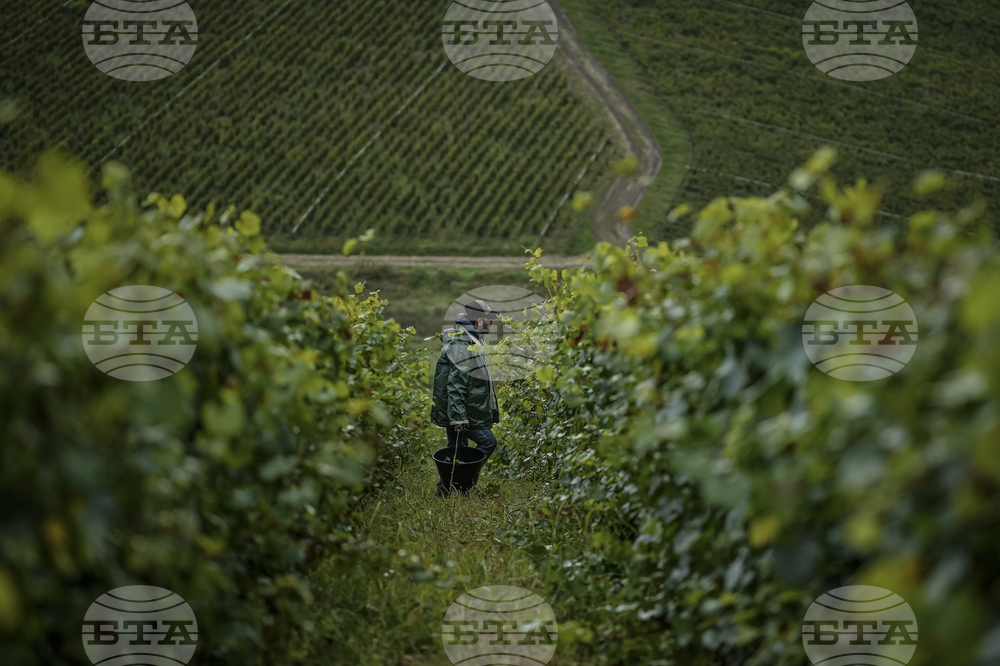
The European Union has recently adopted a new package of measures to protect and promote the wine sector in response to the growing challenges facing the industry.
The EU remains the world’s largest producer and exporter of wine, with a 60% share of global production. Wine is the EU’s third-largest agri-export sector. The industry, however, is under mounting pressure because of declining domestic consumption, the effects of climate change and intensifying global competition. This is why, at the beginning of 2026, the EU institutions adopted an updated framework for wine-sector policy.
A key element of the reform is increased funding to address extreme climate events, plant diseases and market crises.
In Bulgaria, annual reports on the state of the viticulture and wine sector show that the domestic market is not affected as strongly by the global crisis as is the case for countries with larger production, the Agriculture and Food Ministry told BTA. “In Bulgaria the slight decline in wine production in recent years is primarily the result of reduced vineyard yields, which in turn are a consequence of climate change. Even so, the deteriorating international environment and the loss of external markets, as well as the fall, albeit not very large for now, in wine consumption are determining factors behind the declining interest in investing in the sector,” the ministry said.
According to the ministry, the proposed measures to reduce overproduction in the EU will have only a limited effect on the sector in Bulgaria. For the Union as a whole, however, the results are expected to be significant given the size of the plantations and the volumes of surplus production for which there is no market.
Under the reforms adopted at European level, member states will be able, for example, to support the uprooting of surplus vineyards with the aim of preventing oversupply and stabilizing the market, as well as to encourage innovation and adaptation to new market conditions.
To combat plant diseases and protect vineyards, enhanced support is envisaged for monitoring, diagnostics, training and scientific research.
“The option of support for the permanent uprooting of vineyards using European or national funds could assist holdings that need to reduce part of their plantations in order to lower their investment in the sector or exit it altogether if they are unable to cope with market competition. It should be borne in mind that the support will only partly compensate the funds invested. It is also important to note that a grape grower who has uprooted under this measure will not be able to plant other vineyards for the next 10 years. Permanent uprooting could be of help to individual grape growers in areas with sufficient raw material production, where the purchase price of grapes cannot cover the costs of cultivation and harvesting. Although crisis measures may be suitable for overcoming market imbalance, they are not a long-term solution. In this connection it should be noted that applying the vineyard uprooting measure may have a lasting effect on the sector’s production potential,” the Agriculture and Food Ministry added.
Bulgarian wine producers have access to support for specific activities, including the purchase of equipment and construction and installation work for the building of wastewater treatment plants, composting facilities and installations for the processing of other waste products, as well as renewable energy sources with total installed capacity of up to 1 MW for the needs of wine-production enterprises.
Clearer labelling and support for exports
The package provides for the modernization and simplification of labelling rules across the EU. Clearer designations for alcohol-free and low-alcohol wines will be introduced, and consumers will receive information in a more accessible format through digital labels and pictograms. The aim is to reduce administrative burdens and facilitate cross-border trade.
Wines intended for export will be exempt from the requirements to list ingredients and provide a nutritional declaration, which apply to the internal market, with the aim of reducing administrative costs.
Rose wines will be allowed to serve as a base for new regional flavoured wine products, which broadens possibilities for development.
“In this case these are not new requirements but rather opportunities created by the new provisions. Their application will take effect directly once the amendments enter into force, meaning that the state must carry out control in order to guarantee the functioning of the market under the new rules. Control is assigned to the Executive Agency for Vine and Wine, and it is exercised at the production level – monitoring raw materials and production practices – and at the level of product offering in the retail network, where the same checks are carried out for the items, including compliance with the labelling rules. Alcohol-free viticulture and wine products still do not have a significant role on the Bulgarian market, but given general trends they are expected gradually to become established in the context of the growing consumer drive for a healthy lifestyle,” the Agriculture Ministry also explained.
Tourism and advertising
The EU is also focusing on increased support for wine tourism as a driver of economic growth in rural areas. Producers will be able to receive up to 60% European funding for information and promotional activities, including advertising, exhibitions and market research. Member states will be able to add up to 30% for small and medium-sized enterprises and up to 20% for larger companies.
The Agriculture Ministry explained that the strategic plan includes interventions aimed at improving the positioning of Bulgarian wines on the international market and within the EU. These are “Promotion in third countries” and “Information in member states”. These interventions help boost the competitiveness of EU viticulture and wine products in third countries, including the opening and diversification of wine markets, as well as raising consumer awareness of responsible wine consumption and of the Union’s quality schemes for wine. With a view to increasing interest in these interventions and their effectiveness, the so-called wine package provides for an increase in financial support for SMEs from 80% to 90%.
“Moreover, to increase the effectiveness of support for the development of wine tourism in viticulture and wine regions, the wine package expands the circle of eligible beneficiaries under the intervention for promoting wine tourism (...) Until now only recognized interbranch organizations could benefit from the intervention, which made it inapplicable for Bulgaria. With the adoption of the wine package the intervention for wine tourism will be open also to professional organizations, producer organizations or associations of producer organizations established by member states (...) Expectations are that the intervention will be attractive for implementation in Bulgaria…,” the ministry summarized.
It should also be noted that the reform takes into account the changing trade environment, including customs disputes and bilateral agreements. The threats of tariffs on European wines made by the United States in recent years have also influenced the EU’s strategic decisions.
The sector is also responding to the rising demand for low-alcohol and alcohol-free wines, as well as to the growing interest in sustainability and tourism.
Reform in less than a year
- In March 2025 the European Commission proposed the initial package of changes for the wine sector.
- In December an agreement was reached between the European Parliament and the Council of the EU, which was backed by a large majority in the EP, reflecting the growing challenges facing the industry.
- A key driver of the legislative procedure was the European Parliament’s Committee on Agriculture and Rural Development, which drafted the legislative text and supported the support measures.
- On February 23, 2026 the Council of the EU adopted the final regulation for the modernized legislative framework for wine, showing that the member states also support the reforms.
/NF/
news.modal.header
news.modal.text