site.btaEconomic and Social Council Discusses Strategic Reforms with OECD Secretary-General
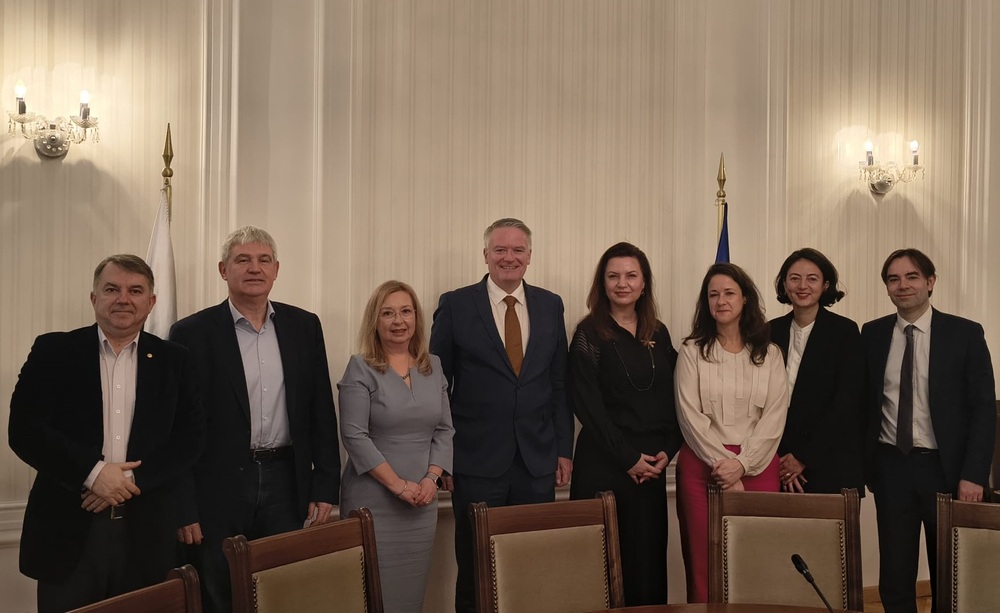
The Chairpersons’ Council of Bulgaria’s Economic and Social Council (ESC) held a meeting with Organisation for Economic Co-operation and Development Secretary-General Mathias Cormann and his team as part of their official visit to Bulgaria, the Council said on Friday. The talks focused on Bulgaria’s progress toward OECD membership, key economic and social reforms, and the role of organized civil society in the process. The OECD Secretary-General outlined the current stage of the accession procedures, stressing the importance of the final phase of technical reviews by the Economic and Development Review Committee.
ESC Chair Zornitsa Rusinova presented the Council’s mission to represent organized civil society and to seek balance among employers, trade unions and civil organizations so that achieved consensus can serve as a stable foundation for public policymaking. She underlined that Bulgaria’s OECD membership is a long-term priority. A large share of the ESC’s acts to date, as well as the activities planned for 2026, are geared toward forthcoming reforms, with the aim of contributing expert input and expressing the Council’s consensus positions on key public issues. Rusinova recalled that two years ago the ESC adopted a resolution in support of OECD membership, citing proven benefits such as stimulating economic growth, a higher standard of living, stable employment and incomes, fiscal sustainability, and more effective public policies based on access to reliable data and international expertise. She also highlighted the ESC’s active role in supporting reforms through expert proposals and consistent backing for government efforts to meet accession criteria.
ESC Deputy Chair from the Employers’ Group Maria Mincheva emphasized the business perspective, saying the accession process is an opportunity to modernize the regulatory framework and accelerate socio-economic convergence.
Deputy Chair from the Trade Unions’ Group Plamen Dimitrov underscored the importance of education, skills development and industrial policy. He said trade unions view economic integration as a driver of higher incomes and purchasing power, but voiced concern over industrial decline and job losses. In his words, the sector needs a new boost through a targeted strategy and investment in digital skills, as well as a closer link between education and the needs of the economy, an area in which the ESC has already formulated specific recommendations.
Deputy Chair from the Civil Organizations’ Group Bogomil Nikolov drew attention to the social dimensions of the green and digital transitions. He noted that while these transformations bring tangible benefits, they also entail social costs, making it essential that policies ensure no group is left behind. He also highlighted issues related to privacy, security and trust in the digital environment.
During the discussion, the ESC’s work on key topics was presented, including a comprehensive analysis of the pension model covering its three pillars and built on balanced dialogue among employers, trade unions and civil organizations.
In conclusion, OECD Secretary-General Mathias Cormann expressed appreciation for the ESC’s active contribution to the process and noted the importance of the issues addressed by the Council for Bulgaria’s sustainable economic and social development.
/RY/
news.modal.header
news.modal.text