site.btaBulgaria Would Unlock Stronger Growth by Boosting Business Productivity, Addressing Fiscal Pressures - OECD Survey
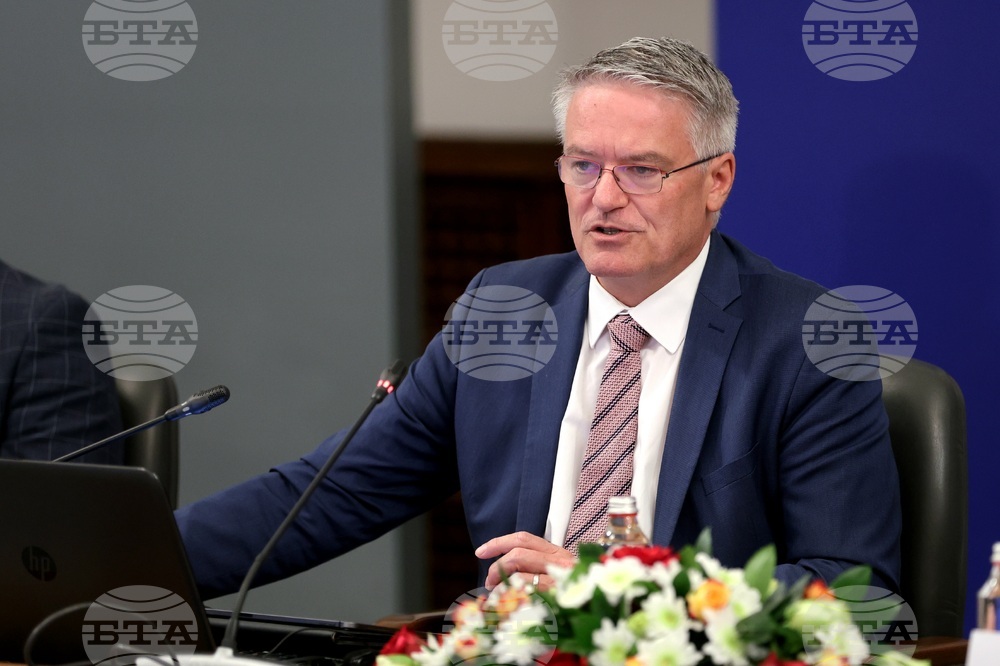
In its latest Economic Survey of Bulgaria, the Organisation for Economic Co-operation and Development (OECD) concludes that boosting business productivity and addressing fiscal pressures would unlock stronger and more resilient growth in the country. The Survey, published by the OECD on Thursday, was presented by outgoing Prime Minister Rosen Zhelyazkov and OECD Secretary-General Mathias Cormann at a news conference here Thursday.
Among the Survey's key messages is that Bulgaria should implement a front-loaded fiscal consolidation. In the longer term, the country needs to address fiscal pressures from defence spending, the green transition, ageing and the need to make investments, including through strengthening efforts to reduce informality and increase tax compliance.
According to the Survey, Bulgaria's income has continued to converge to the OECD advanced economies, albeit at a slower pace than some economies in the region, and the productivity gap remains relatively large. Following a period of prolonged political uncertainty, Bulgaria has the opportunity to undertake more active reforms to boost growth and make better use of EU-funded investments and to benefit from euro area membership.
"Education outcomes are weak. The population is ageing rapidly, and outward migration has reduced the supply of workers, even though net migration has turned positive in recent years," the Survey reads. The economy is now growing at a relatively fast pace, driven by strong real wage growth and low real interest rates against the backdrop of eurozone membership as of January 1, 2026.
According to the OECD, Bulgaria's economic growth needs to rebalance gradually from consumption to investment. Euro area membership will need to be carefully managed at the early stages. Achieving a prudent fiscal path will require consolidation in the coming years and in the long-term, putting the pension system on a sustainable footing and increasing revenues, including by improving tax compliance.
The financial system remains robust and overall credit is low, despite fast growth of household lending in recent years, the Survey notes. Real GDP is expected to grow by 3.0% in 2025 and 2.6% in 2026, driven by a projected gradual rebalancing of the economy from consumption to investment-driven growth. Wage growth is set to slow, and absorption of EU funds should increase. Bulgaria is relatively less exposed to rising global trade tensions.
The OECD advises Bulgaria to boost productivity by improving the business environment and removing obstacles to setting up a business, more effective supports to enter international markets and innovation, boosting competition and stepping up the fight against corruption.
Investment is relatively low and foreign direct investment channelled heavily to services and residential property, the Survey notes. While services industries perform somewhat better, the manufacturing sector is dominated by micro and small firms and focused on low value-added activities. Innovation and the use of new technologies are low. A range of structural reforms is required to make Bulgaria more attractive for foreign investors, improve the business environment, better support innovation and rein in corruption, the OECD believes.
The Survey also analyses the Bulgarian authorities' actions to reduce carbon emissions, concluding that despite meeting the EU target of a 55% reduction by 2030, Bulgaria's emissions remain high and need to decrease further. The Integrated National Climate and Energy Plan is welcome as it sets more ambitious goals to reach the country’s net zero target by 2050, but additional measures are needed alongside a detailed implementation plan. Replacing coal will require a major overhaul of the energy mix. Investments in renewable energy, domestic transmission and cross-border interconnection networks, as well as energy storage, should be complemented by fostering more competition in the electricity market and developing a price-based demand response mechanism.
In the field of education, OECD notes that significant reforms are underway to tackle weak outcomes of the school system. These reforms need to be implemented to raise salaries and the status of teachers, switch to a competence-based curriculum, and boost school infrastructure spending. Further reforms are required to delay tracking, better support vulnerable students, and provide more workplace-based training.
Bulgaria is expected to complete its integration in the OECD in 2026, thus achieving another national priority after its eurozone membership.
/TM/
news.modal.header
news.modal.text