National Statistical Institute
![National Statistical Institute: January Inflation Up 0.7% from December]()
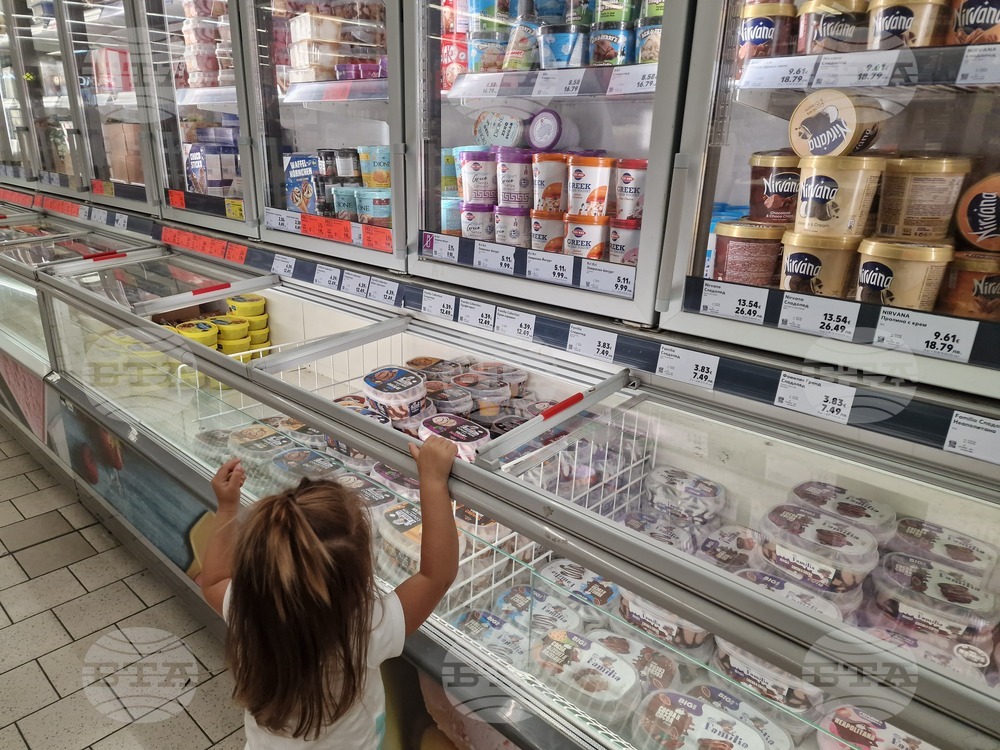
![National Statistical Institute: January Inflation Up 0.7% from December]() Price tags showing values in levs and euros, at a commercial outlet, Targovishte, June 13, 2025 (BTA Photo/Ekaterina Hristova)
Price tags showing values in levs and euros, at a commercial outlet, Targovishte, June 13, 2025 (BTA Photo/Ekaterina Hristova)
site.btaNational Statistical Institute: January Inflation Up 0.7% from December
Bulgaria’s consumer price inflation was expected to be 0.7% higher than in December and 3.6% year-on-year in January 2026, the National Statistical Institute (NSI) said on Tuesday.
Prices in January 2026 compared with the previous month were expected to rise in the groups Personal care, social protection and miscellaneous goods and services (2%), Insurance and financial services (1.9%) and Restaurant and hotel services (1.6%). Prices were expected to fall in Clothing and footwear (-4%) and Information and communication (-0.3%).
With Tuesday’s release of flash inflation, which provides early information on inflation before final and detailed statistics are published, Bulgaria will be able to compare itself on this indicator with the other 20 eurozone countries after joining the currency union on January 1 this year. Later in the month, the flash inflation figure will be replaced on the NSI website by final data, in line with practice in the rest of the eurozone, NSI told BTA, providing further details on what the preliminary inflation methodology covers.
Flash inflation estimation methodology
NSI noted that to calculate inflation, its surveyors visit more than 6,300 retail outlets in regional centres every month and make more than 40,000 price recordings for 860 goods and services tracked in the consumer basket. The calculations then take about 15 days to work out the month’s inflation. From January, however, as a eurozone member Bulgaria is required to publish this preliminary inflation estimate at the end of the current month or at the very start of the next. NSI explained that, for this purpose, more than 90% of all prices will be recorded by the 20th of the month, while the remainder will be collected by month-end for items whose prices are available at the end of the month (for example, home social care services and cardiovascular medicines) or that change frequently (for example, fresh fruit and vegetables and fuels).
NSI said the flash inflation methodology includes data for both the consumer price index and the harmonized index of consumer prices, noting that the two indices are calculated from the same basket of goods and services and the same prices, but differ in the weights used. NSI also calculates a flash estimate for the small consumer basket of 100 socially important and essential goods and services, noting that the weights of the goods, which reflect the relative shares of monetary spending by the lowest-income 20% of households, do not change. The only difference is that, for the flash estimates, NSI does not yet have full information to produce final data.
How accurate is flash inflation compared with the final figure
NSI said that based on practice in other eurozone countries, it is not possible to give a specific percentage difference between flash inflation and the regularly published figure because it depends on price changes. NSI experts added that the goal for national statistical services and all EU countries is for any gap to be minimal.
What the flash inflation estimate is useful for
In today’s fast-paced world, information, especially timely information, is the most valuable commodity, NSI said when discussing the benefits of flash inflation estimates for the state, businesses, and citizens. NSI added that the faster the data become available, the more valuable they are. At the same time, NSI noted that, as a preliminary estimate, the figure may be subject to some error. NSI emphasized that its goal is to provide reliable data rather than mislead users.
Harmonized index of consumer prices (HICP)
Based on the NSI’s flash estimate, inflation in January 2026 is 0.6% higher than in the previous month and 2.3% year-on-year. Compared with the previous month, prices in January 2026 rise in Personal care, social protection and miscellaneous goods and services (3.7%), Insurance and financial services (1.9%), and Restaurant and hotel services (1.7%). Prices fall in Clothing and footwear (-4.2%) and Transport (-0.4%).
Price Index of a Small Basket (PISB)
For the small basket covering the lowest-income 20% of households, prices are expected to change compared with the previous month as follows: food products up 0.9% and services up 0.7%. Prices in the non-food goods group are expected to remain unchanged.
The NSI said the press release on inflation and consumer price indices for January 2026 will be published on February 16, 2026.
On Tuesday, NSI Chair Atanas Atanasov spoke during a briefing of the National Coordination Mechanism for Monitoring and Control of the Introduction of the Euro. The official inflation rate will be announced on February 16, Atanasov said. He added that the NSI had piloted flash inflation calculations for two consecutive months and had calculated the difference between the preliminary and the final inflation figures, which he said was negligible.
In January, the biggest increase was recorded in veterinary services, up more than 25%. Prices of insurance and financial services also rose, mainly due to higher prices of compulsory Motor Third Party Liability insurance, which is reflected in inflation, Atanasov said. Restaurant and hotel services also became more expensive, up 1.6% month-to-month and 9% year-on-year, mainly due to higher restaurant prices, Atanasov added.
/MR/
news.modal.header
news.modal.text