site.btaBulgaria to Submit Draft Buildings Retrofitting Plan to European Commission by Year-End
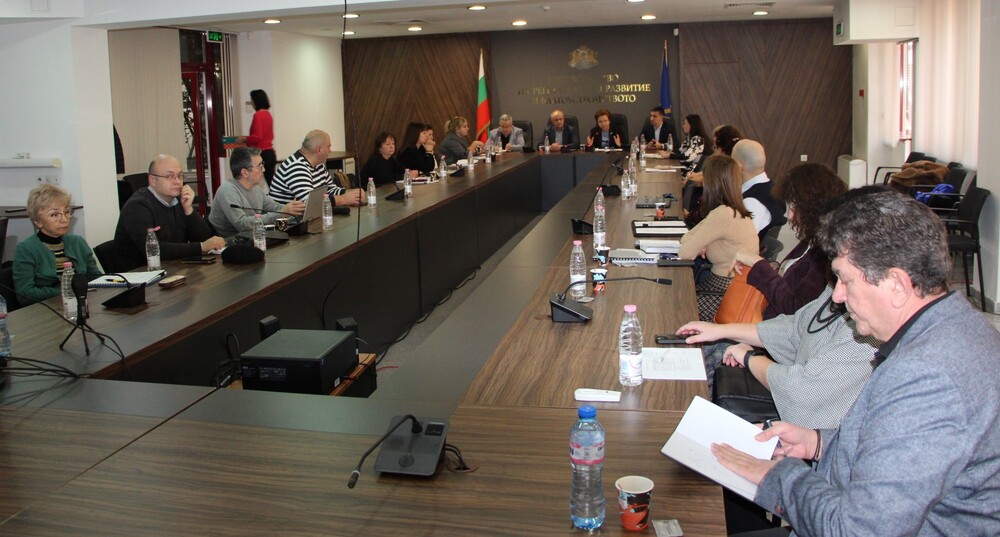
By the end of the year, Bulgaria will submit to the European Commission the first version of the draft national plan for retrofitting residential and non-residential buildings, which is aimed to achieve a highly efficient and decarbonized building stock by 2050, said Deputy Minister of Regional Development and Public Works Dora Yankova, as quoted by her ministry on Thursday.
Yankova chairs an interministerial working group developing the plan to transform existing buildings into zero-emission buildings. The group held a meeting earlier in the day.
"Our ambition is to have an approved national plan by the end of next year, including all the policies we need related to building modernization, environmental protection, improving quality of life, and enhancing the country's economy," said Yankova. She emphasized that the initial draft is only a framework for the large-scale programme. The national plan will set out in detail all requirements, measures, the roles of the various participants, funding sources, conditions, and all other parameters.
Ivaylo Alexiev, Executive Director of the Agency for Sustainable Energy Development and deputy chair of the working group, noted that large-scale retrofitting of buildings in Bulgaria is proposed to be carried out in two temporal frameworks, by 2030–2035 and 2040–2050. He stressed that the plan aims to involve as many stakeholders as possible – private individuals, central and local government institutions, the construction sector, sectoral organizations, and the banking community, which has an interest in energy efficiency programmes.
"Currently, we retrofit about 1% of the existing building stock each year. To meet the European Commission's requirements, we need to renovate between 2% and 3% of the identified buildings annually," Alexiev said.
The preparation of the first version of the plan drew on analyses by the Bulgarian-Austrian Consulting Company (BACC) and the EnEffect Centre for Energy Efficiency, which examined available data from the Agency for Geodesy, Cartography and Cadastre, the National Statistical Institute, the Agency for Sustainable Energy Development, and others.
Tsveta Nanyova from BACC presented an analysis of the existing residential building stock in Bulgaria. According to it, there are currently 1,165,998 buildings with 3,312,056 dwellings, covering nearly 290 million sq. m. Just over one million are single-family buildings, containing more than 1.3 million dwellings. Nearly 83,000 are multi-family buildings, which contain almost 2 million dwellings. Nanyova noted that over the last five years there has been a decline of nearly 200,000 inhabited single-family buildings, offset by multi-family buildings representing new construction in cities.
Experts estimate that nearly 980,000 single-family dwellings and 82,136 multi-family buildings are eligible for renovation. "These are residential buildings with a total area of 277 million sq. m," Nanyova said.
So far, 3,022 buildings in Bulgaria have been retrofitted using EU and national budgetary funds. With the resources currently available, a further 2,000 are expected to be retrofitted by 2030. Some households have independently undertaken energy efficiency measures with their own funds. As a result, 49% of all inhabited dwellings in the country have replaced windows, and nearly 28% have thermal insulation on external walls.
Nanyova also noted that single-family buildings are the most expensive to retrofit, as 30% of resources for this group of structures go to replacing old pitched roofs. At the same time, relatively few people live in them – 2021 census data show an average of 2.4 persons per dwelling. Multi-family buildings are the most significant for the country’s energy profile, covering 50% of inhabited space and 60% of dwellings and having the highest potential for energy savings.
Kamen Simeonov from EnEffect presented interim data from the analysis of the non-residential building stock, including public institutions such as schools, administrative buildings, and industrial enterprises. To date, estimates show a need to retrofit 129 million sq. m of space.
During the working group meeting, a number of topics were discussed, including the adoption of an energy poverty plan, requirements for the structural resilience of buildings, and the issue of uninhabited buildings. The aim is to ensure effective participation of the public and stakeholders in the early stage of drafting the national buildings retrofitting plan, in accordance with Article 3, point 4 of Directive (EU) 2024/1275.
/RY/
news.modal.header
news.modal.text