site.btaInternal Security Committee Backs Changes to MPs’ Security at First Reading
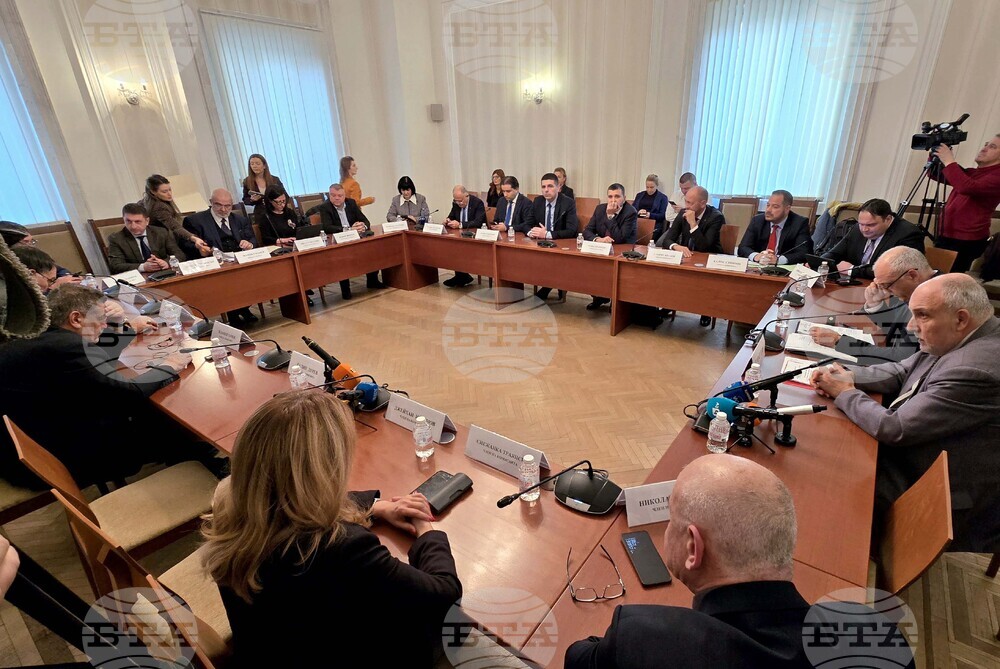
The parliamentary Committee on the Internal Security and Public Order unanimously approved at first reading on Thursday, with 18 votes in favour, a bill amending and supplementing the National Service for Protection (NSP) Act concerning the provision of security for Members of Parliament. The bill was tabled by MPs of Continue the Change – Democratic Bulgaria (CC-DB).
The sponsors of the bill state that the NSP should focus on protecting persons holding high state offices. All other cases involving threats to individuals who do not hold such positions should be handled by the Interior Ministry, more specifically by the General Directorate of Gendarmerie, Special Operations and Counterterrorism, which already provides protection to state officials when there is a specific threat related to their duties. The motives further note that the NSP should not be turned into an elite bodyguard service for influential politicians who do not occupy high state office but may, through illegitimate influence on the security services, secure such protection. The proposed amendments aim to return the NSP to its original purpose: protecting a limited circle of senior state officials under clear and publicly defensible criteria, without the possibility of political or informal influence over who uses the service’s resources.
The Committee Chair, Manoil Manev (GERB UDF), said that making laws for a specific individual has never been a good idea, whether to that person’s benefit or detriment. “The withdrawal of protection, as spelled out by the reasoning, was aimed at depriving [GERB leader] Boyko Borissov of security. On behalf of GERB’s parliamentary group, I say that Borissov’s protection is provided under Article 21 of the NSP Act and has been assessed on the basis of numerous facts and circumstances available to the services. I must say that GERB will vote ‘in favour’ so that, in the subsequent stages of the law-making process, we can do everything possible for every declassifiable text to be declassified for the public to understand what we are talking about,” Manev added.
Bozhidar Bozhanov of CC-DB said the bill is not about an individual but about promoting a model. “We are proposing the removal of NSP protection for all MPs. There are other ways for these people to be protected,” he said.
Nikolay Radulov MP of MECh said that the approach should be a list of persons eligible for protection, including the National Assembly Chair and Deputy Chairs, the President, the Vice President and the Prosecutor General.
Boyko Rashkov MP of CC-DB recalled that years ago, MRF - New Beginning Floor Leader Delyan Peevski requested and received protection because of an imaginary threat, which led not only to security being provided but also to the use of special surveillance means, and several individuals were remanded in custody. “As interior minister at the time, I reviewed documents related to the protection of certain individuals and became convinced that, in some cases, the information used to decide on providing protection was open to criticism,” Rashkov said. He asked NSP Chief General Emil Tonev if there is currently a letter sent by Peevski to the specialized commission under the NSP Act and whether an emergency meeting had been convened to consider the matter.
In response to Rashkov’s question, Tonev confirmed that there is such a letter, that the commission had not convened, and that the remainder of his answer should be given in a closed session.
Support for the bill was also expressed by Tsveta Rangelova MP of Vazrazhdane, who said that some of the texts needed further refinement.
Speaking to journalists in Parliament on Thursday, CC-DB MP Ivaylo Mirchev accused MRF - New Beginning of telling lies regarding Delyan Peevski's security detail. Mirchev commented on MRF - New Beginning's Wednesday statement which included information on the reasoning and salaries of Peevski's security detail.
Earlier in the day, Peevski announced that he would submit a request to the parliamentary Committee on Internal Security and Public Order to assess whether he needs security protection. "If it is not necessary, I will accept the Committee's decision, as I have done in the past and have refused such security. But I will not allow populists to leave MPs and other government officials without security," he said.
/DD/
news.modal.header
news.modal.text