site.btaMedia Review: February 16
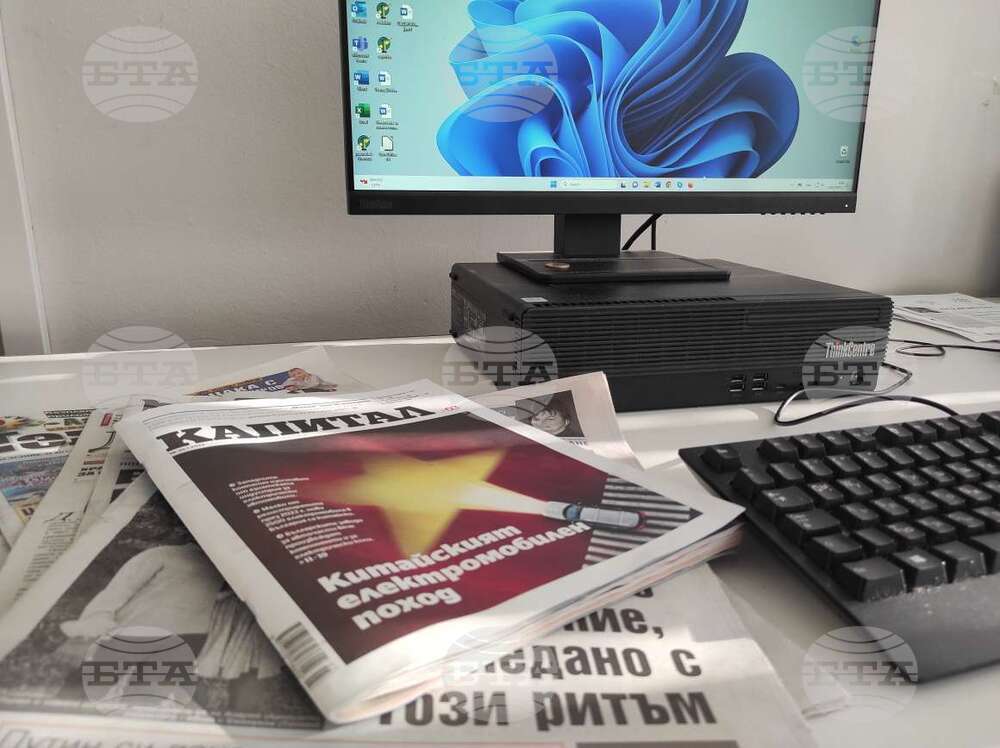
A key topic that continues to dominate media coverage in Bulgaria is the high-profile criminal case in which six bodies were found at two remote mountain locations in Northwestern Bulgaria: a lodge near the Petrohan Pass and a camper van near Okolchitsa Peak. Simultaneously, attention is turning to the formation of a caretaker government and the forthcoming parliamentary elections.
PETROHAN CASE
In a commentary titled Petrohan Version or Lama Version, Capital says that the information vacuum surrounding the investigation into the deaths of six people near Petrohan Hut and below Okolchitsa Peak has fueled numerous conspiracy theories that are now difficult to dispel. According to the article, speculations ranging from murder-suicide scenarios and sect involvement to references to Buddhism, a lama, Hristo Botev, trafficking networks, and paramilitary groups has circulated widely in the ten days since the incidents, in which five men and a child died. The commentary argues that the lack of timely official information has enabled manipulation, reputational damage to the victims, and political exploitation of the case, adding that beyond the confirmed deaths, the public debate is dominated by competing narratives built on partial facts and assumptions.
Mediapool.bg continues coverage of the case, reporting statements by Ralitsa Asenova, the mother of one of the deceased, made in an interview with Nova TV. According to the article, she said that Ivaylo Kalushev, described as the leader of the group, had left a will leaving all assets to two of the young men who later died, which she believes contradicts allegations about his character and supports her doubts about the official version of events. Asenova rejected the authorities’ hypothesis of suicides and murder-suicide, claimed threats against the group from local criminal circles, and expressed concern over the disappearance of a key witness who had discovered the first three bodies. She also criticized the investigation, alleging incomplete recording of her testimony and procedural delays due to parallel pre-trial proceedings, and called for an independent European investigation, public apologies from officials, and institutional protection for witnesses and relatives of the victims.
Journalists Viktor Ivanov of 24 Chasa and Silvia Velikova of BNR discussed on Nova TV recent developments and ongoing suspicions. Ivanov claims that Ivaylo Kalushev was an secret collaborator of the State Agency for National Security (SANS), and that his father was also part of the security system, a predecessor of SANS. He noted attempts to verify alleged connections to drug trafficking in Mexico, which have so far yielded no evidence. Ivanov also highlighted the unusual content of Kalushev’s notebooks, which mix advice for students, notes on meals, and references to the Recovery and Resilience Plan and possible privatization of heat utilities. Ivanov suggested that Deyan Iliev (the man who found the first three bodies) and his partner are alive, citing reports of a property in Mexico they were renting. He stressed the need for clarity on SANS’s role, while noting the existence of a potential sect and the continuous emergence of new questions with each piece of information. Silvia Velikova criticized the political exploitation of the tragedy, calling the sending of materials from the casefile to Parliament "an outrage". She expressed shock at politicians’ handling of the issue, highlighting the lack of attention to the victims’ families and the broader societal failure to respond appropriately. Velikova predicted that the case would be a priority for the new caretaker government, with the President assigning the caretaker prime minister to clarify all aspects and the Interior Minister expected to repeat investigative actions.
Trud daily reports on the Sofia Mayor Vasil Terziev’s donations linked to Ivaylo Kalushev. Terziev stated that he has supported hundreds of people over the years, including the Kalushev group, which he met in 2022 at the Petrohan lodge. He said he visited the lodge for weekends and participated in activities related to nature conservation and "ranger" work, meeting the six individuals involved in the recent tragedy, some more frequently than others. Terziev stressed that his donations were motivated by personal impressions of the group’s work and character, not by knowledge of alleged illegal activities. He denied ever seeing the members heavily armed or involved in encroachments on state land and explained that his financial support was partly directed through individuals at their request. The mayor acknowledged that not all donations were formally declared by the association but framed this as administrative detail rather than wrongdoing. He emphasized his broader philanthropic record, noting that some recipients had disappointed him but that his contributions were always intended to support legitimate causes.
Dnevnik reports that former Interior Minister Ivan Demerdzhiev criticized the Prosecutor’s Office, SANS and the Ministry of Interior over the Petrohan case. Demerdzhiev noted that a closed investigation into a sexual assault allegation against a child could indicate either negligence by the prosecution or protective shielding of those accused. He criticized the lack of meaningful responses from authorities regarding complaints linked to the individuals involved. He added that the law enforcement agencies have yet to answer many questions concerning the investigation and the deaths, and he warned that the Ministry of Interior is promoting only one version of events without revealing the full truth.
In an interview with Bulgarian National Radio (BNR), addiction consultant Zhelyaz Torlakov noted parallels between what has transpired about the Petrohan group and certain South American spiritual practices that view death differently than in Western traditions, highlighting aspects of spiritual growth and the awareness of participants. Torlakov also spoke on addiction, stressing that it is typically a symptom of deeper emotional or psychological problems, which in 90% of cases originate within dysfunctional family relationships, rather than material neglect. He called for inclusion of addiction treatment in the national health insurance system, suggesting that existing legal provisions and a dedicated fund of BGN 5 - 6 million per year could cover care for those unable to afford it.
POLITICS
In a commentary titled As If We Were Electing a Pope, Capital criticizes what it describes as excessive delays and ceremonialism in the procedure for appointing a caretaker prime minister, noting that nearly two months passed between the resignation of the government of Rossen Zhelyazkov on December 11, 2025 and the announcement on February 11, 2026 that Andrey Gurov would temporarily assume the post. The publication argues that the process, formally limited to a small pool of eligible candidates, should be straightforward but has evolved into a prolonged political ritual, pointing to consultations held by President Iliana Iotova with potential nominees and parliamentary parties, similar to practices under former president Rumen Radev. According to the commentary, such steps are neither constitutionally required nor necessary for a caretaker cabinet whose main role is to organize elections, suggesting the delays may serve political timing considerations. It concludes with an ironic comparison, noting that the Catholic Church elected a pope in just two days.
Several media outlets reported on the expected new political formation of former president Rumen Radev, including Telegraph, which cited Nova TV as saying that Radev announced he and his team would register "a coalition with a clear name" with the Central Election Commission by March 4 at the latest, in line with legal deadlines. He added that the formation’s programme would also be presented. Radev said there was no time to create a new party before the upcoming elections and that participation would be through a coalition with already registered parties, without naming them, claiming concerns over "how the repressive machine works". He also said a broad team of supporters was being assembled to “dismantle this oligarchic model”, adding that while many predict he will win the vote, the result will ultimately show.
In an interview with Bulgarian National Radio (BNR), social analyst Genoveva Petrova stated that she does not expect prominent political figures to be included in the caretaker cabinet. She added that the composition of the caretaker government could become a topic for projecting political alliances. Petrova commented that the possibilities to replace the acting chief prosecutor are limited in the context of a caretaker cabinet, but it may at least initiate the process. The sociologist noted that an unofficial campaign is already underway, setting the stage for future confrontations, and predicted a highly tense campaign period, though she said this will not help increase voter turnout.
Duma quotes an interview with Nataliya Kiselova, chair of the BSP-United Left parliamentary group, on BNT, in which she stated that no changes should be made to the Electoral Code in the week of elections. She emphasized BSP’s commitment to national responsibility, criticized coalition partners (GERB) for poor coordination, and defended the party’s handling of internal decisions and parliamentary work. Kiselova also addressed leadership rotations in the BSP group, criticized inadequate ministerial responses on key issues, and suggested attempts to shift blame to BSP reflect concern over the party consolidating and performing well in upcoming elections.
BNT reports that Bulgaria enters a pivotal political week as attention focuses on the formation of the caretaker cabinet and the setting of the date for early parliamentary elections. Caretaker PM designate Andrey Gurov, appointed by President Iliana Iotova, is expected to present the proposed cabinet. The final list of ministers is scheduled to be completed by February 19. Should the President raise no objections, a decree will formalize the appointment of the caretaker government. At the same time, a decree establishing the date of the early elections will be issued, with April currently considered the most likely.
bTV presented the first voter attitude survey following Rumen Radev’s departure from the Presidency and announcement of his plans to go into party politics. A bTV-Market Links poll shows that Rumen Radev leads Bulgarian public trust at 51% following his departure from the Presidency. Between four and six parties are expected in the next National Assembly, while left-wing formations remain below the 4% threshold. Trust in institutions and the outgoing cabinet is critically low, and societal tensions have increased, particularly after the arrest of the Varna mayor in 2025. Support for EU and NATO membership remains high, though growing eurosceptic and pro-Kremlin sentiments around Radev raise questions about Bulgaria’s future foreign policy orientation, the analyst says.
In an article titled Bulgaria May Send Non-Voting Representative to Feb 19 Board of Peace in Washington, 24 Chasa reports that Bulgarian President Iliana Iotova met with Nikolay Mladenov, the High Representative for Gaza, during the 62nd edition of the Munich Security Conference and indicated that Bulgaria may not have an official representative at the Board of Peace summit in Washington on February 19. Iotova said she would not attend because she must issue decrees appointing a caretaker government and scheduling parliamentary elections. On the same date, a new prime minister is to be appointed, while incumbent Rossen Zhelyazkov, who signed as a representative of a founding country, will have already left office and returned to parliament as an MP. Unofficial diplomatic sources told the newspaper that since the charter establishing the Board of Peace has not been ratified by the Bulgarian parliament, any Bulgarian participation would be advisory only, without voting rights or binding commitments.
***
A story in Capital.bg (from the latest issue of Capital Weekly) focuses on alleged inefficiencies in Bulgaria’s healthcare financing in a cover story titled Who Is Syphoning the Health Insurance Fund, arguing that the system is structurally flawed and that more than EUR 5 billion in health insurance contributions are spent wastefully each year, while patients pay roughly the same amount out of pocket. The publication comments that the monopoly position of the National Health Insurance Fund, weak oversight, and incentives favouring hospital treatment over prevention lead to unnecessary hospitalizations, tests, and spending. It cites examples of questionable public procurement practices in state hospitals such as St. Ekaterina University Hospital and notes that despite total annual healthcare spending approaching EUR 11 billion, Bulgaria continues to report poor health outcomes, high mortality, and low medical staff salaries. The article also highlights growing patient demand for private care and treatment abroad, particularly in Turkiye, concluding that systemic misallocation rather than insufficient funding is a key reason for persistent shortages in the sector.
***
Mediapool.bg reports that in the final weeks before leaving office, the government of former Prime Minister Rossen Zhelyazkov approved procurement procedures for road construction worth nearly EUR 800 million, continuing what the publication describes as a recurring pattern of swift infrastructure contracting during government transitions. According to the article, the Road Infrastructure Agency rapidly finalized long-delayed tenders, with multiple contractor selection decisions signed on February 10, shortly before President Iliana Iotova was due to hand a mandate for forming a caretaker cabinet to Andrey Gurov. Mediapool.bg cites agency employees and procurement registry data indicating that contracts include major road repairs, reconstructions funded by EU cohesion funds, and barrier installation projects worth hundreds of millions of euros. The publication notes that several contracts financed under the Regional Development Programme 2021-2027 have already been signed with different companies, which it says reduces concentration of funds and could support timely implementation, particularly in northern Bulgaria. However, it also highlights criticism of the speed of decision-making and questions surrounding large-scale guardrail tenders launched earlier by a caretaker government.
***
BNT highlighted the management of contributions to Bulgaria’s second pension pillar. Contributions from each insured individual are directed to a Universal Pension Fund, which invests the funds to achieve the required returns. Currently, around two-thirds of the funds are invested on international markets, as domestic options on the Bulgarian Stock Exchange are limited. Proposed amendments to the Social Security Code aim to expand the range of permitted assets. Experts note that broader investment options do not increase risk, as they allow for greater portfolio diversification, potentially leading to higher returns. The reform is expected to come into effect no earlier than next year. Over the past two years, the minimum return set by the Financial Supervision Commission (FSC) was 3.07%, while the weighted average return achieved by pension companies reached 6.07%, according to Vladislav Rusev, CEO of a pension insurance company.
***
Dnes.bg published a report on the Jeffrey Epstein affair, saying Bulgaria is mentioned more than 250 times in the so-called Epstein files, a vast archive reportedly containing over three million pages, 2,000 videos and 180,000 photographs. The article traces the case from Epstein’s first public scandal in 2005 to his death in custody in 2019, noting that new disclosures by the US Department of Justice continue to generate global repercussions. Writer Ivo Ivanov commented that public pressure in the United States had reached a boiling point, while former Bulgarian ambassador to Washington Elena Poptodorova told bTV that the files’ release would have a major impact, alleging irregularities in how victims’ identities were handled. According to the report, Bulgaria appears in connection with a modelling agency suspected of trafficking, references to the Sarafovo bombing, intelligence bulletins and mentions of former prime minister Boyko Borisov in protest coverage. The article also points to historical links through media tycoon Robert Maxwell, described as close to communist leader Todor Zhivkov and the father of Ghislaine Maxwell, Epstein’s longtime associate.
/NF/
news.modal.header
news.modal.text