site.btaBulgarian Communist Leader Georgi Dimitrov's Diary Presented in Bucharest
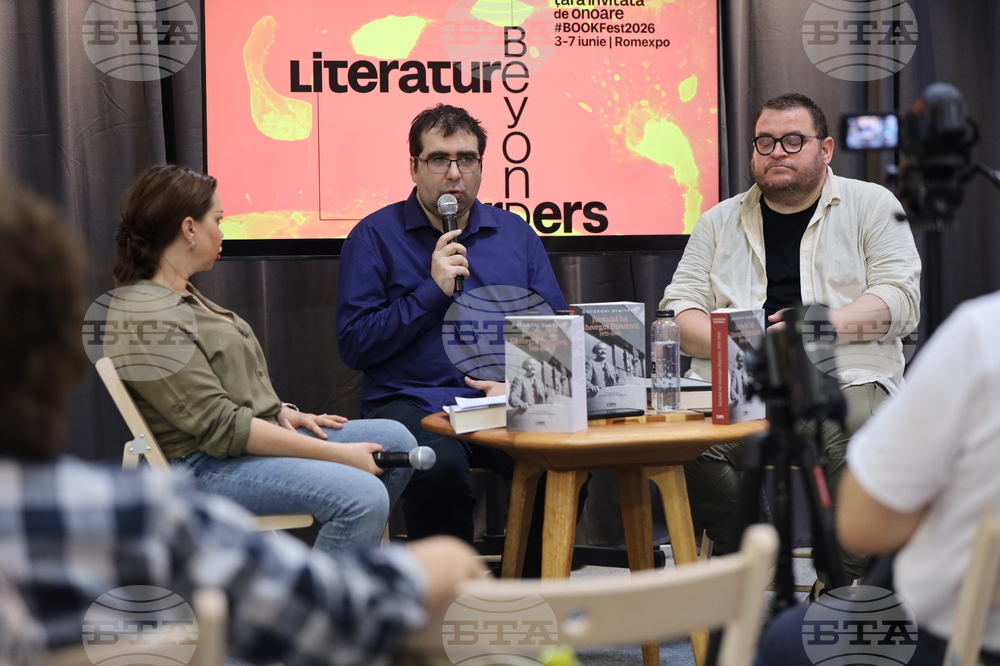
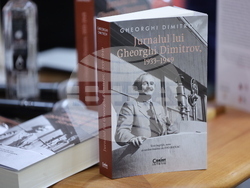
The events associated with Bulgaria's status as the guest of honour at the Bookfest in Bucharest included a presentation of the Romanian translation of the diary of Georgi Dimitrov (1882-1949), who led the Bulgarian Communist Party in the 1930s and 1940s, served as the first leader of the communist People's Republic of Bulgaria, and headed the Communist International from 1935 to 1943. Dimitrov became known internationally as "the hero of Leipzig" after his fearless self-defence against Nazi leaders, most notably Hermann Goering, during the 1933 Reichstag Fire Trial in Leipzig.
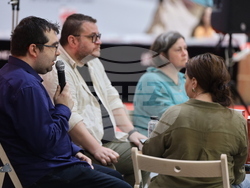
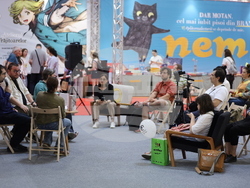
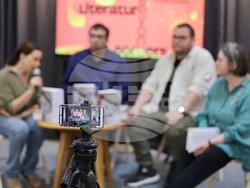
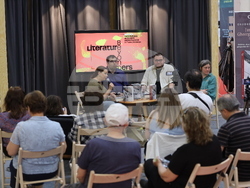
His diary covers the period from 1933 to 1949. During the book's presentation at the Bulgarian stand at the Bucharest fair on Sunday, journalist Vladimir Mitev said: "I started school at the age of seven, and at that time school textbooks still contained information about Georgi Dimitrov. Attention was paid to him, and he was presented as a hero of Leipzig."
Mitev recalled that when the communist regime was replaced and the political changes came, Georgi Dimitrov disappeared from public discussion, and the mausoleum in central Sofia where he had been buried was demolished.
"Occasionally films are made about him and podcasts devoted to history are produced. But it is fair to say that over the past 30 years Georgi Dimitrov has not attracted the interest of the Bulgarian public. He is, in fact, more recognizable internationally. In North Macedonia, for example, he is viewed very positively, and there are schools and boulevards named after him. Romanians do not seem to have a figure with such broad recognition. At one time Georgi Dimitrov was transformed into an icon. But the baggage of the socialist identity has been left behind, and today opinions of him are generally negative," Mitev commented.
He expressed the view that Dimitrov had two major achievements. "One was his heroic appearance in Leipzig. He defended himself there in German and became a global star. I should add that Georgi Dimitrov did not receive much formal education – he completed only six years of schooling – but he was someone who learned from life and from the women in his life. He learned German from his first wife. His other major contribution was the concept of the Popular Front," the Bulgarian journalist explained.
Mitev also said that many people were unaware of Dimitrov's diary and noted that it has had two editions in Bulgaria, published in 1997 and 2003, respectively.
"I am very pleasantly surprised that there is interest in this subject in Romania. The translation strikes me as very good," he added.
/VE/
Additional
news.modal.image.header
news.modal.image.text
news.modal.download.header
news.modal.download.text
news.modal.header
news.modal.text