BTA exclusive
![In World Torn by Propaganda, Literature Must Unite Divided Souls - Author Gospodinov]()
![In World Torn by Propaganda, Literature Must Unite Divided Souls - Author Gospodinov]() Bulgarian writer Georgi Gospodinov (BTA Photo/Minko Chernev)
Bulgarian writer Georgi Gospodinov (BTA Photo/Minko Chernev)
site.btaIn World Torn by Propaganda, Literature Must Unite Divided Souls - Author Gospodinov
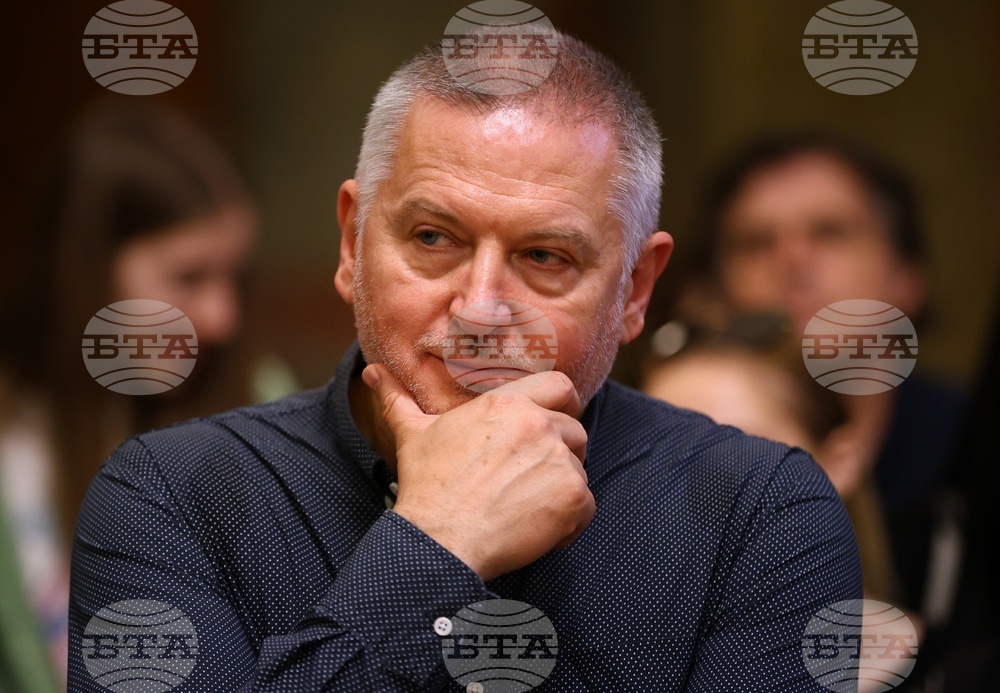
In a world torn apart by propaganda, the role of literature is to bring together the scattered fragments and divided souls, Bulgarian writer Georgi Gospodinov said in an interview with the Bulgarian News Agency (BTA). He will take part in the Bookfest International Book Fair in Bucharest from June 3 to 7. Bulgaria will be the guest of honour at the event and the BTA will serve as media partner.
Romanian readers are curious, warm-hearted, and have a great respect for literature, he noted.
Asked which story he most wanted to share with Romanian readers, the 2023 International Booker Prize winner said that he could speak about Bulgarian sorrows and “things that never happened,” and hear similar stories in return.
“I hope this becomes a shared storytelling experience, because stories have this quality of awakening other people’s stories,” he said.
Gospodinov, who is the most widely translated Bulgarian author abroad, also expressed interest in a discussion about the stereotypes Bulgarians and Romanians have about each other. He noted that such a conversation would be both “interesting and healing.”
When asked to elaborate on his statement that “the most difficult form of curiosity is toward your neighbour,” he said: “With the fall of the [Berlin] Wall in 1989, the boundaries of our socialist dormitory - or camp, as it was called - also came down. Both words - dormitory and camp - carry rather negative connotations. Naturally, everyone then turned toward the world they had been denied - the West. It was about catching up on a huge deficit of unseen cities, films, books, galleries… And it is good that after all this, we are now beginning to return and discover that here, in the Balkans, there is also plenty to see and read.”
Gospodinov added that Bulgarians and Romanians share a kind of common personal past within a shared recent history.
“In a world torn apart by propaganda, the role of literature is to bring together the scattered fragments and our divided souls. I know my books speak to those of Romanian writers of my generation. My childhood and the childhood of [Mircea] Cartarescu, for example, understand each other without needing much explanation. In recent years, European literary critics have been writing about this shared perspective and the wave of Eastern European literature. I believe we have good things to look forward to in literature,” the writer said.
/IV/
news.modal.header
news.modal.text