site.btaApril 12, 1961: 65 Years since World's First Manned Space Flight
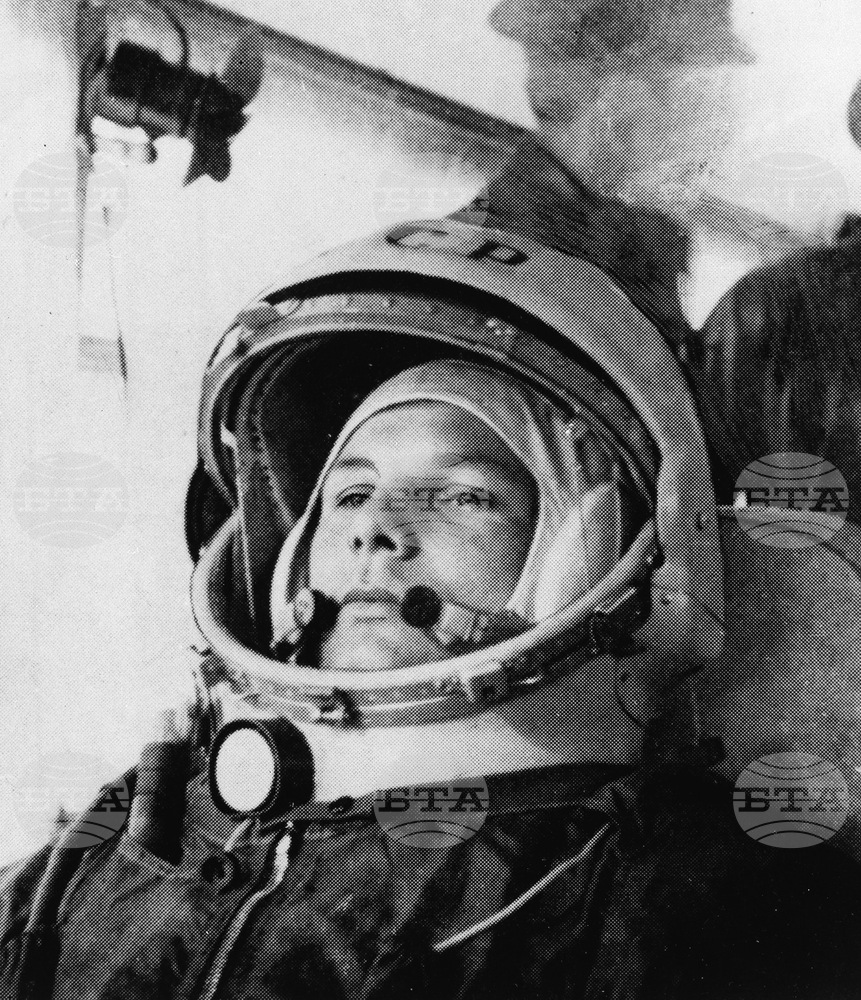
Sixty-five years ago on Sunday, Soviet air force pilot Yuri Gagarin, 27, became the first human being in history to journey into outer space. He was launched on board the Vostok spacecraft from the Baikonur Cosmodrome (in Kazakhstan) at 9:07 a.m. Moscow Time (6:07 a.m. UTC) on April 12, 1961. At the rocket's lift-off, Gagarin radioed his famous "Poekhali!" ("Let's go!"). Vostok logged a single 108-minute orbit around Earth, during which the space explorer observed what nobody before him had seen: the curve of the horizon, coastlines, mountain ranges, and vast landmasses. Vostok reached a speed of 28,260 km/h, or nearly 8 km/sec - the fastest a human had ever travelled at. Some 90 minutes into the flight, the spacecraft began its descent. It re-entered the planet's atmosphere, and at 10:42 a.m. the cosmonaut ejected at an altitude of 7 km and landed safely near the city of Engels in the Saratov Oblast (Southwestern Russia) at 10:53 a.m. Moscow Time (1:53 p.m. UTC). His mission ushered in a new space era in the history of humankind.
After a hero's welcome in Moscow and an avalanche of honours, by the end of April Gagarin started a two-year international tour that took him to more than 30 countries. The first one was Czechoslovakia, and the second was Bulgaria, where the first cosmonaut visited from May 22 to 26, 1961.
BTA's International News Desk bulletin covered extensively the flight and its aftermath, including Gagarin's biography, interviews, comments and reactions. The principal source of this news feed was the Soviet new agency TASS:
"Soviet Man in Space
TASS Announcement
Moscow, April 12 (TASS). The world's first satellite space ship Vostok, with a man on board, was placed in an around-the-earth orbit in the Soviet Union on April 12, 1961.
The pilot space navigator of the Vostok is a citizen of the U.S.S.R., Flight Maj. Yuri Alekseyevich Gagarin.
The launching of the multi-stage rocket was successful, and after attaining the first space velocity and the separation of the last stage of the carrier-rocket, the space ship went into free flight on an around-the-world orbit.
According to preliminary data, the period of the revolution of the satellite space ship around the earth is 89.1 minutes. The minimum distance from the earth (at perigee) is 175 kilometres and the maximum (at apogee) is 302 kilometres. The angle of inclination of the orbit plane to the equator is 65 degrees 4 minutes.
The space ship with the navigator weighs 4,725 kilograms, exceeding the weight of the final stage of carrier.
Bilateral radio communications have been established and are maintained with Space Navigator Gagarin. The frequency of the short-wave transmitters on board are 9,019 megacycles and 20,006 megacycles, and in the ultra-short-wave range 143,625 megacycles.
The condition of the navigator in flight is observed by means of radio telemetric and television systems.
Space Navigator Gagarin withstood satisfactorily the placing of the satellite ship Vostok into orbit and at present feels well. The systems insuring the necessary vital conditions in the cabin of the spaceship are functioning normally.
The spaceship, with Navigator Gagarin on board, is continuing its flight in orbit."
A dispatch from New York, dated April 13, quoted the disappointment that the three finalists selected for the first US manned space flight voiced about a Russian beating them into orbit:
Commander Alan Shepard Jr., 35, naval test pilot: "I am happy that the Soviet astronaut has successfully completed his earth orbital journey, but I feel a deep sense of personal disappointment."
Air Force Captain Virgil Grissom, 33: "Obviously I'm disappointed that we weren't first."
Lieutenant Colonel John Glenn: "The Russian accomplishment was a great one… I am naturally disappointed that we did not make the first flight to open this new era."
The global political implications of this momentous event were consigned to the restricted bulletin of BTA's International News Desk:
"Washington, April 12 (AP correspondent John M. Hightower) - Russia's latest space achievement is expected to harden the diplomacy of Soviet Premier Nikita Khrushchev and make him a more difficult man for President Kennedy to deal with.
U.S. officials agreed [privately today] that the launching and recovery of a man-carrying space vehicle is not only a historic feat but one which is certain to strengthen Khrushchev's determination to get his own way more and more on outstanding issues.
[. . .]
Ever since Russia put the first man-made satellite into orbit more than three years ago students here of Soviet affairs have noticed a toughening trend in the policy conduct of Khrushchev, even when he was talking most enthusiastically about the need of East-West negotiations and was urging peaceful settlement of all disputes.
Khrushchev's behavior in this respect is considered a reflection of his judgment of the Soviet Union's power position in the world - primarily in relation to the power of the United States.
The power balance is the basis of the East-West diplomatic balance.
Russia's ability to put a man into space has already been fully credited here and to this extent the demonstration of Soviet rocket prowess was discounted in advance.
But the prestige which the Soviets gain by actually pulling off the accomplishment, assuming all their results stand up as claimed, is a new element to be reckoned with.
It must make a tremendous impact on what people in other countries and particularly in the less developed nations of Asia and Africa think about Soviet abilities in many fields.
Obviously from the wording of the official Soviet government and Communist Party statement this event will have a great deal to do with what the Soviets think of themselves from now on.
For example, the statement said 'Before the eyes of the whole world, the working class, the Soviet collective farm peasantry and the Soviet intelligentsia - the whole Soviet people - demonstrate an unprecedented victory of science and technology.'
[. . .]
The boastful tone which seemed unnecessary in view of the accomplishment occasioned some surprise in official quarters here though it was in line with similar Moscow statements in the past.
It seems to be beyond question in view of the nature of the Soviet announcement and the extent of the Soviet achievement that Khrushchev from now on will believe his had has been greatly strengthened in his dealings with Kennedy by the success of Soviet science in putting the first man into space."
/LG/

news.modal.header
news.modal.text